
Top Teamwork Activities for Small Groups to Boost Collaboration in 2026


Finding the right teamwork activities for small groups can make the difference between a team that merely functions and one that genuinely thrives. Small groups benefit from activities that are specific enough to generate meaningful interaction—not just generic fun—and practical enough to translate directly into better day-to-day collaboration. This guide covers the most effective exercises across seven categories: icebreakers, creative thinking, problem-solving, fun games, virtual activities, reflective exercises, and planning guidance to help you run events that actually deliver results in 2026.
Key Takeaways
- Teamwork activities for small groups build the communication, trust, and collaboration skills that improve both team performance and workplace culture.
- Icebreaker activities reduce initial barriers and create the psychological safety that makes deeper collaboration possible.
- Problem-solving and creative thinking exercises develop skills that transfer directly to real workplace challenges.
- Reflective activities like Trust Battery and Feedback Circle sustain team growth between structured events by encouraging honest, ongoing dialogue.
- Effective team building requires clear objectives, activity selection matched to team needs, and post-event measurement to confirm impact.
Why Teamwork Activities for Small Groups Matter
Small groups have a structural advantage over large teams: every individual’s contribution is visible, and the relational dynamics between members directly shape the quality of the group’s output. That advantage compounds when teams invest deliberately in building their collaborative skills—and erodes quickly when they do not.
Teamwork activities for small groups give members structured opportunities to practice the behaviors that strong collaboration requires: listening actively, communicating clearly under pressure, trusting colleagues to deliver, and giving and receiving feedback constructively. When organizations make these activities a consistent part of team life rather than a one-off event, they see measurable improvements in morale, communication quality, and overall team performance.
The activities in this guide are organized by purpose. Each section covers specific exercises with timing, group size recommendations, and guidance on what each activity develops, so you can select the right combination for your team’s current needs.
Icebreaker Activities to Kickstart Engagement
Icebreaker activities reduce the social friction that slows down new or reconvening teams. They create a low-stakes environment where people can reveal something about themselves, find common ground, and relax into genuine interaction. For small groups in particular, where every relationship matters, a well-chosen icebreaker can establish the tone for everything that follows.
Two Truths and a Lie
Each participant shares three statements about themselves—two factual, one invented. The group votes on which statement is the lie. The game runs 15–30 minutes for groups of 5–8 people, requires no materials, and consistently generates laughter and surprise. Its real value is in the personal information it surfaces: team members regularly discover shared experiences, unexpected hobbies, and backgrounds that create genuine connection. It is an effective opener for any team building event regardless of the group’s familiarity level.
Quick-Fire Trivia
Teams are divided into pairs or small groups of 2–4 and compete in rapid 2-minute trivia rounds covering topics such as history, science, pop culture, and general knowledge. The format rewards quick thinking and creates natural conversation between rounds as teams discuss their answers and strategies. New team members bond quickly over shared knowledge, and the competitive structure keeps energy levels high throughout. Quick-fire trivia works well as an opener and scales easily for groups of varying sizes.
What Do We Have in Common?
Participants pair up or form small clusters and identify 5–10 things they have in common—shared experiences, interests, habits, or life stages—within a set time. The activity runs 40–60 minutes and is suitable for groups of 20–50 people, making it one of the more scalable icebreakers available. A virtual-friendly variation called Cross the Circle uses posed questions that participants respond to by signaling agreement, enabling remote teams to participate equally. The activity surfaces unexpected common ground that casual workplace interaction rarely reveals.
Creative Thinking Exercises for Small Groups

Creative thinking exercises push teams to approach problems differently—to generate ideas outside their routine assumptions and practice the kind of collaborative innovation that produces better outcomes in real work. These activities are particularly valuable for teams in environments that reward adaptability and original thinking.
The Marshmallow Challenge
Teams receive 20 sticks of spaghetti, one yard of tape, one yard of string, and a single marshmallow. The objective is to build the tallest freestanding structure possible with the marshmallow placed on top, within 18 minutes. The activity consistently reveals how teams approach prototyping and iteration: groups that plan extensively and build only once nearly always underperform groups that test multiple iterations quickly. Designed by Peter Skillman and popularized by Tom Wujec’s widely viewed TED Talk, the Marshmallow Challenge has been used in organizational development settings worldwide because its lessons about collaboration and prototyping transfer directly to workplace problem-solving.
Build a Boat
Teams of 5–10 people are given limited materials—cardboard, tape, and plastic sheeting—and tasked with building a vessel that can float within 45–60 minutes. The constraints force creative resource allocation and require every team member to contribute meaningfully to the design process. The physical test at the end provides immediate, unambiguous feedback on the quality of the team’s collaboration and execution, making this one of the more memorable and discussed activities in any team building program.
Innovators’ Auction
Teams of 5–8 are given a budget and must bid competitively on materials to build a functional invention within 30–45 minutes. The bidding element introduces a strategic layer absent from most creative exercises: teams must decide which materials are worth prioritizing before they know exactly what they will build. This combination of resource management, creative constraint, and competitive pressure closely mirrors the conditions teams face when developing new products or solutions under business constraints.
Problem-Solving Activities to Enhance Collaboration
Problem-solving activities develop the specific collaborative behaviors that make teams effective when stakes are real: trust, clear communication under pressure, and the ability to coordinate toward a shared goal without losing individual accountability. They are the category of teamwork activities for small groups most directly linked to measurable improvements in workplace performance.
Egg Drop Challenge
Using materials such as straws, newspaper, tape, and rubber bands, teams design and build a structure capable of protecting a raw egg from a significant drop. The activity runs 30–60 minutes and requires teams to brainstorm, prototype, and test under time pressure. The Egg Drop Challenge is particularly effective because the success criterion is binary and immediate—the egg either survives or it does not—which creates a clear shared objective that focuses the team’s energy and produces a memorable shared outcome regardless of the result.
Minefield
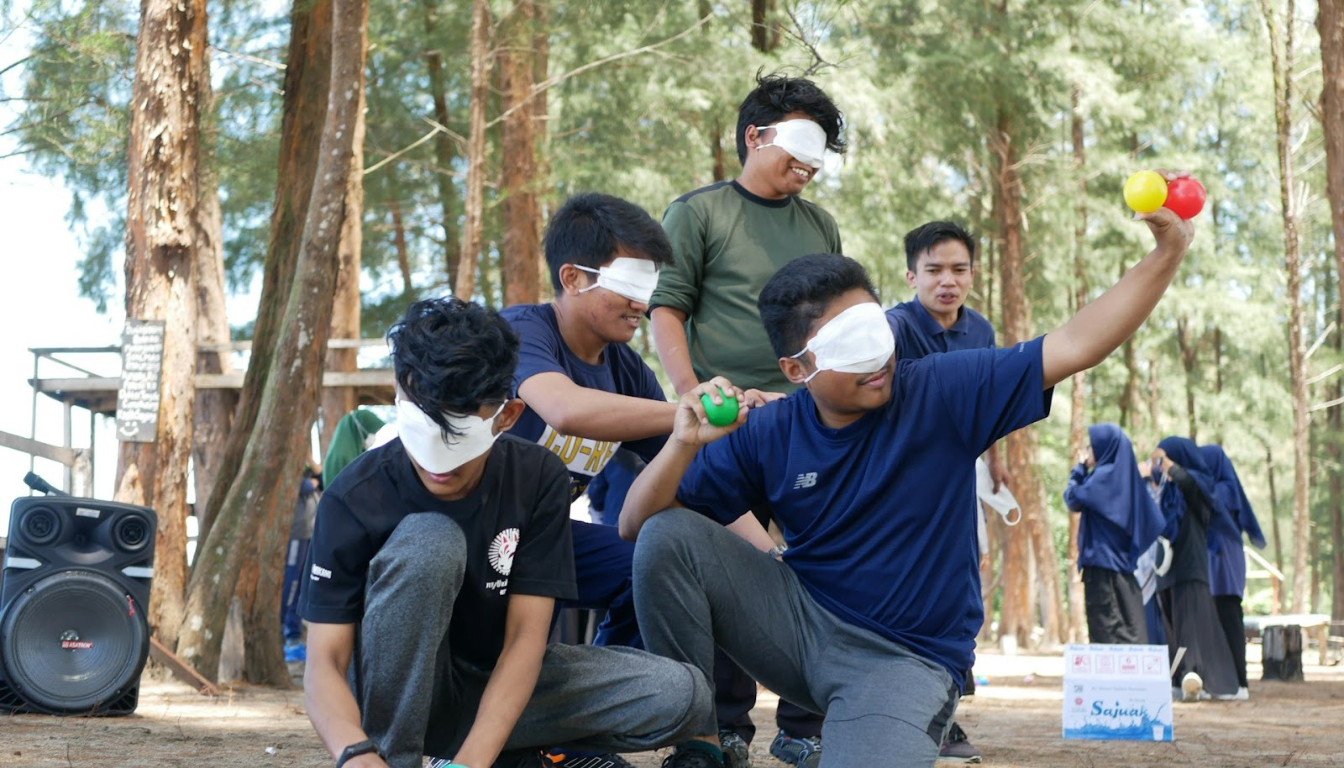
One participant is blindfolded; their partner must guide them verbally through a “minefield” of scattered objects without touching any of them. The activity runs approximately 45–50 minutes for groups of 8–16 people. Because the blindfolded participant is completely dependent on their partner’s instructions, the exercise creates a genuine experience of trust and demonstrates concretely how the clarity and precision of communication affects outcomes. Teams consistently report that Minefield produces more candid post-activity discussions about communication habits than almost any other exercise.
Bridge Build
Teams must construct a bridge using provided materials—blocks, cards, or craft supplies—within 20–30 minutes, with one critical constraint: no verbal communication is permitted during the build phase. Participants must coordinate entirely through non-verbal cues, gestures, and written notes. The restriction forces teams to develop alternative communication strategies, surfaces assumptions about shared understanding, and generates rich debrief material about how the team communicates under normal conditions. This activity is particularly valuable for teams that have identified communication gaps as a recurring challenge.
Fun Team Building Games to Boost Morale
High-stakes or intellectually demanding activities produce their own value, but teams also need experiences that are simply enjoyable—where the primary goal is laughter, connection, and the kind of low-pressure interaction that builds the informal familiarity that makes a team feel like a team. The following games deliver that experience reliably.
Human Knot
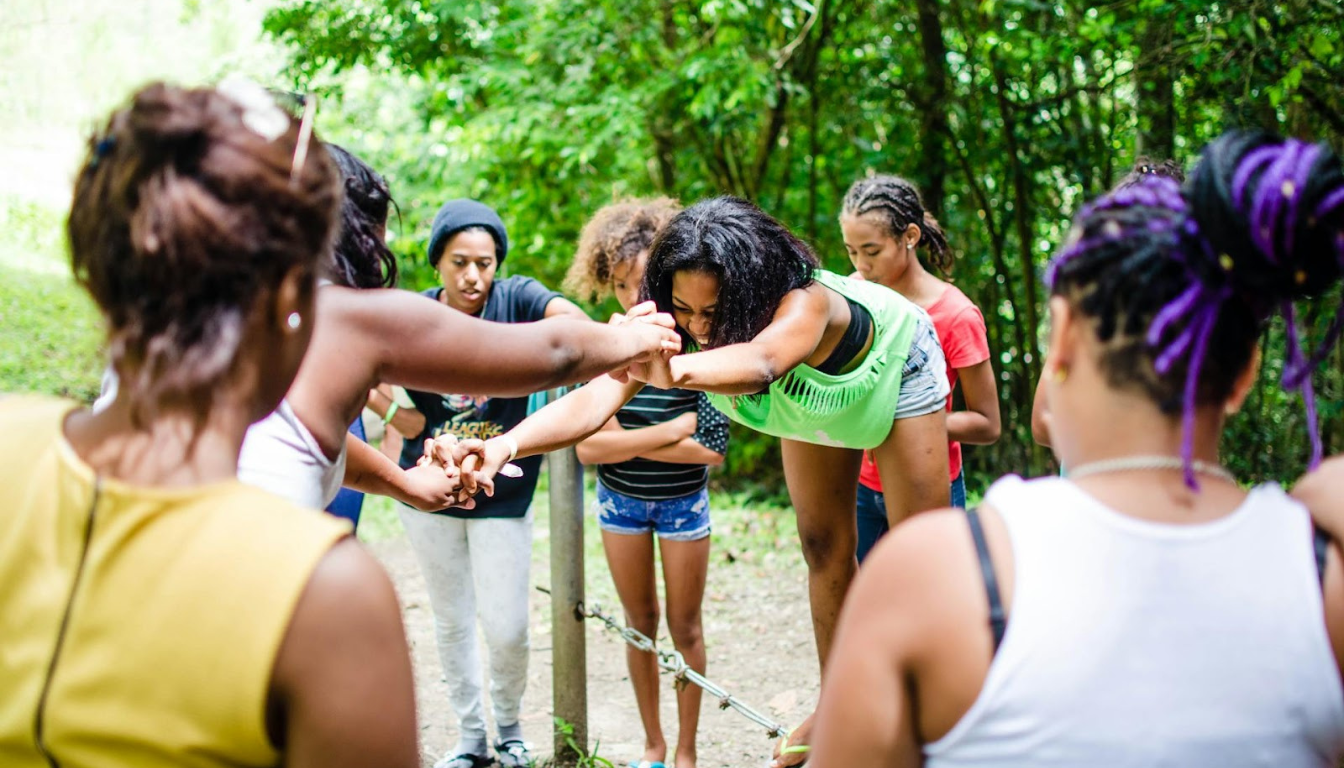
Eight to sixteen participants stand in a circle, each reaching across to hold hands with two different people. The group must then untangle the resulting “knot” without releasing hands. The activity takes 20–30 minutes and requires constant physical coordination, patient communication, and a willingness to look slightly ridiculous—all of which generate laughter and build the informal ease that more structured activities sometimes cannot. It works best as an energizer after a long sitting session or as a physical warm-up before more cognitively demanding exercises.
Office Trivia
Teams of 5–30 participants compete in answering lighthearted questions about their workplace, colleagues, and shared history—running for 30–45 minutes. Unlike general knowledge trivia, Office Trivia rewards people for paying attention to their colleagues and their environment, which subtly reinforces the value of noticing and appreciating the people around them. The format tends to surface surprising and entertaining facts that become part of the team’s shared lore, referenced long after the activity itself.
Scavenger Hunt
Participants receive a list of items or tasks to complete within a set time—typically 2 minutes per item—working in teams of 5–50 people across 20–30 minutes total. Scavenger hunts can be run in-person or adapted for virtual teams, making them one of the most flexible teamwork activities for small groups available. The competitive format encourages creative thinking and quick decision-making, and the shared experience of racing toward a goal together produces genuine team cohesion.
Virtual Teamwork Activities for Remote Small Groups
Remote small groups face a specific challenge: the informal interactions that build familiarity in person—hallway conversations, shared lunches, reading body language—do not happen naturally online. Virtual teamwork activities for small groups address this gap by creating structured opportunities for genuine connection across digital platforms.
Online Escape Room
Teams work together on a video call to solve a series of interconnected puzzles within a set time limit, typically 45–60 minutes. Virtual escape rooms are available from numerous providers in formats ranging from self-facilitated to fully hosted, with themes to suit most team demographics. The activity requires genuine collaboration—no single participant can solve all the puzzles alone—and time pressure creates the kind of coordinated energy that is difficult to generate in a standard virtual meeting. It is one of the most consistently well-received virtual teamwork activities available for remote groups.
Virtual Coffee Breaks
Scheduled unstructured video sessions of 20–30 minutes give remote team members space for the casual conversations that distributed work eliminates. Optional trivia questions or light games can provide a starting point for groups that find unstructured time awkward at first. Virtual coffee breaks work best when they are recurring—a consistent slot in the calendar that signals the organization’s investment in informal connection—rather than one-off events. Their value compounds over time as participants become more comfortable with one another.
Remote Office Trivia
A quiz focused on workplace-related questions—company history, team members’ backgrounds, organizational milestones, and shared culture—run through a platform like Kahoot or Mentimeter. Remote Office Trivia rewards knowledge about the specific people and environment participants share, which builds the sense of organizational belonging that remote teams can struggle to develop. It runs 20–30 minutes and requires no preparation beyond the question list, making it one of the most practical virtual teamwork activities for small groups on this list.
Reflective Activities to Strengthen Team Dynamics
Reflective activities address the aspect of team development that icebreakers and games cannot reach: the deeper patterns of trust, feedback, and shared experience that determine how a team functions when challenges are real. They require more psychological safety than other activity types and are most effective when introduced after a team has established some baseline comfort through earlier activities.
Memory Wall
Participants write meaningful shared memories on sticky notes and place them on a wall or shared digital surface, creating a visible record of the team’s history together. The activity runs 20–30 minutes for groups of 8–20 people. Memory Wall is particularly effective after periods of significant change—a team restructure, the end of a major project, or the departure of a long-standing member—because it gives participants a structured way to acknowledge and honor shared experiences that might otherwise go unspoken.
Trust Battery
Each participant privately rates their current level of trust in each team member on a scale of 0–100, then shares and discusses their ratings with the group. The concept was popularized by Shopify CEO Tobi Lütke, who described trust within working relationships as a “battery” that charges and drains based on interactions over time. The activity runs 20–40 minutes for groups of four or more. It produces some of the most honest and productive conversations available in a team building context—and is most valuable when the team has the psychological safety to engage with the results constructively.
Feedback Circle
Participants sit or appear in a circle format and take turns receiving specific, structured feedback from peers—both what they do well and where they could grow. The circle format ensures everyone both gives and receives, creating reciprocity that reduces the discomfort of one-directional critique. This activity builds a feedback culture that extends beyond the session itself: teams that practice giving and receiving feedback regularly develop higher levels of trust, more direct communication, and a stronger orientation toward continuous improvement.
How to Plan Effective Teamwork Activities for Small Groups
Well-chosen activities produce limited results if the planning around them is weak. Effective team building events require clear objectives, thoughtful activity selection, and a process for measuring whether the intended outcomes were achieved.
Set Clear Objectives
Define what the team building event is designed to achieve before selecting any activities. Objectives might include improving communication between specific team members, rebuilding trust after a difficult period, onboarding new members, or sustaining morale during a demanding quarter. Clear goals shape every subsequent decision and ensure the activities chosen are relevant rather than generic. Creating a brief shared document that outlines the event’s purpose gives participants context that increases engagement and makes the debrief more productive.
Choose the Right Activities
Match activities to the team’s current challenges and to the level of psychological safety already present in the group. A team that is newly formed or coming out of conflict needs icebreakers and trust-building exercises before reflective activities like Trust Battery will land well. A well-established team may find icebreakers underwhelming and benefit more from creative problem-solving or strategic reflective exercises. Consider whether activities will be conducted indoors or outdoors, in person or virtually, and select formats accordingly. Inclusive activities that allow every participant to contribute regardless of physical ability or seniority consistently outperform competitive formats that favor particular personality types.
Measure Success
Establish evaluation criteria before the event so that post-event feedback can be assessed against clear benchmarks. Post-event surveys asking participants to rate specific outcomes—how connected they feel to colleagues, how clearly they communicate, how comfortable they are raising concerns—provide more actionable data than general satisfaction scores. Observing changes in team behavior in the weeks following the event provides the most reliable indicator of real impact. Tracking participation rates, noting shifts in meeting dynamics, and monitoring progress toward the specific objectives defined before the event gives a comprehensive picture of whether the investment delivered results.
Summary
Teamwork activities for small groups work best when they are chosen intentionally, run with clear purpose, and followed by reflection and measurement. The seven categories covered in this guide—icebreakers, creative thinking, problem-solving, fun games, virtual activities, reflective exercises, and planning—provide a complete toolkit for building the communication, trust, and collaboration that make small groups perform at their best.
Consistent investment in these activities creates compounding returns: teams that build strong relational foundations early navigate challenges more effectively, adapt faster, and maintain higher morale during difficult periods. For organizations looking to streamline the logistics of team building events, platforms like Offsite provide end-to-end planning support that reduces the administrative burden and ensures every activity is well-suited to the team’s goals
FAQs
- What are the benefits of teamwork activities for small groups?

Teamwork activities for small groups build communication skills, strengthen interpersonal trust, improve collaborative problem-solving, and increase morale. Small groups benefit particularly because every relationship within the group directly affects how the team functions—meaning improvements in team dynamics are visible and impactful quickly.
- How do icebreaker activities help small groups?
Icebreakers reduce the social friction that slows down new or reconvening teams by creating low-pressure opportunities for personal sharing and informal connection. They establish psychological safety—the belief that it is safe to contribute, take risks, and be honest—which is the foundational condition for effective collaboration. For small groups, where every relationship matters, a well-chosen icebreaker sets a positive tone for everything that follows.
- What are effective virtual teamwork activities for remote small groups?
Online Escape Rooms, Virtual Coffee Breaks, and Remote Office Trivia are consistently effective for remote small groups. They address the specific challenge of distributed teams—the absence of informal in-person interaction—by creating structured opportunities for genuine connection. Virtual activities work best when they are recurring rather than one-off, so that familiarity and trust can develop over time.
- How do I choose the right teamwork activities for my small group?
Match activities to the team’s current development stage and specific challenges. New or low-trust teams need icebreakers and trust-building exercises first. Established teams benefit more from creative problem-solving or reflective activities. Consider the format—in-person or virtual—and prioritize inclusive activities that allow every participant to contribute regardless of personality type or physical ability. Involving team members in the selection process increases engagement and ensures the activities resonate.
You may also like



Stay Updated with Our Insights
Get exclusive content and valuable updates directly to you.