
23 Work Party Themes for Any Celebration


The closing celebration of a company retreat is not an afterthought — it is the emotional punctuation mark on everything the team just experienced together, and it deserves the same intentionality that went into the agenda. A well-chosen work party theme transforms a generic dinner into a memorable shared experience that reinforces team identity, amplifies the retreat's momentum, and sends people home feeling genuinely celebrated rather than simply dismissed. Whether your team is 15 people wrapping up a two-day leadership offsite or 200 employees closing out a full-company event, the right theme gives the evening a sense of occasion that a standard banquet room and a buffet simply cannot replicate. These 23 ideas are organized by atmosphere and group size so you can find the right fit for your team, your venue, and the tone your retreat was designed to create.
Key Takeaways
- The best work party themes for a retreat closing celebration reinforce the retreat's energy and give attendees a shared, memorable experience to carry home.
- Match the theme's formality level to your company culture — a forced black-tie event for a casual startup team will fall as flat as a backyard cookout for a formal financial services firm.
- Themes that involve participation and interaction consistently outperform passive dining formats for team bonding and post-retreat sentiment.
- Venue and destination should inform theme selection — the best options lean into location rather than fight against it.
- The closing celebration is the last impression the retreat makes; invest in it proportionally to the rest of the program, not as a budget afterthought.
How to Choose the Right Work Party Theme for Your Retreat Closing

The strongest options share a few common qualities: they are easy for attendees to engage with immediately without preparation, they create natural conversation and interaction rather than parallel dining, they feel special relative to the team's daily environment, and they amplify rather than contradict the emotional tone the retreat was designed to create. A high-energy sales kickoff calls for a different closing celebration than a reflective leadership wellness retreat — and a theme that lands perfectly for one will undermine the other.
Three questions help narrow the field quickly. First, what is the dominant energy you want the team to leave with — celebratory and high-energy, warm and connected, or relaxed and restorative? Second, what does your venue and destination make easy — are you at a mountain lodge, a coastal resort, an urban hotel, or a dedicated retreat center? And third, how participatory does your team culture tend to be — will people lean into an interactive theme with enthusiasm, or will they engage more comfortably with an immersive atmosphere that does not require direct performance? The answers steer you toward the categories below.
The 23 Themes at a Glance
High-Energy and Interactive Themes
These ideas are built for teams that lean into participation and want to close the retreat with maximum collective energy. They work especially well for sales organizations, early-stage companies with strong social cultures, and groups that responded enthusiastically to interactive elements throughout the retreat itself.
- Casino Night. Set up blackjack, poker, and roulette tables staffed by professional dealers, with play money guests exchange for raffle prizes at the end of the night. The competitive, social format works naturally for sales-oriented teams and keeps energy high throughout.
- Decades Dance Party. Pick a decade — the 70s, 80s, or 90s tend to land best — and commit to era-appropriate music, lighting, and optional costume elements. A professional DJ with crowd-reading skills makes or breaks this theme, so invest accordingly.
- Game Show Night. Transform your event space into a live game show set with a host, buzzers, team rounds, and escalating prizes. Familiar game-show formats are immediately accessible without requiring attendees to learn new rules mid-event.
- Lip Sync Battle. Divide the team into groups and give them 30 minutes to prepare a song, then host a judged competition. The prep time is itself a bonding activity, and the performances reliably generate uninhibited laughter.
- Field Day Olympics. If the celebration can extend outdoors before moving inside for dinner, run competitive outdoor games — relay races, tug-of-war, bocce, cornhole — followed by an awards ceremony and cookout. It delivers energy, competition, and fun in sequence.
- Comedy Night. Hire a professional stand-up comedian with corporate event experience and let them run the room for 45 to 60 minutes before dinner transitions to open socializing. This passive format suits groups who’d rather be entertained than perform, and a skilled comedian can riff on the retreat itself.
Immersive Atmosphere Themes

This category prioritizes a fully realized environment over structured activities. They create a sense of occasion through décor, music, food and beverage programming, and the feeling of having been transported somewhere distinct from the retreat's working sessions. They tend to work particularly well for larger groups and venues with a strong built-in atmosphere.
- Gatsby and Gold. A 1920s-inspired celebration with jazz musicians, art deco styling, signature cocktails in coupes, and passed hors d’oeuvres that keep guests mingling rather than seated. The elegance signals a special evening without requiring formal dress codes.
- Night Market. Transform the event space into an indoor street market with food stalls representing different cuisines, string lights, and communal tables. The relaxed browsing format encourages conversation and accommodates dietary restrictions more gracefully than a plated dinner.
- Rooftop Sunset Soiree. If the venue permits, host a rooftop or terrace celebration at golden hour with a curated playlist, passed cocktails, and simple grazing tables. It’s best suited to destinations with reliable weather and real outdoor event infrastructure.
- Luau and Island Night. Works especially well for coastal or warm-weather destinations and needs relatively little production to execute well. Tiki torches, tropical flowers, a live band or steel drum performer, and a grilled seafood menu create a genuinely distinct atmosphere.
- Festival of Lights. String lights, lanterns, and candlelit tables transform almost any venue into something celebratory. Pair with acoustic live music, a family-style dinner, and a late-evening s’mores or dessert station for a warm, connected close.
- Night at the Museum. Partner with a local museum, gallery, or cultural institution to host the closing celebration after hours. The exclusive setting creates instant occasion, and the exhibits provide natural conversation prompts all evening.
Location-Inspired and Destination Themes
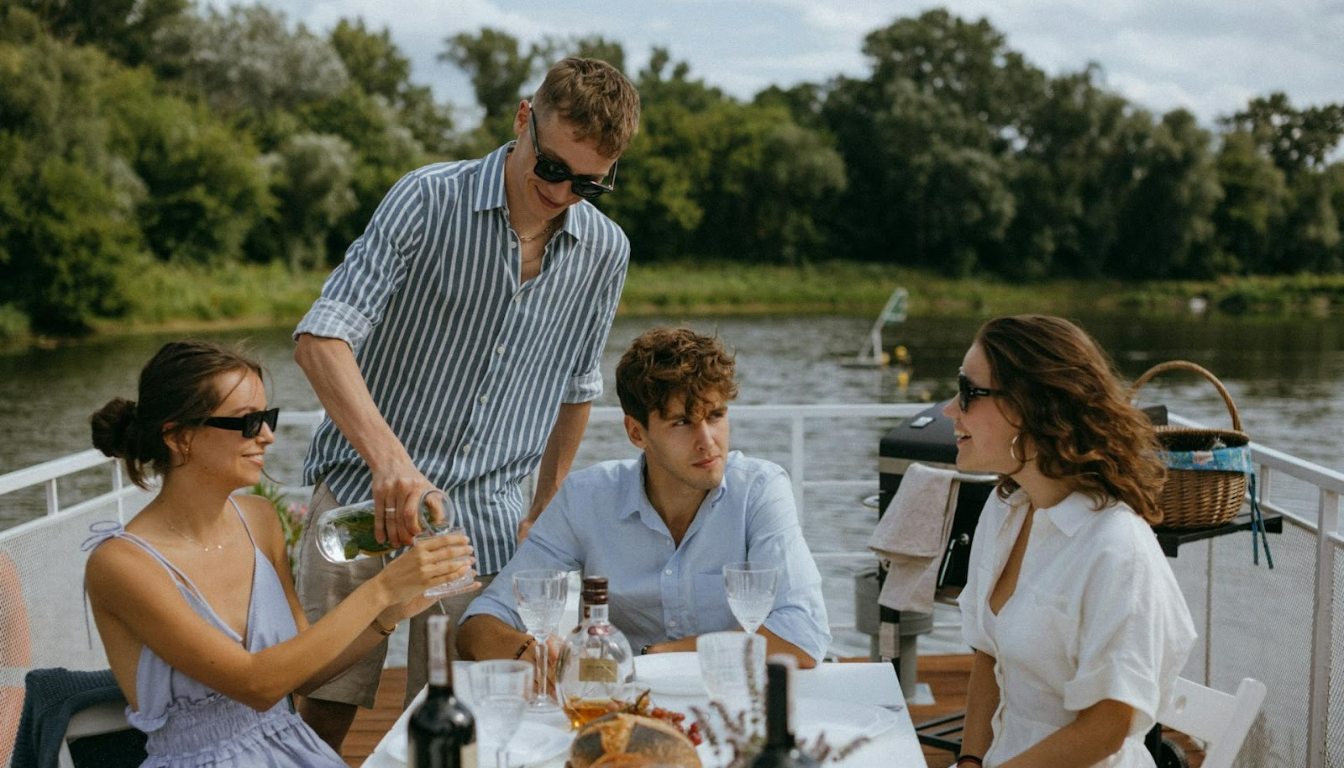
These ideas draw directly on the retreat's geography and give attendees a curated taste of the destination they visited. They work best when the retreat is held somewhere with a strong regional identity — a wine country, a mountain town, a coastal city, an international destination — and when the local food, drink, or cultural traditions are genuinely distinctive.
- Wine Country Harvest Dinner. For retreats in wine-producing regions, a seated dinner with a local sommelier leading a curated pairing menu turns the celebration into an experience and an education. Add a winemaker’s talk or vineyard tour if the venue permits.
- Southern BBQ and Bluegrass. Regional comfort food done well — smoked meats, cast-iron sides, fresh cornbread — paired with live bluegrass or country music makes an unpretentious, generous closing celebration. It works particularly well for teams with varied tastes in formal dining.
- Coastal Clambake. Salt air, picnic tables, lobster or shellfish, and cold beer in an outdoor setting feels genuinely local and effortless for a coastal retreat. The informal, communal format encourages conversation at a relaxed pace.
- International Destination Night. For global retreats held abroad, a closing dinner highlighting the host country’s cuisine, music, and traditions through local vendors and performers. It gives an international retreat a conclusion that feels both respectful and celebratory of the place that hosted it.
- Ski Lodge Après. For mountain destinations, model the celebration on après-ski culture — fondue, hearty comfort food, warming cocktails and hot cocoa, a fireplace backdrop, and acoustic folk music. It translates the location’s identity into an easy, natural party format.
Culinary and Creative Experience Themes
This category makes the act of creating or discovering something together the centerpiece of the evening. They tend to produce higher levels of genuine engagement and conversation than passive reception formats, and they generate a shared reference point — the dish you made, the cocktail you designed, the art you created — that travels back to the office with the team.
- Cooking Competition. Divide the group into teams, assign each a basket of ingredients, and have them compete to produce the best dish judged by a professional chef. It’s highly participatory, sparks natural cross-team interaction, and produces genuinely collaborative laughter.
- Cocktail and Mocktail Masterclass. A professional mixologist teaches groups to build two or three signature drinks from scratch, ending with a friendly competition to present their original creation. Inclusive mocktail options ensure everyone can fully participate.
- Paint and Sip. A guided painting session led by a local artist, with wine and charcuterie throughout, gives participants a finished artwork to take home. It creates a relaxed, creative counterpoint to an analytical, strategy-heavy retreat.
- Pottery or Ceramics Workshop. For smaller groups or wellness-oriented retreats, a hands-on ceramics session creates an unhurried, tactile shared experience unlike anything else on the agenda.
Recognition-Centered Celebration Themes
These ideas make performance recognition and team appreciation the structural centerpiece of the closing celebration rather than a brief interlude between courses. They work best for sales teams, high-performance cultures, and organizations where peer recognition is a strong cultural value.
- Awards Gala. Run a formal or semi-formal awards ceremony with creative, company-specific categories voted on by peers before the retreat, followed by a seated dinner. Keep categories specific, culturally resonant, and inclusive so recognition spreads across the team rather than concentrating on the usual top performers.
- Yearbook and Wall of Fame. Build the celebration around a curated visual look back at the year — team photos, milestones, and candid retreat moments displayed throughout the space — paired with a relaxed dinner and a printed keepsake yearbook. The nostalgia and personalization land especially well with teams that have strong identity and long tenure.
What Makes Any Work Party Theme Actually Work in Execution
The theme is the starting point, but execution determines whether it lands. Three elements separate a well-executed closing celebration from an ambitious concept that underdelivers. First, the transition from the day's programming to the celebration should feel like a genuine shift in energy and environment — a costume change, a venue walk, a musical cue — something that signals to attendees that the work of the retreat is complete and the celebration has begun. Second, the food and beverage experience should be genuinely excellent rather than merely adequate; closing celebrations where the catering disappoints color the entire retreat retrospectively in ways that are disproportionate to the offense. Third, the celebration should have a clear, intentional close — a final toast, a musical moment, a fireworks display, a group photo — rather than simply trailing off when the last attendees drift back to their rooms. The closing moment of the closing celebration is the final impression the retreat makes, and it is worth designing deliberately.
Summary
The right work party theme does more than make the last night of a retreat enjoyable — it closes the program on an emotional note that reinforces team identity, extends the retreat's momentum, and gives attendees a shared memory that travels back to the office with them. Whether your team gravitates toward high-energy interactive formats, immersive atmosphere themes, location-inspired experiences, creative workshops, or recognition-centered celebrations, the 23 ideas here offer a starting point for any group size, budget, and cultural context. Match the theme to your team's energy and your venue's natural strengths, invest in execution quality over conceptual complexity, and treat the closing celebration with the same intentionality that shaped the rest of the retreat agenda. Done right, the closing celebration is how a good retreat becomes a great one — the detail that people still mention months later when they describe what made the offsite worth attending.
FAQs
- What are the best work party themes for a corporate retreat closing celebration?

The best options for a retreat closing celebration are those that match the team's culture, lean into the retreat's destination or setting, and create genuine interaction rather than passive attendance. High-performers with competitive cultures tend to respond well to casino nights, game show formats, or awards galas. Creative and collaborative teams often prefer cooking competitions, cocktail masterclasses, or paint-and-sip experiences. Teams seeking relaxation after an intensive program gravitate toward immersive atmosphere themes like luaus, festival of lights dinners, or regional cuisine experiences. The strongest choice is always the one that feels authentically right for the specific team it is designed for.
- How much should a company budget for a closing party at a retreat?
A closing celebration for a corporate retreat typically represents 15 to 25 percent of the total event's food and beverage and entertainment budget. For leadership retreats and executive offsites, higher investment in the closing celebration is usually appropriate given the seniority and the signals it sends about how the organization values the team. For large full-company retreats, maintaining per-person budget discipline becomes more important. A useful benchmark: the closing celebration should feel noticeably more special than the retreat's standard dinners — enough to signal genuine celebration — without requiring a budget that dwarfs the program's other investments.
- How do you make a work party theme inclusive for all employees?
Inclusive execution requires attention to three areas: dietary and alcohol accommodation, physical participation requirements, and cultural sensitivity. Ensure that any food-centered theme offers genuinely good non-meat and allergen-conscious options — not an afterthought side plate. For themes involving physical activity or performance, always provide non-participatory ways to enjoy the event for those who may be unable or unwilling to participate physically. And for themes with cultural or historical references — decades nights, international destination themes, or costumes — vet the concept explicitly for elements that may be exclusionary or culturally insensitive before committing to them.
- What work party themes work best for remote or hybrid teams at an in-person retreat?
For teams that are primarily remote and gathering in person for the first time or infrequently, the closing celebration theme should prioritize formats that create natural, low-barrier social interaction rather than performances that require existing social comfort. Night markets, cooking competitions, cocktail masterclasses, and festival of lights dinners all work well because they provide built-in conversation starters and shared activities that do not presuppose existing relationships. Avoid themes that require pre-existing social fluency — like improv or lip sync battles — as the primary format for remote teams who may still be getting to know each other in person.
You may also like
Stay Updated with Our Insights
Get exclusive content and valuable updates directly to you.