
The Accessibility Checklist Every Corporate Retreat Planner Needs


Planning a corporate retreat is no small feat. Coordinating schedules, selecting venues, managing budgets, and building an agenda that actually energizes your team is a tall order. But there's one dimension that too often gets treated as an afterthought: accessibility.
For HR executives and retreat planners, building accessible events isn't just a legal or compliance consideration — it's a reflection of your company's values. When every employee can fully participate in a company retreat, regardless of physical ability, dietary need, neurodivergence, or other considerations, you signal that inclusion isn't a talking point. It's operational. This guide walks you through a practical accessibility checklist for corporate retreats, from venue selection to post-event follow-up, so your next offsite leaves no one behind.
Key Takeaways
- Accessibility planning should start at the venue-selection stage, not after the booking is confirmed.
- Accessible company travel requires more than just wheelchair ramps — it includes sensory, dietary, cognitive, and communication needs.
- Proactively collecting accommodation requests from attendees reduces last-minute scrambles and prevents exclusion.
- Accessible events are better events. The practices that support employees with disabilities often improve the experience for everyone.
Why Accessibility at Corporate Retreats Matters More Than You Think
The business case for accessible events is straightforward: you can't have full team participation if some team members can't fully participate. Yet according to the U.S. Bureau of Labor Statistics, approximately 1 in 5 working-age Americans has a disability, and that figure doesn't account for temporary impairments, chronic conditions, or neurodivergent team members who may not self-identify.
Corporate retreats, by their nature, are high-stakes gatherings. They're where culture gets reinforced, relationships are built, and strategic alignment happens. When an employee can't access the venue, follow along with a presentation, or safely eat the provided meals, they're not just physically excluded — they're culturally sidelined.
The good news: most accessibility gaps are entirely preventable with a structured planning process.
Before You Book: Accessibility in Venue Selection
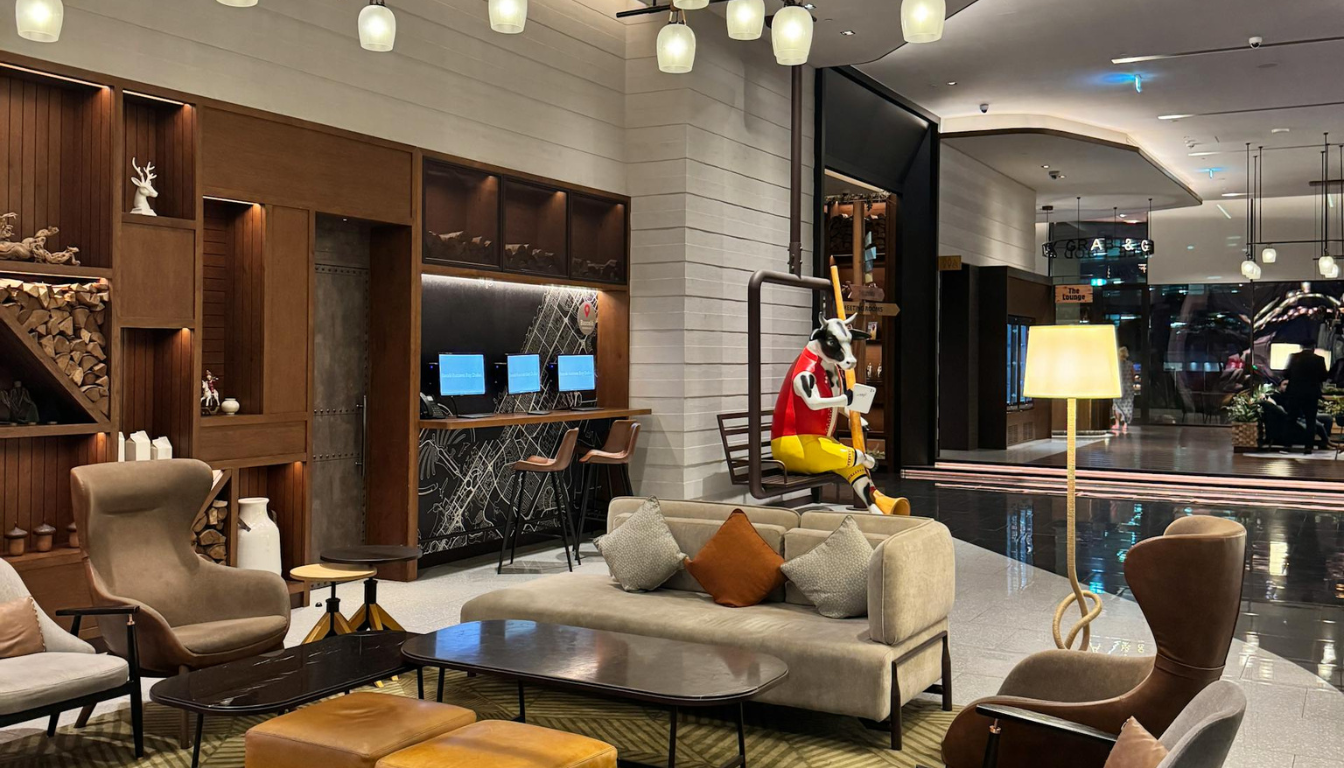
The single highest-leverage moment in accessible retreat planning is before you sign the venue contract. Once you've committed to a space, retrofitting for accessibility becomes exponentially harder.
What to Ask Every Venue
- Is the main event space fully wheelchair accessible, including restrooms?
- Are there accessible sleeping accommodations available, and in what quantity?
- Does the venue have elevators, or are all key areas on the ground floor?
- What is the surface material of outdoor spaces? Gravel paths, for instance, are problematic for wheelchair users.
- Is there accessible parking and drop-off proximity to the entrance?
- Are there quiet rooms or low-stimulation spaces available?
- Does the venue accommodate service animals?
A venue's willingness to answer these questions — and how thoroughly they answer them — tells you a great deal about how much they've thought about accessible events before your inquiry.
Accessible Company Travel: Getting Everyone There
Transportation logistics are one of the most overlooked dimensions of accessible corporate travel. Even if your venue is fully accessible, the journey to get there may not be.
Travel Accessibility Checklist
- Survey attendees early. Send a pre-event accommodation request form at least 4 to 6 weeks before the retreat. Ask about mobility aids, service animals, anxiety around certain travel modes, and medical equipment that requires special handling.
- Book accessible ground transportation. If you're arranging shuttles or group transport, confirm that vehicles can accommodate wheelchairs or mobility devices.
- Account for travel fatigue. Multi-leg travel itineraries that might be routine for most attendees can be exhausting or physically painful for those with chronic conditions. Build in buffer time.
- Consider proximity. When selecting retreat destinations, factor in distance from major accessible transit hubs.
- Provide clear pre-travel documentation. Share detailed travel instructions with accessibility notes, including which entrances to use, where accessible parking is located, and who to contact for assistance on arrival.
On-Site Accessibility: The Day-Of Checklist

Even with thorough pre-planning, on-site execution matters. Designate a single point of contact, an accessibility liaison, who knows the venue layout and is empowered to solve problems in real time.
Physical and Mobility Access
- Confirm accessible entrances are clearly signposted and unlocked.
- Check that all session rooms are reachable without stairs.
- Ensure accessible restrooms are located near main event spaces.
- Verify that seating arrangements allow wheelchair users to sit alongside colleagues, not relegated to the back or sides.
- Confirm ADA-compliant furniture is available, if needed.
Sensory and Cognitive Access
- Provide printed or digital agendas in advance so attendees can mentally prepare.
- Offer a quiet room or designated low-stimulation space throughout the retreat.
- Use microphones in all sessions, even for small rooms, to support attendees who are hard of hearing.
- Avoid relying on color alone to convey information in presentations.
- Caption all video content; offer live captioning for keynotes or large sessions.
- Limit the use of strong fragrances in shared spaces and notify attendees if scent-free requests are in place.
Dietary and Medical Access
- Collect dietary restrictions and allergies in your pre-event survey, not just "vegetarian/vegan" but full allergen details.
- Ensure labeled, allergen-safe food options are clearly separated at every meal.
- Confirm refrigeration is available for attendees who need to store medication.
- Identify the nearest hospital or urgent care to the venue and share this information in the attendee packet.
Communication and Language Access
- If your team is multilingual, consider whether any sessions require interpretation.
- Provide materials in plain language and avoid acronym-heavy or jargon-dense documents.
- Make all presentation slides available digitally in advance for screen reader compatibility.
Inclusive Activity Planning: Rethinking the "Team Bonding" Default

The classic corporate retreat activity lineup — ropes courses, hiking, competitive sports — can inadvertently exclude a significant portion of your team. Accessible events don't mean boring events. They mean intentionally designed ones.
Questions to Ask When Selecting Activities
- Can this activity be fully participated in by someone using a mobility device?
- Does this activity require a level of physical fitness that may not be universal on this team?
- Are there high-noise or high-stimulation elements that could be difficult for neurodivergent attendees?
- Is participation voluntary, and is there a genuinely appealing alternative for those who opt out?
Activities like culinary workshops, creative sessions, trivia, escape rooms with accessible layouts, and collaborative problem-solving exercises tend to have much broader accessibility profiles than physical-first options.
Post-Event: Closing the Accessibility Loop
Accessible retreat planning doesn't end when the event does. Build a brief post-event feedback process that specifically invites input on the accessibility of the experience.
- Send a short post-retreat survey with a dedicated accessibility section
- Follow up privately with any attendees who submitted accommodation requests to confirm their needs were met
- Document what worked and what didn't for your internal planning records
- Update your venue and vendor shortlists based on how partners performed on accessibility
This feedback loop not only improves your next retreat — it sends a clear signal to employees that their experience was genuinely valued.
Summary
Accessibility at corporate retreats is not a checklist to be completed once and forgotten. It's a planning mindset that shapes every decision from venue selection to post-event follow-up. The most inclusive offsites are built by teams who ask the right questions early, collect accommodation needs proactively, and treat accessibility as a core quality standard rather than an add-on.
For HR leaders and executive assistants managing these logistics, the investment in accessible event planning pays dividends in employee trust, participation equity, and the signal it sends about your organization's culture. When your team sees that every detail, from the shuttle to the seating to the lunch menu, was considered with their needs in mind, the retreat does exactly what it's supposed to: bring people together.
Planning your next company retreat? Offsite helps HR teams and executive assistants coordinate every detail of accessible, high-impact corporate retreats, from venue sourcing to on-site logistics, so no one on your team gets left behind.
FAQs
- What does accessibility mean in the context of corporate retreats?

Accessibility in corporate retreats refers to planning practices that ensure all employees can fully participate regardless of physical ability, sensory needs, dietary requirements, neurodivergence, or other considerations. It covers everything from venue selection and accessible company travel to activity design and communication materials.
- When should I start collecting accessibility accommodation requests from attendees?
Ideally, send an accommodation request form 4 to 6 weeks before the retreat. This gives you enough lead time to coordinate with the venue, catering, and transportation providers without last-minute scrambling.
- What are the most commonly overlooked accessibility needs at company offsites?
Sensory needs such as quiet spaces, captioning, and fragrance-free environments, along with dietary allergen management, tend to be the most frequently overlooked. Physical accessibility often gets more attention, but cognitive and sensory accommodations are equally important for fully accessible events.
- How do I make team-building activities more accessible?
Choose activities that don't require a specific level of physical fitness or mobility. Culinary workshops, creative sessions, trivia nights, and collaborative problem-solving exercises tend to be far more inclusive than physically demanding options. Always make participation optional and ensure alternatives are genuinely appealing, not just a consolation option.
You may also like


Stay Updated with Our Insights
Get exclusive content and valuable updates directly to you.