
Employee Morale Suggestions: 20 Strategies That Stick After the Retreat is Over


There's a pattern that plays out in companies everywhere: a well-intentioned offsite generates real energy, genuine connection, and a wave of enthusiasm that crests sometime around the drive home — and then quietly fades by the third week back. Employees feel it. HR leaders notice it. And every year, the planning cycle begins again with the same question: how do we make this one actually last?
The truth is that a single retreat, no matter how well designed, can't carry the full weight of employee morale on its own. What it can do, when paired with the right ongoing strategies, is serve as a catalyst. The offsite becomes the spark; everything else keeps the fire lit.
This guide is for HR executives, executive assistants, and offsite planners who are thinking beyond the event itself. Here are 20 practical employee morale suggestions that work before, during, and long after your next retreat.
Key Takeaways
- Employee morale is a long-term investment, not a single-event fix. Retreats are most effective when they're part of a broader engagement strategy.
- Recognition, autonomy, and psychological safety consistently outperform perks and one-time experiences in sustaining morale over time.
- The period immediately following a retreat is critical. How managers respond to offsite momentum determines whether it carries forward or dissipates.
- Small, consistent actions (weekly check-ins, peer recognition, shared rituals) compound over time more reliably than large, infrequent interventions.
- Distributed and hybrid teams require intentional design to ensure morale strategies reach everyone equally, not just those in the main office.
Why Employee Morale Suggestions Fall Flat and What Changes That
Most employee morale suggestions fail not because they're bad ideas, but because they're deployed in isolation. A team lunch here, a recognition shoutout there, an annual retreat that generates a post-event survey score HR never quite replicates. The underlying problem is that morale is treated as a destination rather than a practice.
Research in organizational psychology consistently points to three core drivers of sustained employee morale: a sense of belonging, a sense of meaning, and a sense of agency. Perks address none of these directly. What addresses them, with compounding effect over time, is the texture of daily work life: how managers communicate, how achievements get acknowledged, how often people feel heard, and how much ownership they have over their contributions.
The 20 strategies below are organized to reflect that reality. Some are high-touch, some are structural, and some are deceptively simple. All of them work better together than in isolation.
Before the Retreat: Setting the Morale Foundation

1. Involve employees in retreat planning. Nothing signals that leadership values employee input like actually asking for it. A pre-retreat pulse survey, even a five-question one, that shapes the agenda, tells people their experience matters. It also builds pre-event buy-in that carries into the room.
2. Set clear intentions, not just logistics. Share the "why" behind the retreat well in advance. When employees understand that the goal is genuine connection and alignment rather than just a line item in the Q3 budget, they arrive with greater openness and more to give.
3. Address morale gaps before the offsite. If there's unresolved tension, a communications gap, or a team that feels overlooked, the retreat won't heal it. It will just relocate it. A brief skip-level conversation or team check-in in the weeks before the offsite can surface what needs to be acknowledged before you ask people to connect.
4. Create anticipation through storytelling. Share brief profiles of attendees, highlight the venue's local character, or ask a past participant to write a few sentences about what made a previous offsite meaningful. This primes people for the experience and signals that the company takes it seriously.
5. Make travel and logistics equitable. For distributed teams, how travel is handled sends a message before anyone arrives. Employees who feel like an afterthought in the logistics, given shorter reimbursement timelines, fewer accommodation options, or less flexibility, arrive already slightly less engaged. Equity in the details matters.
During the Retreat: Building Morale That Travels Home
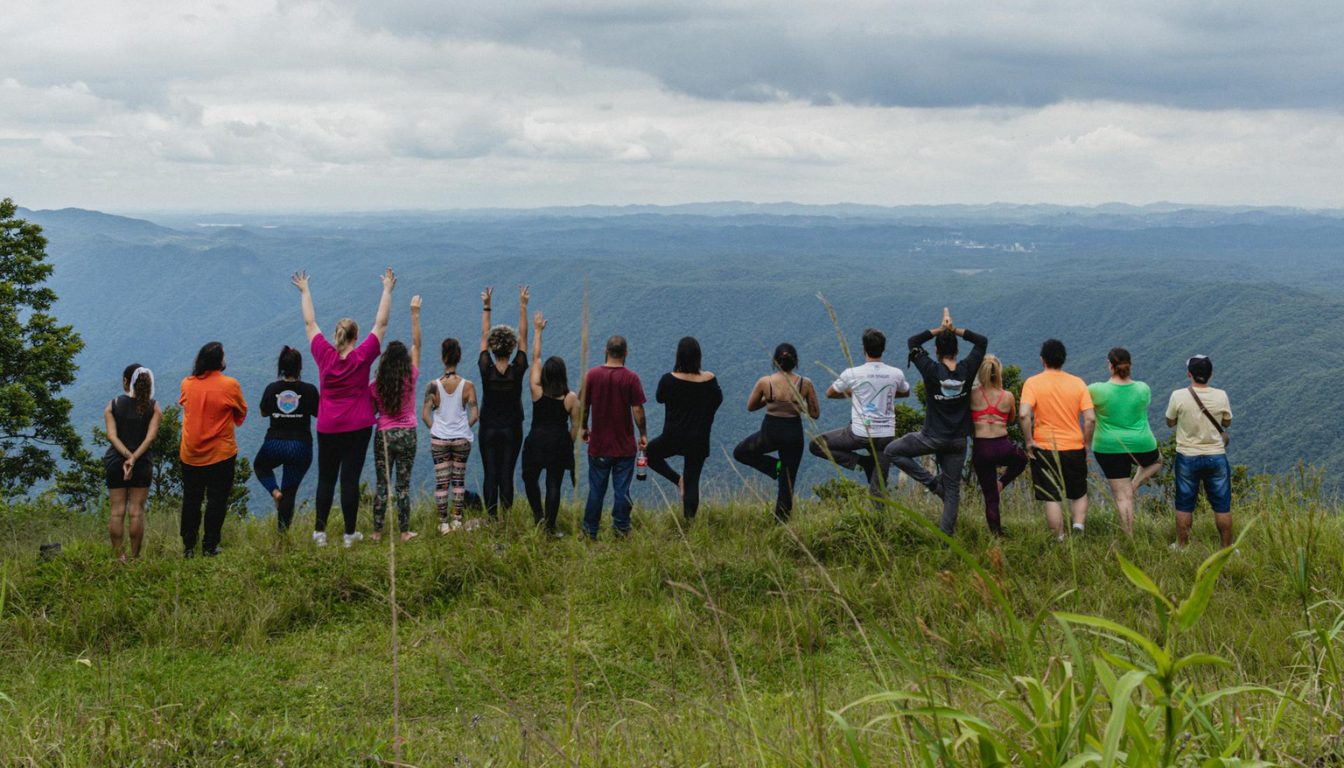
6. Prioritize unstructured connection time. Over-programmed retreats squeeze out the interactions that actually build trust: the hallway conversation, the late dinner that runs long, the spontaneous walk where someone says something real. Build margin into the agenda deliberately.
7. Use facilitated reflection, not just celebration. Morale benefits from acknowledgment of difficulty, not just wins. A structured session that asks "what's been harder than expected this year, and what's helped?" permits employees to be real. That kind of honesty with colleagues is what creates actual connection.
8. Create rituals the team can take home. Closing ceremonies, shared commitments, or a simple recurring phrase born in the retreat room can become cultural touchstones that outlast the event. Small rituals create continuity between the offsite and everyday work life.
9. Give employees something to own. Agency is a morale driver. Any structure in the retreat that lets employees lead a session, present an idea, or make a real decision rather than simply receive content generates a different kind of engagement than passive participation.
10. Build in explicit appreciation. Structured peer recognition, whether that's a card-writing exercise, a brief appreciation round, or a "kudos board," gives employees a channel for expressing gratitude that normal workflows rarely create. When this is genuine rather than performative, its effects linger.
Offsite's planning tools are built to help HR teams design retreats with this kind of intentionality, with programming frameworks that move beyond logistics into the engagement outcomes that actually move the needle.
After the Retreat: The 10 Strategies That Make the Difference

This is where most morale programs fall short. The post-retreat window, roughly 30 to 90 days, is when the culture either absorbs the experience or reverts to baseline. The following strategies are specifically designed to prevent that reversion.
11. Follow through on commitments made at the retreat. Nothing deflates morale faster than a list of offsite action items that disappears into inboxes. Assign ownership, set timelines, and close the loop visibly. This is basic operational discipline, but it's also a profound morale signal: it tells employees that the retreat was real.
12. Sustain recognition practices that started at the event. If you ran a peer appreciation exercise at the offsite, build a lightweight version into team meetings for the following quarter. If someone was publicly acknowledged for a contribution, follow up privately. Recognition that continues after the retreat tells people the company sees them continuously, not just at annual events.
13. Schedule regular manager one-on-ones with morale explicitly on the agenda. In most organizations, one-on-ones default to task and project status. A simple reframe, adding one standing question like "what's energizing you right now, and what's draining you?", creates a recurring channel for morale data and signals that managers care about the whole person, not just the output.
14. Act on what you heard. If the retreat generates feedback about communication breakdowns, unclear priorities, or a lack of flexibility, and leadership does nothing with it, the next offsite will generate cynicism rather than energy. Closing the loop on what was heard and what's being done about it is one of the highest-leverage morale actions available to HR leaders.
15. Create peer connection structures that don't require leadership activation. Post-retreat morale sustains better when it doesn't depend on a manager to initiate it. Peer mentoring pairs, cross-functional coffee chats, or a shared Slack channel around an interest that surfaced at the retreat let employees maintain connection laterally, which is more resilient than top-down programming.
16. Celebrate small wins publicly and frequently. Large, infrequent celebrations don't build morale as effectively as small, frequent ones. A brief weekly "wins" share in a team meeting, two minutes, unscripted, creates a cultural practice of noticing and naming progress. Over time, it shifts the ambient experience of work toward the positive.
17. Give employees meaningful flexibility. For many employees, schedule autonomy is a top morale driver — sometimes above compensation. Where possible, offering flexible scheduling, remote work options, or project-ownership flexibility after a retreat demonstrates that the company's stated values about employee wellbeing extend to daily life, not just event design.
18. Invest in skill development aligned with what matters to employees. A learning stipend, a stretch assignment, or access to a course in an area of personal interest signals investment in the employee's growth, not just the company's current needs. This kind of alignment between individual development and organizational support is a proven driver of long-term morale and retention.
19. Address psychological safety directly. Employees who don't feel safe speaking up, disagreeing, or admitting mistakes operate under low-grade chronic stress, which is incompatible with high morale, regardless of how good the retreat was. Post-retreat is a useful time to revisit team norms and explicitly name what psychological safety looks like on your team.
20. Plan the next touchpoint before morale dips. Don't wait until engagement scores fall to schedule the next team connection. Whether it's a lightweight virtual social, a half-day local offsite, or simply a shared lunch, having a future moment of connection already on the calendar sustains anticipation and continuity. For distributed teams, especially, the gap between in-person moments is where morale erodes. Planning ahead using a platform like Offsite to make that process efficient keeps the connective tissue of the team intact between major retreats.
Summary
Employee morale isn't built in a single event. It's built on the accumulation of small, consistent actions that signal to employees they are seen, valued, and invested in. The strategies above work because they address morale at its root: belonging, meaning, and agency. A well-designed corporate retreat can accelerate all three of those in a concentrated way, but only if the surrounding culture is ready to absorb and sustain what the offsite creates.
For HR leaders, the most impactful shift is treating the retreat not as the destination but as a catalyst, the concentrated beginning of an engagement arc that continues for months afterward. When pre-retreat preparation, intentional in-room design, and structured post-event follow-through are aligned, the energy generated at the offsite doesn't dissipate. It compounds.
FAQs
- What are the most effective employee morale suggestions for remote teams?

For distributed teams, the most effective morale strategies address the two things remote work makes hardest: connection and visibility. Regular video-on touchpoints, peer recognition systems that don't require physical co-location, and at least one annual in-person gathering designed with intentionality rather than just logistics consistently outperform activity-based perks. The key is consistency. Small, frequent signals of investment work better than large, infrequent gestures.
- How do you improve employee morale after a difficult period?
After a period of organizational difficulty, such as layoffs, leadership changes, or a sustained high-pressure sprint, morale rebuilding requires acknowledgment before activation. Employees need to feel that leadership understands what was hard before they're asked to re-engage. A well-designed offsite that includes structured space for honest reflection, followed by visible action on what was heard, is one of the most effective tools HR leaders have for genuine morale recovery.
- How long does a morale boost from a retreat actually last?
Research on event-driven morale boosts suggests the initial effect fades within two to four weeks without reinforcement. This isn't a reason to avoid retreats. It's a reason to design the 30 to 90 days after them with as much care as the event itself. The strategies that extend morale effects are the ones that create recurring structures: regular recognition, manager check-ins with morale on the agenda, and peer connection channels that don't require leadership activation.
- What's the difference between employee morale and employee engagement?
Morale and engagement are related but distinct. Morale refers to the overall emotional climate of the team, how people feel about their work, colleagues, and organization. Engagement refers to the degree of commitment and discretionary effort employees bring to their roles. High morale tends to precede high engagement, which is why investing in morale strategies is also an investment in performance outcomes.
You may also like


Stay Updated with Our Insights
Get exclusive content and valuable updates directly to you.