
Sales Kickoff Meeting (SKO): Complete Planning Guide for 2026


A sales kickoff meeting is the highest-stakes team event most sales organizations run all year — and the one most likely to be remembered for the wrong reasons. When an SKO lands, it sends a team into the new year with shared conviction, sharpened skills, and genuine momentum. When it does not, it burns through a significant budget, pulls the entire revenue organization out of the field for two to three days, and produces little more than a polished slide deck and a fleeting post-event buzz that evaporates before the first full week of selling is over.
This guide covers everything you need to plan a sales kickoff that actually earns the investment: the design principles, agenda structure, content decisions, speaker strategy, virtual and hybrid formats, and post-SKO follow-through that separates high-impact events from expensive ones.
Key Takeaways
- The most effective SKO sales kickoffs are built around one to three clear strategic themes — not a comprehensive review of every product update, process change, and company initiative from the past year.
- Inspiration and information are not the same thing; a strong SKO agenda balances motivational programming with skill-building content that participants can apply immediately.
- Breakout sessions, peer-to-peer learning, and manager-led team time consistently outperform large-room keynote content for retention and behavior change.
- The opening 90 minutes of any SKO sets the emotional tone for the entire event — invest disproportionately in getting it right.
- Post-SKO reinforcement programming — structured follow-up in the 30 to 90 days after the event — is what determines whether the SKO changes how the team sells or simply how they feel for a week.
- Measure SKO effectiveness through leading indicators tied to sales behavior, not just participant satisfaction scores.
The 60 Days Before the SKO: Pre-Event Preparation

The quality of a sales kick off meeting is largely determined before the first attendee arrives. Teams that invest in the 60-day pre-event window consistently produce better outcomes than those that treat preparation as logistics only.
Set the Strategic Context Early
Send participants a pre-read package two to three weeks before the event. This should include the SKO’s strategic themes and why they matter, any competitive intelligence or market data that will inform the event’s content, and a brief framing of what participants should come ready to contribute — not just receive. A team that arrives at an SKO having thought about the themes in advance engages at a fundamentally different level than one arriving cold.
Build Cross-Functional Input Into the Agenda
The strongest SKO agendas are built with input from beyond the sales leadership team. Customer success surfaces renewal risks and expansion patterns the SKO should address. Product provides the roadmap context that shapes how the team positions solutions. Marketing brings the messaging and campaigns that the SKO should reinforce. Organizations that do this well treat the SKO planning process as a cross-functional alignment exercise — and it shows in the quality and coherence of the event.
Create Anticipation Before the Event
Teaser content in the weeks before an SKO — short video messages from leadership, sneak previews of a keynote speaker, countdown communications that build excitement — sets an emotional tone before anyone gets on a plane or opens a laptop. This is especially effective for large or distributed teams where many participants may be meeting leadership or peers in person for the first time. Pairing pre-event communication with a clear plan for team-building activities during the event itself signals to participants that the SKO will ask something of them, not just deliver to them.
What Separates a High-Impact SKO from an Expensive One
Most underperforming SKOs share a common root cause: they were planned as content delivery events rather than behavior change events. The planning team focused on what the organization needed to communicate — new product features, updated compensation plans, revised territory structures, strategic priorities — and built an agenda that maximized information transfer. The result is typically a dense, presentation-heavy program that leaves attendees feeling informed but not energized, and that produces very little measurable change in how the team approaches customers in the weeks that follow.
High-impact SKO sales kickoffs are designed around a different question: not what do we need to tell the team, but what do we need the team to believe, be able to do, and commit to doing differently as a result of this event? That question shifts the design orientation from content delivery to outcome achievement — and it produces a fundamentally different agenda, a different mix of session formats, and a different standard for measuring whether the event succeeded.
Define the SKO’s Strategic Themes Before Building the Agenda
The most reliable structural failure in SKO planning is attempting to cover everything. Every business unit wants a slot. Every product team has updates to share. Every functional leader sees the annual sales kickoff as a captive audience for their priorities. Left unchecked, this produces an agenda that is a mile wide and an inch deep — one that gives the sales team a comprehensive tour of organizational activity without giving them a compelling reason to change their behavior in any particular direction.
Effective SKO planning begins with a deliberate constraint: identifying the one to three strategic themes that will anchor the entire event. The strongest sales kickoff themes reflect the most important shifts in how the organization needs to sell in the coming year — a new market segment, a value-selling motion, a competitive repositioning, a platform expansion. Every session, speaker, breakout, and piece of content should connect visibly to at least one of these themes. Content that does not connect to a strategic theme belongs in an internal newsletter, not in a two-day event.
How to Design an SKO Agenda That Holds Attention and Drives Action
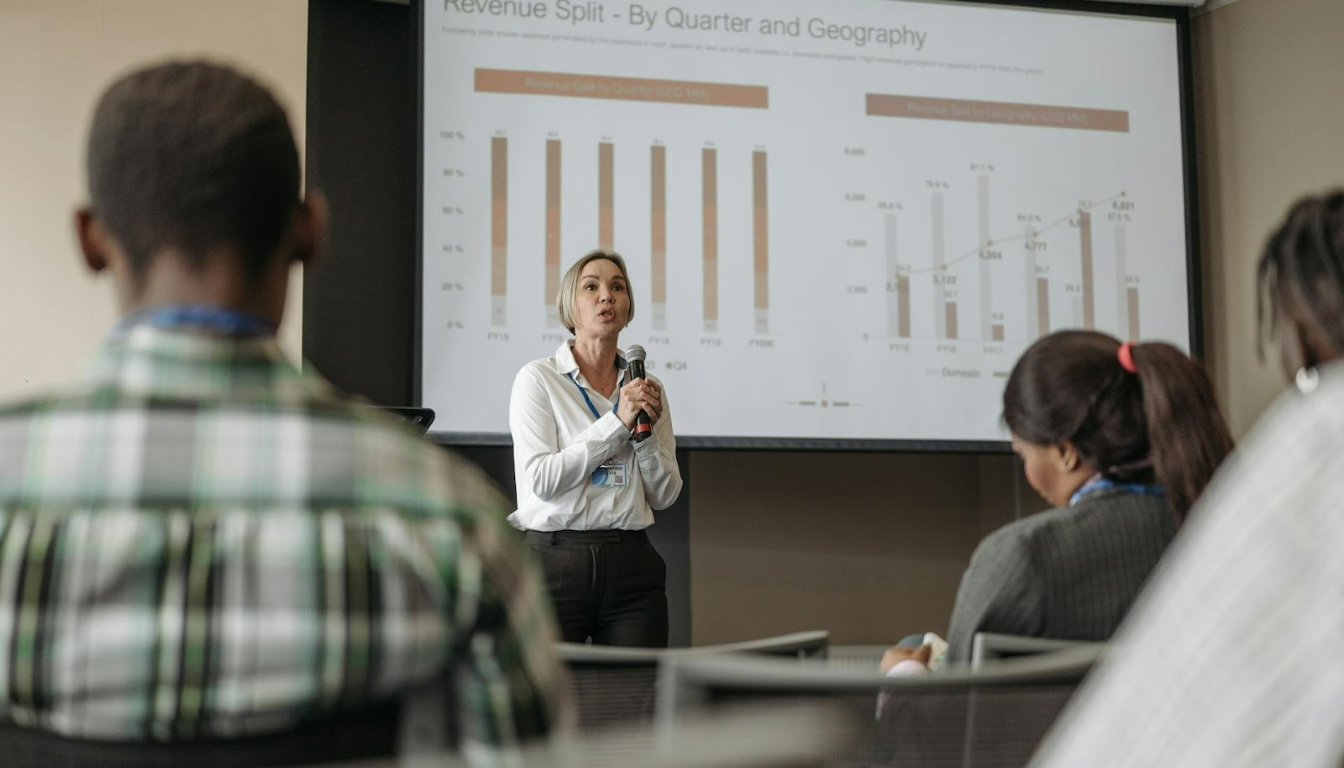
Sales teams are professionally skeptical audiences. They spend their working lives evaluating pitches, reading rooms, and identifying when someone is wasting their time. An SKO agenda that does not immediately demonstrate its relevance and value to their day-to-day selling reality will lose the room — first emotionally, then physically — faster than almost any other corporate event format. Agenda design for a sales kickoff must account for this reality from the first planning conversation.
The Opening 90 Minutes: Where SKOs Are Won or Lost
The first 90 minutes of a sales meeting kick off set the emotional temperature for the entire event. A strong opening establishes why this year matters, what the team has accomplished, and why the themes of the kickoff are directly relevant to every person in the room. It should move quickly, carry genuine energy, and give participants something to feel proud of and excited about before it asks anything of them.
Tactical considerations: the opening sales kickoff presentation should be delivered by the most compelling speaker in the leadership team — not necessarily the most senior one. Customer voices, whether live or via video, are consistently among the highest-impact elements of an SKO opening. Recognition of individual and team performance belongs here, not buried in a mid-day session.
Balancing Inspiration, Information, and Skill-Building
A well-structured SKO agenda allocates time deliberately across three content types. Inspirational content — executive vision, customer success stories, competitive wins, motivational speakers — energizes the room and builds emotional connection to the organization’s direction. Informational content — product updates, market analysis, competitive intelligence, process changes — equips the team with what they need to know. Skill-building content — pitch practice, objection handling, discovery frameworks, negotiation training — develops the capabilities they need to perform.
Most SKOs over-index heavily on informational content and under-invest in skill-building. Research on sales training retention is consistent: sales reps forget the majority of information-only content within a week, while skills practiced in context are retained at significantly higher rates. Build the agenda with this ratio in mind.
The Three Pillars of Every Effective SKO
No matter the size, industry, or stage of the organization, every high-impact sales kickoff is built on the same three-part structure:
- Inspiration — the emotional fuel. Executive vision, customer wins, competitive momentum, recognition. This is what makes the room believe the year ahead is worth fighting for.
- Education — the capability investment. Product training, methodology updates, competitive positioning, skill-building sessions. This is what makes the team able to execute.
- Celebration — the cultural signal. Top performer recognition, team achievements, milestones. This is what makes people feel seen and want to contribute again next year.
The most common SKO failure is over-indexing on education at the expense of inspiration and celebration. A team that leaves informed but not energized is a team that will forget the majority of what they learned within the week.
Breakouts, Peer Learning, and Manager-Led Team Time
Large-room general sessions are the least efficient format for behavioral change and should be used selectively for content that genuinely benefits from shared, simultaneous delivery — executive vision, major announcements, company-wide recognition. The majority of an SKO’s skill-building and application work belongs in smaller formats: role-specific breakouts, peer-to-peer coaching sessions, and manager-led team time where strategic content gets translated into specific selling motions for each team’s context.
Manager-led team time is consistently underutilized in SKO agendas and consistently ranks as one of the highest-value elements in post-event feedback. Building two to three hours of dedicated manager-team time into the program — structured around application rather than additional content — is one of the highest-return investments in SKO design.
The sales kickoff ideas that hold up in practice are almost always the ones designed for small groups rather than the full room.
Running a Virtual or Hybrid Sales Kickoff
For distributed and hybrid sales teams, the SKO faces a structural challenge that in-person events don’t: engagement and energy are harder to generate through a screen, and the informal moments that do so much of the relationship-building work — hallway conversations, shared meals, team dinners — don’t exist in the same form.
A virtual SKO that simply replicates an in-person agenda over video call is almost always a disappointment. The format requires deliberate redesign, not just digital delivery.
Design Principles for Virtual SKO Success
- Shorten session blocks aggressively. Attention spans in virtual settings are meaningfully shorter than in person. Cap individual sessions at 45–60 minutes with breaks between. What you plan as a 90-minute general session should become two 40-minute sessions with a 15-minute break.
- Build interactivity into every session. Live polling, audience Q&A, collaborative whiteboards, and reaction tools are not optional extras — they are what separates a virtual SKO from a webinar. If participants are passive for more than 10 minutes, you are losing them.
- Use breakout rooms for skill-building. Small-group breakouts in Zoom, Teams, or similar platforms replicate the peer-learning dynamic of in-person sessions more effectively than any large-room format. Design breakout exercises that produce a shareable artifact: a pitch, a one-pager, a response to a competitive scenario.
- Address the energy problem directly at the opening. Virtual openings need more work, not less. A high-energy video montage, a live musical act streaming in, or a surprise executive guest appearance can set a tone that carries through an otherwise screen-heavy day.
- Send physical packages in advance. Pre-event kits — branded swag, relevant books, snacks, a handwritten note from the CRO — create a tactile, real-world connection to a digital event. When a rep opens a box the morning of the SKO, it signals investment in a way that a calendar invite cannot.
For Hybrid SKOs: Don’t Split Your Attention Equally
The most common hybrid SKO mistake is trying to serve both in-person and remote attendees equally well simultaneously. It produces an experience that is mediocre for both groups. Instead: design the event primarily for the in-person audience, and invest separately in making the remote experience feel intentional rather than secondary.
Practical tactics: designate a remote experience producer whose only job is to monitor and manage the digital stream; give remote participants their own breakout sessions rather than forcing them into in-person group conversations; schedule specific moments designed for remote participants, such as a virtual networking session timed to a break in the in-person agenda.
Speaker Strategy: Who Belongs on the SKO Stage
Speaker selection is one of the most consequential decisions in SKO planning and one of the most frequently made on the basis of seniority rather than effectiveness. The right criterion is not rank — it is the ability to move a room of sales professionals.
Internal Speakers: Match Energy to Role
The CEO or executive sponsor sets the strategic context and signals organizational commitment. This slot should be high-energy, forward-looking, and relatively brief — 30 to 45 minutes maximum. A CEO who spends 90 minutes reviewing last year’s numbers in detail is misusing both their time and the SKO’s opening energy.
Top performers and sales leaders make the most credible peer voices on winning motions, competitive differentiation, and customer handling. Their presence signals that the organization values field wisdom, not just leadership perspective. Build structured time for peer-to-peer knowledge sharing into the agenda.
External Speakers: Earn the Investment
External speakers — motivational figures, industry experts, customer champions — can be among the most memorable elements of an SKO when selected for genuine fit with the event’s strategic themes. They become expensive distractions when selected for name recognition alone and deliver content with no connection to how the team actually sells.
The test for any external speaker: can their content be directly tied to at least one of the SKO’s strategic themes? If the connection requires a stretch, reconsider.
Venue Selection and Logistics
The venue for an SKO communicates something about the organization’s investment in its sales team before anyone delivers a word of content. A well-chosen venue — one that removes the team from their daily environment, provides the right combination of meeting space and social space, and reflects the scale of the event — contributes meaningfully to the energy and engagement the program produces.
What the SKO Venue Needs to Deliver
- Plenary space that holds the full team comfortably without feeling like a conference hall — intimacy at scale is the goal
- Breakout rooms sufficient for the number and size of small-group sessions in the agenda
- Social and informal spaces where the hallway conversations happen — underestimated in planning, overvalued in post-event feedback
- Accommodation on-site or within walking distance, so the event does not lose an hour at the start and end of each day to logistics
- AV and technology infrastructure capable of supporting the event’s format, including streaming capability for hybrid events
Offsite sources and manages SKO venues for organizations of all sizes, with access to 1,000+ curated properties worldwide. Working with a specialist reduces the time and cost of venue search significantly and ensures the space matches the event’s requirements before a contract is signed.
Post-SKO Follow-Through: Where the Investment Is Won or Lost

Most of the behavioral impact of a sales kickoff is determined not by what happens during the event but by what happens in the 30 to 90 days after it. The SKO creates conditions for change — it does not create change itself. Reinforcement programming is what closes that gap.
Measurement That Actually Predicts Performance
The most meaningful measures of SKO success are leading behavioral indicators tracked in the 30 to 90 days following the event: changes in call and meeting activity, pipeline creation rates, average deal size, win rates against the competitors addressed at the SKO, and adoption of new methodologies or tools introduced during the program.
Participant satisfaction scores are useful as a quality signal but are insufficient as a primary measure of SKO effectiveness — a team can feel good about an event that produces no behavioral change, and can leave a challenging but well-designed SKO with middling satisfaction scores and significantly improved performance. Build both measurement tracks into the planning process.
Manager Reinforcement in the First 30 Days
The most reliable predictor of whether SKO content translates into changed selling behavior is whether frontline managers actively reinforce it in the weeks following the event. Organizations that brief managers on their reinforcement role before the SKO ends — with specific coaching prompts, call review criteria tied to the SKO’s themes, and sales meeting themes that reference the event’s content — see measurably better retention and application than those that treat manager enablement as an afterthought.
Building a Post-SKO Resource Hub
One of the highest-ROI investments you can make in your SKO is ensuring that everything produced during the event — session recordings, pitch frameworks, competitive battlecards, product one-pagers, workshop outputs — is accessible to every participant in a single, organized location within 48 hours of the event closing.
This matters because most SKO content has a half-life measured in days if participants have to search for it. A resource hub removes the friction and keeps the SKO’s intellectual output alive in the working environment.
What the hub should contain:
- Session recordings — indexed and searchable, not just a raw folder of files
- Key frameworks and methodologies introduced at the SKO, formatted for daily use
- Competitive intelligence updates presented at the event
- Manager enablement materials — guides for reinforcing SKO content in team meetings
- 30/60/90-day action items tied to each strategic theme
Assign a single owner for the resource hub. Without ownership, it becomes outdated within two weeks and stops being used. The hub owner is responsible for keeping it current through the first quarter post-SKO.
Work With a Professional SKO Planner
Planning a high-impact sales kickoff is a full-time job in the months before the event. For organizations that run their SKO as an internal project on top of existing roles, the logistics overhead — venue sourcing, vendor coordination, AV management, agenda production, travel and accommodation logistics — almost always consumes more time and produces worse outcomes than working with a specialist.
Offsite manages the full operational footprint of sales kickoff events: venue sourcing and negotiation, agenda design support, vendor coordination, on-site logistics, and post-event debrief. Our planning teams have run SKOs for sales organizations ranging from 25 to 2,500 attendees. We work on a flat per-person rate with full cost transparency, and most venues can be locked in within a week.
Start planning your sales kickoff with Offsite →
Summary
A sales kickoff meeting is an investment in how your team sells for the rest of the year. The return on that investment is determined by the quality of the pre-event preparation, the design of the agenda, the calibration of content across inspiration, education, and celebration, the virtual and hybrid experience for distributed teams, and the reinforcement programming that follows the event.
The organizations that run the best sales meeting kick offs share one design principle: they build the event around behavioral outcomes, not content delivery. Every session, every speaker, every breakout answers the same question: what do we need the team to believe, be able to do, and commit to doing differently? When the answer to that question drives every planning decision, the investment earns itself.
For activities specifically built for a sales audience — not generic team-building — see our guide to sales kickoff ideas that actually land.
FAQs
- What is an SKO sales kickoff?

SKO stands for Sales Kickoff — the annual event where the full sales organization comes together to align on strategy, build skills, recognize performance, and launch the new selling year. A well-run SKO is designed as a behavior change event, not a content delivery event.
- How long should an SKO sales kickoff be?
Most SKOs run two to three full days. One day is typically insufficient to cover strategic alignment, skill-building, and the social and cultural programming that makes an SKO more than a long staff meeting. Larger organizations with more complex agendas occasionally run four-day programs, but three days is the most common format for organizations of 50 to 500 sales team members.
- What are the three pillars of a successful SKO?
Inspiration (executive vision, customer stories, recognition), Education (product training, methodology, competitive intelligence, skill-building), and Celebration (top performer spotlights, team achievements, milestones). Most underperforming SKOs over-invest in education and under-invest in the other two.
- How do you run a virtual or hybrid sales kickoff?
Shorten session blocks, build interactivity into every session (polling, Q&A, collaborative exercises), use breakout rooms for skill-building, and send physical pre-event kits to create a tactile connection to the event. For hybrid SKOs, design the experience primarily for in-person attendees and invest separately in a parallel remote experience — trying to serve both audiences simultaneously produces a mediocre experience for both.
You may also like

Stay Updated with Our Insights
Get exclusive content and valuable updates directly to you.