
Indoor Team Activities for Groups of Any Size: From 10 to 500 People


Here's the planning mistake that derails more corporate retreats than any other: choosing an activity before accounting for your actual headcount. The indoor team activities that generate genuine energy and connection for a 15-person leadership team are completely impractical for 80 people with no breakout infrastructure. Planning for group size isn't a logistics footnote — it's the first decision that determines whether everything else works. Whether you're coordinating a department offsite or a company-wide event, this guide maps the right formats to each headcount range so you can stop retrofitting generic activity lists and start building around your group.
Key Takeaways
- Group size is the most overlooked variable in corporate event planning — it determines format, logistics, and facilitation requirements before anything else.
- Small groups (10–30) thrive with immersive, high-stakes formats where everyone has a direct role: structured debates, design sprints, silent workshops, and role-playing simulations.
- Mid-size groups (31–100) need deliberate structure — parallel programming, rotating cohorts, and an assigned facilitator for every sub-group.
- Large groups (101–300) require production-level thinking: staggered schedules, simultaneous programming tracks, and a dedicated event MC.
- Very large groups (300–500+) benefit most from opt-in experience zones and structured networking mechanics rather than forced whole-group participation.
- The right venue configuration matters as much as the activity itself — confirm room layout, breakout capacity, and AV infrastructure before committing to a format.
Why Group Size Is the First Decision When Planning Indoor Team Activities
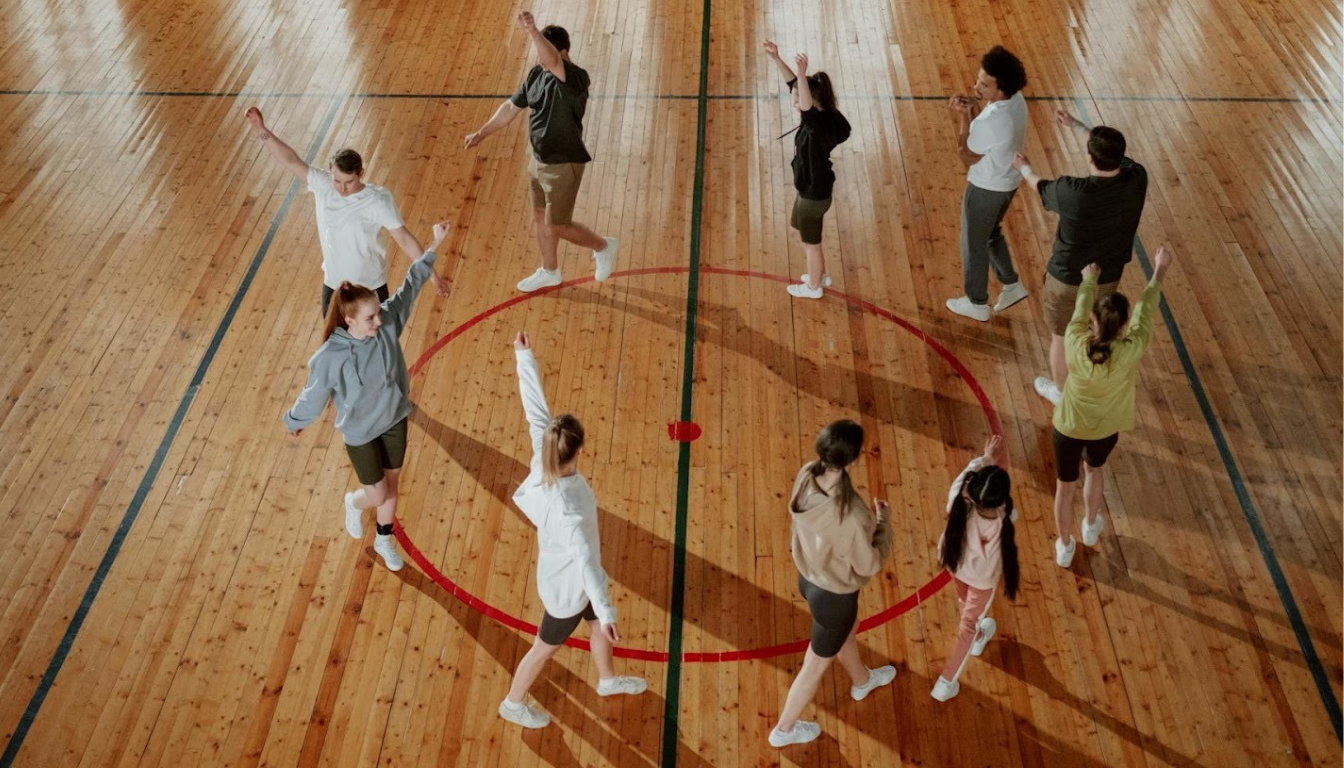
Most activity lists treat group size as a footnote — "works for teams of 10 to 200!" — without acknowledging that the format, pacing, facilitation requirements, and physical space needs are completely different at each end of that range. Choosing corporate team activities indoors without first solving for headcount means you're designing around the wrong constraint.
Three things change fundamentally as group size grows: participation quality (can everyone actively engage, or are they watching?), logistical complexity (how do people move, rotate, and receive information?), and facilitation load (how many skilled people does it take to run this well?). Nail all three and the specific activity format almost doesn't matter. Ignore them and even a well-designed team building concept falls flat.
Indoor Team Activities for Small Groups (10–30 People)
Small groups give you genuine latitude to run high-stakes, high-engagement formats that don't work at scale. With fewer than 30 people, everyone can have a real role and real accountability — which is what makes these formats so effective for leadership team building, cross-functional working groups, and department corporate retreats.
Best Formats for Small Groups
- Structured debate or Oxford-style argument: Divide the group into two teams and assign opposing positions on a real company challenge — a strategic tradeoff, a resource allocation decision, a cultural question. Each side prepares and argues formally. The format forces rigorous thinking, surfaces hidden assumptions, and generates more honest strategic conversation than most offsite workshops. Works best with 10–20 people.
- Silent workshop or silent brainstorm: Participants work through a defined problem simultaneously and independently — writing, sketching, or mapping — before any verbal discussion begins. Research consistently shows this approach produces more diverse ideas than traditional group brainstorming. Debrief verbally once individual work is complete. Ideal for 10–25 people.
- Design sprint (condensed format): A facilitated, time-boxed process where small teams prototype and pressure-test a specific solution in a single day. Works exceptionally well for product, operations, or strategy teams who want outcomes alongside engagement. Typically run with teams of 4–8, making them ideal for groups of 12–24 across 2–3 parallel sprints.
- Role-playing simulations: Participants are assigned roles — client, regulator, competitor, journalist — and navigate a simulated business scenario together. Works especially well for client-facing teams, new managers, or groups preparing for a high-stakes situation. Scenarios can be built around real company challenges for maximum relevance. Best with 10–20 people.
- Fishbowl discussion: A small inner circle (4–6 people) discusses a topic openly while the rest of the group observes silently, then rotates in. The format creates unusually candid conversation by removing the pressure of performing for a large audience. Excellent for culture conversations, retrospectives, or strategic alignment sessions with groups of 12–30.
Planning tip: At this size, over-programming is the enemy. Small groups need breathing room for conversation to go somewhere interesting. Build in unstructured time between facilitated segments — some of the best outcomes from small-group corporate retreats happen in the margins.
Choosing the Right Formats for Mid-Size Groups (31–100 People)
This is the range where most corporate event planners run into trouble. Thirty-plus people is too many for open whole-group participation, but not enough to justify the production infrastructure of a large-scale event. The solution is parallel programming: multiple activities or cohorts running simultaneously, with deliberate rotation and assigned group leads keeping everything on track.
Best Formats for Mid-Size Groups
- Cohort-based case study competition: Divide into teams of 6–10 and give each a real or thinly fictionalized business case relevant to your company or industry. Teams analyze, deliberate, and present recommendations to a panel of senior leaders. The format generates genuine intellectual engagement and encourages cross-functional perspective-taking. Works well for 30–80 people.
- Skill-share marketplace: Each participant or small team prepares a 5–10 minute micro-session on something they know that others don't — a technical skill, a personal expertise, a process they've built. Sessions run simultaneously in a marketplace format, with attendees rotating freely. Ideal for organizations with diverse functional expertise and groups of 30–70 people.
- Speculative fiction or future-casting workshop: Teams are assigned a time horizon (5, 10, or 20 years) and tasked with building a detailed picture of what the company or industry looks like then — including the challenges and decisions that led there. A structured synthesis session follows. Works well for strategy or innovation-focused groups of 30–60 people across 4–6 teams.
- Photo documentary challenge: Teams are briefed to document what collaboration, culture, or leadership looks like inside your organization, using phones or provided cameras. The deliverable is a short curated photo essay presented to the group. The activity builds cross-team connection through movement and conversation while producing something tangible. Works well for 30–100 people.
- Pitch competition with real stakes: Teams pitch a real idea — a process improvement, a product concept, a culture initiative — to a panel with actual follow-through commitment from leadership. Knowing their pitch might actually get resourced changes how people engage. Ideal for companies looking to surface grassroots ideas while building engagement across 40–100 people.
Planning tip: At 50-plus people, never rely on self-organization. Pre-assign teams and group leads, and over-communicate the schedule in advance. Confusion at this scale burns time and energy you can't recover during a company offsite.
Team Activities for Large Groups Indoors (101–300 People)
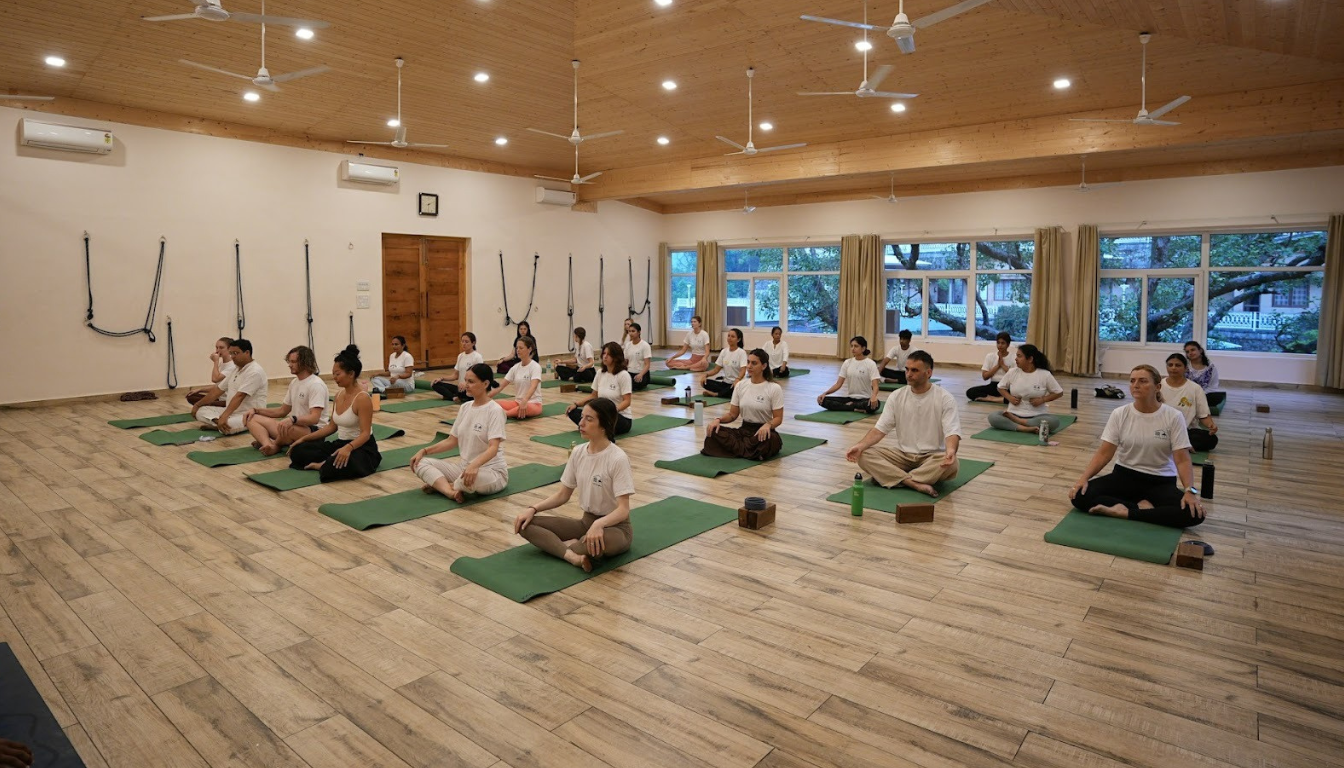
For groups of 150 or more, venue layout is as critical as activity selection. You need flexible room configuration, multiple breakout spaces, strong AV, and clear circulation flow. When evaluating venues, filter by group capacity and room configuration upfront — it saves significant time compared to browsing broadly and discovering a space doesn't support your format after you've committed.
Best Formats for Large Groups
- World Café format: Participants rotate through a series of facilitated table conversations on different strategic or cultural topics, contributing to and building on each other's ideas across multiple rounds. A skilled host synthesizes themes in a closing plenary. Specifically designed for groups of 50–200+ and generates broad engagement while creating a sense of collective intelligence emerging from the room.
- Peer learning panels: Instead of external speakers, seat cohorts of 10–12 with a rotating panel of internal experts who share specific experiences — a product launch, a team turnaround, a leadership moment — and facilitate discussion. Run multiple panels simultaneously for large groups. Highly scalable and builds cross-departmental relationships that outlast the event.
- Silent disco or headphone concert experience: Each participant wears wireless headphones and can toggle between 2–3 live or curated audio channels — a DJ set, a guided meditation, a comedy set. Everyone is physically together but having a semi-individualized experience, creating a uniquely energetic group atmosphere. Works well as an evening social format for 100–500 people.
- Collective mural or large-format art installation: A professional artist facilitates a group mural or installation where every participant contributes a section. The finished piece becomes a permanent artifact of the corporate event. This works best when the theme connects to company values or a strategic moment. Ideal for 100–300 people with proper space and materials planning.
- Rotating roundtable speed networking: Participants are seated at tables of 6–8 with a structured prompt and a timer. Every 8–10 minutes, one person at each table rotates to the next. The format ensures every attendee has multiple genuine small-group conversations without the awkwardness of unstructured networking. Scales well from 80–300 people.
Planning tip: For groups of 150 or more, venue layout is as critical as activity selection. You need flexible room configuration, multiple breakout spaces, strong AV, and clear circulation flow. Platforms like Offsite let you filter venues by group capacity and room configuration, so you're not reverse-engineering your format around a space that doesn't support it.
Indoor Group Activities for Groups of 300–500+ People
At 300-plus people, staffing is your single largest variable after the venue. Budget for one event staff member or facilitator per 25–30 participants for any activity requiring guided participation. Understaffing a large-group corporate event is the most common — and most avoidable — failure mode.
Best Formats for Very Large Groups
- Conference-style breakout programming: Offer 3–5 concurrent session tracks — skill-building workshops, panel discussions, hands-on labs — and let attendees self-select based on interest. A shared opening keynote and closing session bookend the self-directed middle. This format respects individual autonomy while creating collective moments, and scales to virtually any headcount with the right venue.
- Interactive data or story wall: Create a physical installation — a large company timeline, a 'state of the company' data visualization, a story collection wall — that participants actively contribute to throughout the event. Sticky notes, marker walls, and response cards let hundreds of people each leave a mark without requiring simultaneous participation.
- Mentor speed rounds: Senior leaders or subject-matter experts cycle through short 8–10 minute conversations with attendees who sign up in advance. For large organizations where junior employees rarely access senior leadership directly, these sessions are often the highest-value interaction of the entire corporate event.
- Professionally facilitated small-group dinners: Instead of a standard banquet, deliberately assign seating to mix functions, levels, and geographies — and provide each table with a conversation guide or hosted facilitator. A well-structured dinner creates more genuine connection than almost any programmed activity because it meets people where they are: seated, relaxed, and already talking.
- Opt-in wellness or creative studio sessions: Run drop-in sessions throughout the day — a sound bath room, a sketching station, a guided breathwork session, a journaling prompt corner — that offer participants ways to decompress between more structured programming. Particularly effective at multi-day company offsites where energy management matters as much as engagement.
Planning tip: At 300-plus people, staffing is your single largest variable after the venue. Budget for one event staff member or facilitator per 25–30 participants for any activity requiring guided participation. Understaffing a large-group corporate event is the most common — and most avoidable — failure mode.
How Do You Choose the Right Indoor Team Activity for Your Group?
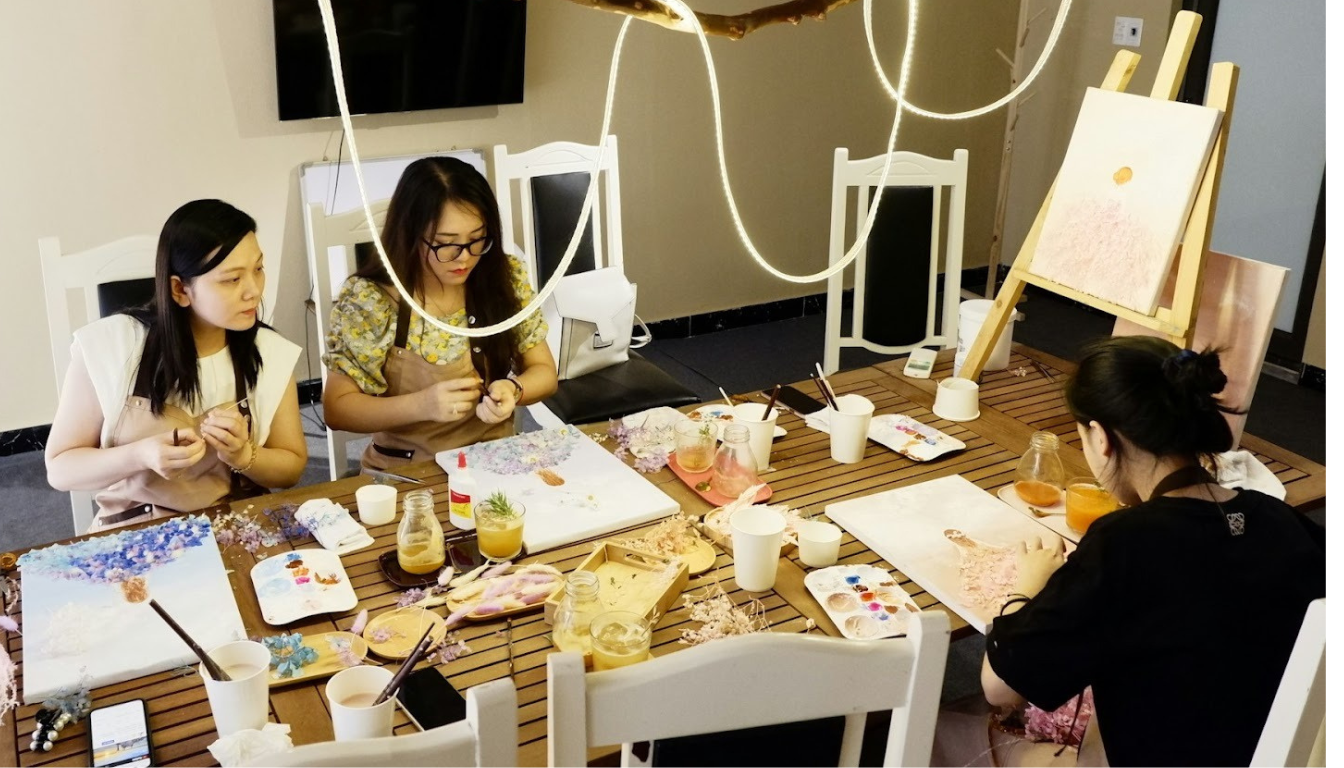
Once you've filtered by headcount, work through these questions before finalizing your format.
- What is the primary outcome? Connection and trust-building require different formats than strategic alignment, skill development, or recognition.
- How well do participants know each other? New teams need lower-stakes, high-interaction formats. Established teams can handle formats involving more vulnerability, competition, or candid feedback.
- What energy arc do you need? High-energy competitive formats work well mid-morning or as an afternoon reset. Reflective or collaborative formats suit post-lunch or day-closing slots.
- What does your facilitation capacity actually support? Be honest about whether you have a professional facilitator, a skilled internal host, or neither — and choose accordingly.
- What does the venue actually allow? Ceiling height, room configuration, AV capability, and breakout availability are not minor details. Confirm them before finalizing any format.
Summary
The best indoor team activities are the ones matched precisely to your group size, facilitation capacity, and desired outcome. Small groups under 30 have the latitude for immersive, high-stakes formats where everyone plays a real role. Mid-size groups of 30–100 need parallel programming and deliberate structure to keep engagement from diffusing. Large groups over 100 require production-level planning with shared anchor moments paired with smaller human-scale experiences. At 300-plus, the goal shifts from engineering participation to designing an environment where meaningful team building can happen organically.
Choosing the right venue is the first practical decision that makes any of these formats actually work. The space has to support the activity — in room configuration, breakout capacity, and AV infrastructure. Use venue search platforms that let you filter by corporate group size and room flexibility, so you're matching space to format rather than the other way around.
FAQs
- What indoor team activities work best for groups of 100 or more people?

For groups of 100 or more, the most effective formats use a layered structure: a shared plenary experience that creates collective energy, paired with smaller breakout formats where real connection happens. World Café discussions, rotating roundtable networking, and peer learning panels are all well-suited to this scale. The key requirement is a venue with room flexibility to support simultaneous programming tracks.
- What are good indoor group activities for large groups of 50 people?
At 50 people, parallel programming with rotation is your most reliable structure. For team activities for 100 people and under, divide participants into cohorts of 8–12, run 3–4 activities simultaneously, and rotate groups through on a set schedule. Pre-assign cohorts and designate a group lead for each one. The parallel format keeps everyone actively engaged rather than watching others — the most common failure mode for mid-size group events.
- What corporate team activities indoors work for mixed seniority groups?
Corporate team activities indoors that create genuine peer-to-peer exchange across levels tend to work best — structured roundtables, fishbowl discussions, skill-share marketplaces, or peer learning panels where seniority doesn't automatically equal authority. Intentionally mixed team assignments are essential: if you let seniority self-sort, you reinforce existing hierarchies rather than breaking them down.
- How far in advance should I book a venue for indoor corporate team activities?
For groups under 50, four to six weeks is typically adequate. For groups of 50–150, plan for six to ten weeks. For team activities for 100 people or more — particularly Q4 dates when corporate event demand peaks — three to six months ahead is strongly recommended. Searching by headcount and room configuration upfront narrows the field significantly faster than browsing broadly.
You may also like

Stay Updated with Our Insights
Get exclusive content and valuable updates directly to you.