
18 Ice Breakers for Corporate Retreats and Large Group Offsites (2026)


The first 30 minutes of a corporate retreat set the tone for everything that follows. The right icebreaker doesn’t just warm people up — it signals what kind of experience this retreat is going to be. A well-chosen activity says: this is a space where people connect, collaborate, and do their best work together.
Yet most retreat planners treat icebreakers as an afterthought — a quick “go around the room and share a fun fact” before the real agenda begins. That’s a missed opportunity. For HR leaders and People Ops teams running company offsites, the opening activity is one of the highest-leverage moments of the entire retreat. Done well, it lowers social barriers, energizes the room, and sets the collaboration tone for everything that follows. This guide gives you 19 icebreakers purpose-built for corporate retreats and large group offsites, with guidance on how to choose the right one for your group.
Key Takeaways
- The opening activity of a retreat sets the tone — treat it as a strategic choice, not a formality.
- Match the icebreaker to your retreat goal: bonding, alignment, creative thinking, or cross-functional mixing.
- Group size, hybrid/virtual attendance, and physical accessibility all determine which formats work.
- The “Best for” tag on each activity below helps facilitators make the right call quickly.
- Icebreakers work best when they connect to the broader retreat agenda, not just fill time before it starts.
What Are Group Icebreakers?
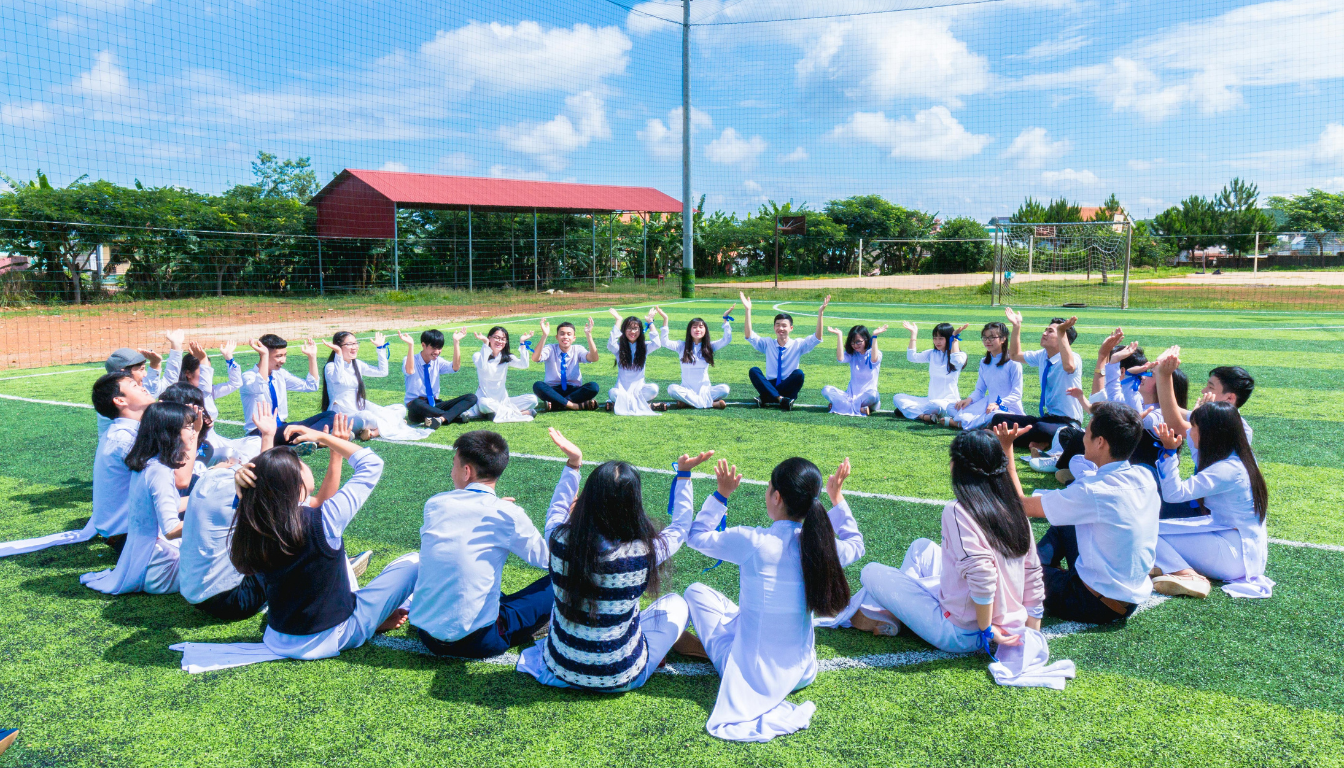
Group icebreakers are structured activities designed to help participants feel comfortable, connected, and ready to engage. In a corporate retreat context, they serve a more specific purpose: breaking down the professional distance between colleagues who may interact mostly over Slack and video calls, and creating the psychological safety that productive offsite work requires.
The best icebreakers for retreats aren’t just fun — they’re calibrated to the size of the group, the goal of the retreat, and the mix of in-person and remote participants. The sections below give you options across all three variables.
Benefits of Icebreakers for Your Session
- Reduces social anxiety and gets people out of “work mode” before collaborative sessions
- Accelerates trust-building between team members who don’t interact day-to-day
- Establishes the psychological safety needed for honest strategic conversations
- Signals the retreat’s tone: collaborative, energetic, and human
- Gives facilitators a read on group energy before the agenda kicks off
How to Choose an Icebreaker for Your Retreat
Not all icebreakers are created equal — and the wrong one for your context wastes the most important 30 minutes of your retreat. Here’s how to narrow it down:
Group size
For groups of 30+, choose scalable formats like Human Bingo or Speed Networking. For intimate leadership offsites (8–15 people), deeper activities like Rose/Bud/Thorn create more meaningful exchanges. Avoid complex logistics for groups over 50 — keep the format simple and mobile.
Retreat goal
If your retreat is focused on strategic alignment, open with something that surfaces team thinking. If the goal is bonding after a period of remote work, start with something social and low-stakes. Match the opening activity to the energy you need to create.
Hybrid attendance mix
If even a handful of attendees are joining remotely, choose a format that’s fully inclusive — virtual scavenger hunts, GIF battles, or live polling. Physical activities that require people to move around the room exclude remote participants. For hybrid retreats, default to formats that work equally well on both sides.
Engaging Large Group Icebreakers
1. Baby Photos Are
Ask everyone to submit a childhood photo before the retreat. Display them during the opening session and have the group guess who’s who. Creates immediate laughter and personal connection across seniority levels.
✦ Best for: Retreat kick-off sessions and annual company offsites
2. Icebreaker Bingo
Each participant receives a bingo card with traits or experiences in each square (e.g., “lived in 3+ countries,” “plays a musical instrument”). They circulate and find colleagues who match each square. First to complete a row wins.
✦ Best for: Large group retreats (30+ attendees) at the start of Day 1
3. Blind Car
Participants pair up. One person is blindfolded and must navigate an obstacle course guided only by their partner’s verbal instructions. A hands-on metaphor for trust and communication — and a natural setup for team cohesion content.
✦ Best for: Team-building offsites and cross-functional retreats
Fun and Interactive Games for Large Groups
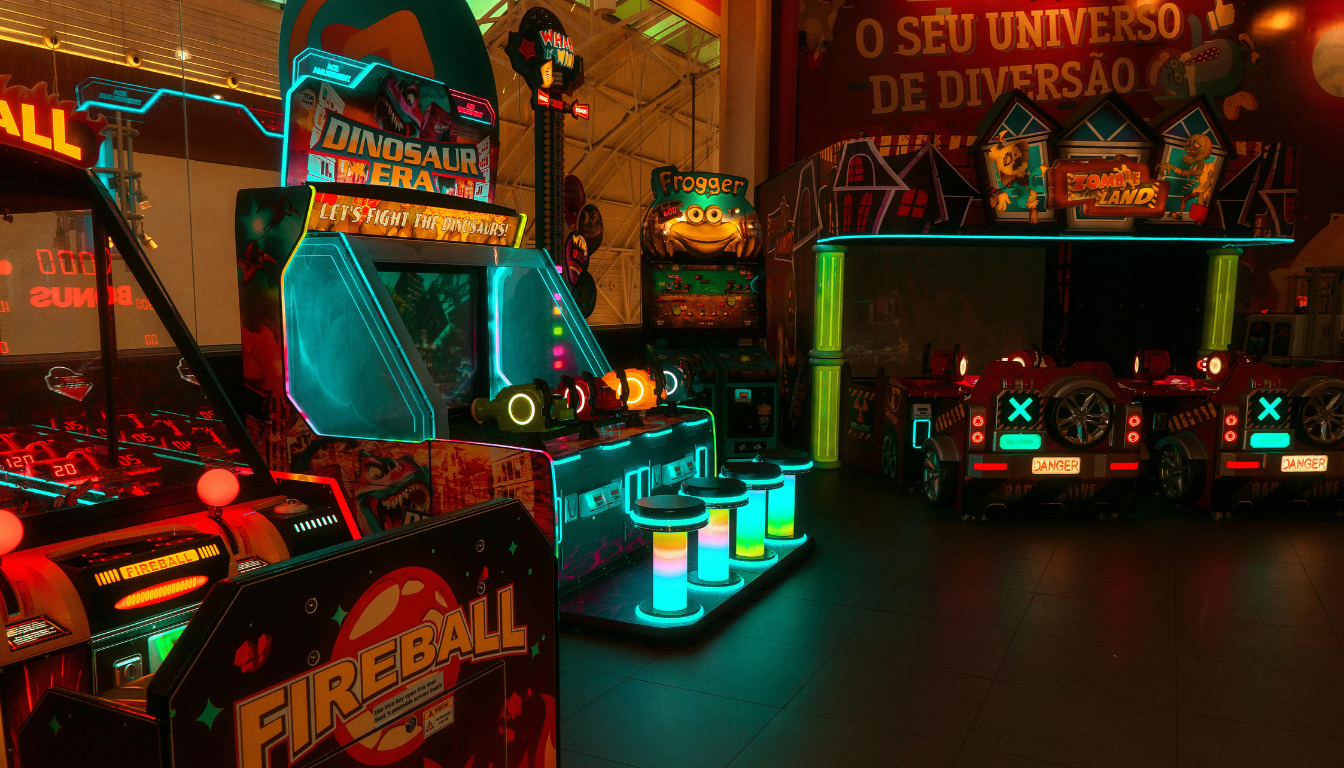
4. Team Trivia Quiz
Run a Kahoot or Jeopardy-style quiz covering company history, industry knowledge, or fun general trivia. Competitive, scalable, and works for in-person and hybrid groups when displayed on a shared screen.
✦ Best for: All-hands retreats and large group offsites with hybrid attendance
5. The Networking Buzz
Structured like speed networking, participants rotate through timed one-on-one conversations (2–3 minutes each) with a prompt card to guide the exchange. Efficient for large groups where organic mingling is slow.
✦ Best for: Cross-functional offsites and all-hands retreats
6. Homemade Robot
Teams are given a bag of random craft supplies and must build a “robot” that represents their team in 15 minutes. Groups present their creation and explain each feature. Fast, creative, and reliably generates energy.
✦ Best for: Retreat kick-off sessions and team innovation workshops
Creative Icebreakers to Foster Team Building
7. Community Mural
Provide a large shared canvas or whiteboard section for each table. Teams contribute a section of a mural based on a prompt tied to the retreat theme. The finished piece becomes a tangible artifact of the session.
✦ Best for: Culture-building offsites and annual company retreats
8. Zing Zag
A rapid call-and-response word game where participants pass an invisible “ball” around the room using eye contact, vocal cues, and gestures. Energizes a group instantly and builds focus. Common in improv training.
✦ Best for: Retreat kick-off sessions where energy needs a fast boost
9. Lost Rock Goal
Each person writes their biggest professional challenge or goal on a rock (or card) and places it in a shared pile. The facilitator shuffles and redistributes anonymously. Pairs discuss the challenge on the card they received — then reconnect with the original owner.
✦ Best for: Leadership retreats and strategy alignment offsites
Quick Icebreakers for Large Groups
10. Speed Networking
Three-minute timed conversations with rotating partners and a conversation prompt card. Efficient, low-pressure, and ensures every attendee meets at least 8–10 colleagues during the session.
✦ Best for: Large group offsites and cross-functional company retreats
11. Virtual Icebreaker Quiz
A quick 10-question multiple choice quiz about the company, team, or retreat location, run via live polling tools. Results are shown in real time and spark instant discussion.
✦ Best for: Hybrid retreats and all-hands events with distributed attendees
12. Mini Chef
In small groups, teams must create a “dish” using only the snacks available in the room. Presentations are judged on creativity, flavor, and story. Works well as a pre-dinner warm-up activity.
✦ Best for: Evening sessions and multi-day retreat kick-offs

Humorous Icebreakers to Boost Morale
13. Rapid Fire
The facilitator fires off quick questions (“coffee or tea?” “Email or Slack?” “Remote or office?”) and participants respond by standing, raising hands, or moving to opposite sides of the room. Fast, revealing, and reliably funny.
✦ Best for: Retreat kick-off sessions and post-lunch energy resets
14. Number Play Game
Participants count off as a group, but anyone who lands on a multiple of 3 or 7 must say “Buzz” instead of the number. Anyone who hesitates or says the number is out. Simple but surprisingly engaging for adults.
✦ Best for: Small-to-mid-size groups (10–40); ideal for leadership retreats
15. Escape the Council
A mini escape-room challenge run in small groups using printed clue sheets. Teams must solve puzzles to “escape” in under 15 minutes. Scales via multiple simultaneous groups.
✦ Best for: Team-building offsites and cross-functional retreats
16. Virtual Challenges
Participants compete in silly online challenges — drawing contests, meme creation, GIF battles — run via a shared digital platform. Fully inclusive for hybrid retreats.
✦ Best for: Hybrid retreats with remote participants
17. The Canada Silence
The facilitator asks participants to sit in total silence for 60 seconds, then describe what they noticed or thought about. Counterintuitive but effective — resets the group’s energy and creates a contemplative opening for strategy-focused sessions.
✦ Best for: Leadership retreats and executive strategy offsites
Virtual Icebreakers for Remote Teams
18. Virtual Scavenger Hunt
Participants race to find items around their home or office that match prompts (e.g., “something that represents your biggest win this year”). Runs via chat or video. Keeps remote attendees fully engaged during mixed retreats.
✦ Best for: Hybrid retreats and remote-first teams meeting virtually for an offsite
19. Your Team as a (Virtual Edition)
Each participant shares a GIF, image, or emoji that represents their current mood, work style, or week. Run in a shared Slack channel or on a presentation slide. Zero physical requirements — naturally inclusive for distributed teams.
✦ Best for: Remote-first teams and hybrid retreats with majority virtual attendance
Icebreaker Questions to Get Large Groups Talking
Not every icebreaker needs props or setup. For big rooms, a few well-chosen questions — asked to the whole group or in small breakouts — get people talking fast. Here are ten that work well for corporate retreats and large offsites:
- What’s one small thing that instantly makes your day better?
- If our team had a theme song, what would it be?
- What’s a skill or hobby most people here don’t know you have?
- What’s the best piece of advice you’ve ever received?
- If you could instantly master any skill, what would it be?
- What’s your go-to comfort food after a long week?
- What’s a place you’ve always wanted to travel to, and why?
- What’s the most memorable event you’ve ever attended?
- If you could swap jobs with anyone for a day, who would it be?
- What’s one thing you’re proud of from this past year?
Summary
The best icebreakers for corporate retreats aren’t just warm-up exercises — they’re the opening move in a carefully designed experience. Choosing the right one for your group size, retreat goal, and attendance mix signals to your team that this retreat was thoughtfully planned.
Use the “Best for” tags above to narrow your options, then match the activity to the energy your retreat agenda needs to create. The icebreaker doesn’t just break the ice — it sets the temperature for everything that follows.
Planning the full retreat? Start with our Corporate Retreat Planning Guide or browse Staff Retreat Activities for what comes after the icebreaker.
FAQs
- What are the best large group icebreaker activities for teams of 100 people or more?

For 100+ people, the most reliable formats are polling-based activities (Live Word Cloud, Would You Rather, How Far Did) and structured sub-group activities (Team News Quiz, Icebreaker Bingo). These work because they don't require individual confidence or physical movement across a large room.
- How do I run icebreakers for a virtual or hybrid large group meeting?
Use tools designed for simultaneous participation — Mentimeter, Slido, Kahoot, or your video platform's built-in polling. The key is equal participation: remote attendees should have the same experience as in-person, not a modified version. Live Word Cloud, Two Truths and a Lie (Virtual Edition), and Virtual Scavenger Hunt are the strongest hybrid-native options.
- What types of icebreaker games work best for corporate team building?
Icebreakers that create shared reference points — moments the group remembers and references later — are the most valuable for corporate settings. Baby Photos, Trading Cards, and Two Truths and a Lie (curated) consistently generate the strongest post-session recall. Avoid formats that require physical ability, public performance, or personal disclosure beyond what participants are comfortable with.
- What are some quick icebreakers for meetings with tight agendas?
For meetings with limited time, opt for ‘Speed Networking’, ‘Would You Rather?’, or ‘Have You Ever?’ — all of which can run in under ten minutes and still generate meaningful energy and connection. Live Word Cloud is also an excellent ultra-quick option, requiring only a single question and two to three minutes of interaction.
You may also like

Stay Updated with Our Insights
Get exclusive content and valuable updates directly to you.