
Innovation Lab Off-Site: Run a Breakthrough Session


An innovation lab off-site is a structured, immersive working session held outside your organization’s primary workplace, purpose-built around solving a specific challenge through creative, experimental thinking. Unlike a general team retreat or annual strategy session, it operates like a real lab: participants hypothesize, prototype, test, and iterate within a compressed, high-energy timeframe.
The “lab” framing is intentional. It signals a different mode of working — defined by curiosity over certainty, experimentation over execution, and generative thinking over critical evaluation. This is not a meeting. It is not a performance review. It is a dedicated environment for the kind of thinking that normal working conditions actively suppress.
Common use cases include: launching a new product or service line, solving a persistent internal challenge that resists conventional problem-solving, building cross-functional alignment around a major strategic initiative, rapid UX or customer experience ideation, and quarterly planning cycles that benefit from genuine creative input rather than top-down goal-setting.
Looking for a build-focused format instead of open-ended ideation? See our guide to running a company hackathon at your offsite for a 48-hour, deliverable-driven alternative.
Key Takeaways
- A structured off-site session removes daily distractions and signals that creative thinking is a strategic priority — not an afterthought.
- Location is a facilitation tool: the right venue stimulates curiosity and breaks familiar thinking patterns.
- Pre-work, a precise challenge statement, and skilled facilitation are the foundation of any high-output session.
- The Double Diamond framework (Discover, Define, Develop, Deliver) provides a proven structure for off-site innovation work.
- Post-session follow-through matters as much as the day itself — design your momentum plan before you leave.
Why Your Team's Best Creative Work Happens Off-Site

Running an innovation lab off-site is one of the highest-leverage investments a team can make in creative problem-solving, cross-functional alignment, and strategic momentum. The moment you step outside the office — away from back-to-back meetings, Slack notifications, and the gravitational pull of "how we’ve always done it" — something fundamental shifts. Teams think bigger, challenge assumptions more freely, and build the kind of interpersonal trust that makes genuine creative risk-taking possible.
The science backs this up. Research from the Journal of Environmental Psychology confirms that novel environments stimulate divergent thinking by activating the brain’s default mode network — the neural system most associated with imagination and creative synthesis. Familiar environments, by contrast, trigger habitual thinking patterns that make it harder to see old problems from genuinely new angles. Your regular conference room is working against you.
Beyond neuroscience, there's a powerful organizational signal embedded in the decision to take your team off-site for a dedicated session like this. You’re telling every participant that this challenge deserves different space, different energy, and different rules. That signal changes how people show up: more prepared, more curious, and more willing to voice the unconventional idea they’d normally keep to themselves.
But not all off-site innovation sessions deliver on that promise. Without the right structure, the wrong venue, or an underprepared facilitator, even the most motivated teams can spend two days producing a wall of sticky notes and no clear path forward. This guide gives you the framework to design a session that consistently generates testable, actionable outputs — and sustains momentum long after you’ve returned to your desks.
How to Structure Your Off-Site for Maximum Creative Output
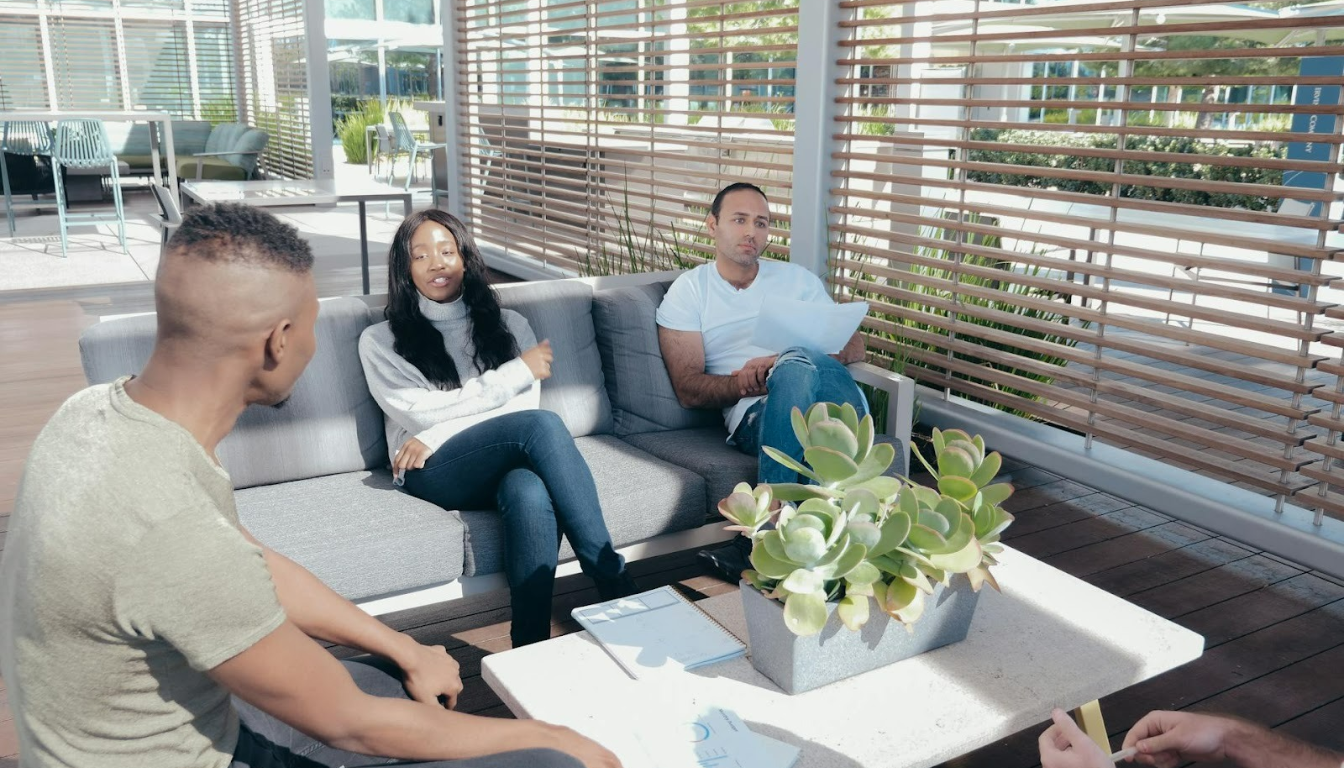
Structure is the backbone of a successful off-site session. The most effective sessions are built on the Double Diamond — a design thinking framework developed by the UK Design Council that maps creative work into four phases:
- Discover: Explore the problem space broadly. Surface user insights, challenge assumptions, and map the stakeholder experience to identify hidden opportunities.
- Define: Synthesize what you’ve learned into a focused, validated challenge statement and a clear set of design criteria for good solutions.
- Develop: Generate a wide range of possible solutions without filtering. Use structured ideation methods to maximize both the volume and diversity of ideas.
- Deliver: Select the most promising concepts, develop rapid prototypes or proposals, and define committed next steps with clear ownership.
A Proven 2-Day Agenda Framework
For most teams, 1.5 to 2 full days is the optimal format — long enough for meaningful divergence and convergence, short enough to sustain energy throughout. Here’s how the days typically map to the Double Diamond:
- Day 1 Morning — Challenge framing, pre-work insight sharing, and stakeholder journey mapping (Discover)
- Day 1 Afternoon — Affinity mapping, “How Might We” reframing, and opportunity prioritization (Define)
- Day 2 Morning — Ideation sprint using Crazy 8s, idea gallery, and dot voting on top concepts (Develop)
- Day 2 Afternoon — Concept development, rapid prototyping, structured feedback rounds, and action commitments (Deliver)
Before the session: distribute a challenge brief, assign pre-work (a short research task, one customer or stakeholder conversation, and one surprising insight to share), and define what a successful outcome looks like. Teams that arrive with substantive preparation consistently produce better outputs in less time.
Choosing the Right Venue
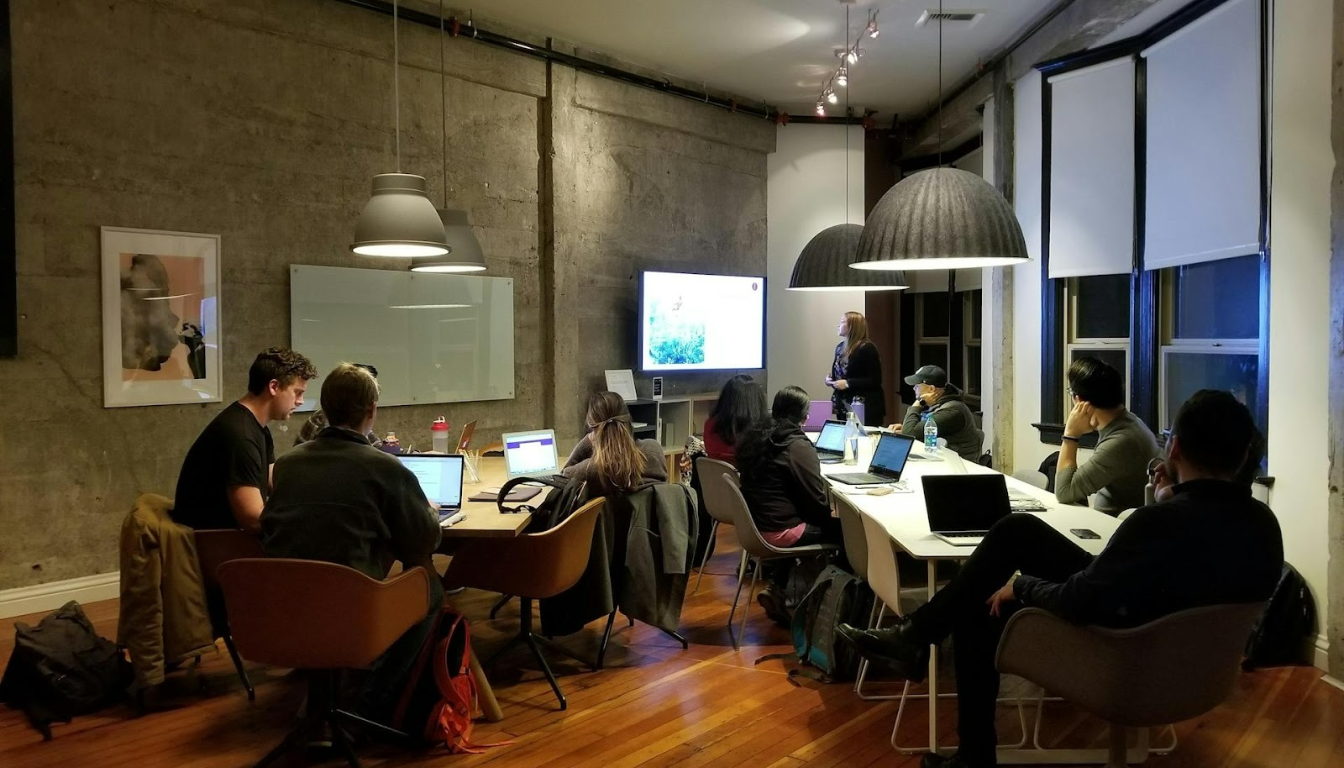
Venue selection is one of the most underestimated decisions in off-site session planning. The physical environment is a facilitation tool — and the wrong space actively suppresses the creative energy you’re trying to create. Three qualities define the best venues:
Non-corporate aesthetic. Avoid hotel conference rooms that feel indistinguishable from your own office. The visual and sensory environment should be different enough to register as genuinely novel to your team’s brains. Art studios, converted industrial spaces, boutique retreat centers, and university innovation hubs consistently outperform traditional conference venues because they break participants out of habitual mental modes from the moment they walk in.
Flexible spatial configuration. These sessions require different room setups at different points in the day: open plenary space for full-group work, small breakout clusters for team ideation, significant wall space for posting and organizing sticky notes, and quiet zones for individual reflection. If a venue insists on a fixed boardroom or classroom setup, keep looking.
Right distance from headquarters. Far enough that participants can’t easily slip away to handle daily urgencies, but close enough that travel doesn’t eat into session time. A 30–90 minute journey from your main office is typically the sweet spot. For multi-day immersive sessions, residential retreat settings — where participants sleep on-site — dramatically increase both focus and interpersonal connection.
Facilitation: The Highest-Leverage Variable
Facilitation quality is the single biggest factor separating a transformative off-site from an expensive talking session. A skilled facilitator does far more than manage an agenda and keep time. Here’s what the best ones consistently do differently:
- Protect divergent thinking. Resist the urge to evaluate ideas until the generation phase has fully run its course. Premature convergence is the most common creativity killer in off-site sessions.
- Use silence as a tool. Structured individual reflection before group discussion surfaces more diverse ideas and ensures quieter participants contribute on equal footing with the loudest voices in the room.
- Make hierarchy invisible. Anonymous voting, mixed-level small groups, and explicit ground rules (“titles stay at the door”) create the psychological safety that enables genuine creative risk-taking.
- Read energy and adapt. No agenda survives a real group completely intact. The best facilitators notice when a discussion is running hot and needs to close, when energy is flagging and needs a physical break, and when a breakthrough moment is emerging and deserves more time than the schedule allows.
- Capture everything. Assign a dedicated scribe and photograph all wall work before the room is cleared. A brilliant session with poor documentation is a wasted session.
If your organization doesn’t have experienced innovation facilitation capacity internally, engaging an external facilitator is typically the highest-ROI investment you can make in the session’s success.
The Most Common Off-Site Session Mistakes
Even experienced teams make avoidable mistakes. Watch out for these:
- Skipping pre-work. Teams that arrive unprepared spend the first half of the session just getting oriented. Pre-work is not optional — it’s the foundation that makes the session productive.
- A vague challenge statement. “How do we innovate?” is not a challenge. A strong “How Might We” statement is specific, user-centered, and open-ended without being directionless.
- Inviting only senior leaders. Homogeneous groups self-censor. Include frontline voices, newer hires, and at least one or two external perspectives — customers, partners, or domain experts from adjacent industries.
- No post-session follow-through. The session summary sent a week late, the check-in that never gets scheduled, the concept that dies in a pending folder — these are the most common killers of off-site momentum.
How to Sustain Momentum After the Session

The real measure of a well-run off-site isn't the quality of ideas generated on the day — it's the percentage of those ideas that become real initiatives, validated concepts, or launched products in the months that follow. The transition from session energy to sustained action is where most organizations lose their investment.
- Within 48 hours: distribute a session summary covering key insights, top concepts, decisions made, and action owners with deadlines. This is your highest-leverage post-session window.
- Within 2 weeks: identify one “quick win” concept and run the simplest possible test of its core assumption — a landing page, a customer interview, a paper prototype.
- At 30 days: hold a check-in to share findings, assess progress on commitments, and request resources to advance the most promising concepts.
- Ongoing: consider a quarterly off-site cadence. Organizations that treat the off-site as a recurring practice — not a one-time event — build creative muscle, cross-functional trust, and a growing portfolio of tested concepts over time.
Summary
An innovation lab off-site is one of the most powerful tools available to any team serious about creative problem-solving and strategic momentum. Done well, it delivers far more than a list of ideas: it produces tested concepts, renewed cross-functional alignment, stronger interpersonal trust, and a team that’s genuinely energized to build something new.
The keys are consistent: start with a precisely framed challenge, curate a diverse participant group, invest seriously in pre-work, choose a venue that inspires rather than suppresses, facilitate with skill and adaptability, and follow through with urgency. The organizations winning on innovation aren’t the ones with the largest budgets — they’re the ones who’ve made a disciplined practice of stepping away from the noise to think differently about what’s possible. Your next off-site session can be the start of that practice.
FAQs
- How long should an innovation lab off-site be?

For most teams, 1.5 to 2 full days is the sweet spot — long enough for genuine divergence and convergence, short enough to sustain energy and minimize time-away impact. A single full day works for focused, well-scoped challenges with well-prepared participants. Multi-day immersive formats (3–4 days) are best reserved for complex organizational challenges where deep trust-building is also a priority.
- Who should attend an off-site session?
Aim for 8–20 participants representing genuine diversity in function, tenure, and thinking style. Avoid groups made up exclusively of senior leaders or a single department — the most powerful innovation emerges from unexpected combinations. Include at least one or two external perspectives: customers, partners, or domain experts from adjacent industries who haven’t yet accepted your internal constraints as inevitable.
- What makes this type of off-site different from a regular strategy session?
A strategy session typically works within known parameters to review performance and set goals. An innovation lab off-site deliberately works with ambiguity and open-ended challenges, using experimental methods — prototyping, structured ideation, design thinking — to generate testable concepts. The output is not a plan. It’s a set of validated ideas ready for the next stage of development.
- Can remote or hybrid teams run this type of off-site?
Yes, with deliberate design adaptations. Fully remote innovation labs work best as shorter, multi-session formats using visual collaboration tools like Miro or MURAL. Hybrid formats require extra intentionality to ensure remote participants engage equally. That said, in-person off-sites consistently produce stronger creative energy and interpersonal trust. For your highest-stakes challenges, prioritize getting the team together physically.
You may also like



Stay Updated with Our Insights
Get exclusive content and valuable updates directly to you.