
Luxury Retreats for Corporate Groups: What 'Premium' Actually Means and When to Invest


There's a version of the "luxury corporate retreat" that most people picture when they hear the phrase: a five-star resort, a private chef, rooms that cost more per night than some employees earn in a week. And for many HR executives and offsite planners, that image comes with an immediate reaction: either a wince at the optics or a quiet conviction that the budget simply won't stretch there.
Both reactions are understandable. But they're responding to a caricature, not the real thing. Luxury retreats for corporate groups aren't about excess for its own sake. Done well, they're about removing friction, elevating presence, and creating conditions under which a team can do its best thinking together. The question isn't whether luxury is worth it. It's what "premium" actually delivers, and whether this particular investment makes sense for your particular team at this particular moment.
This guide breaks down what genuinely distinguishes a luxury corporate retreat from a standard offsite, when the investment is strategically justified, and how to avoid paying premium prices for a mediocre experience dressed up in high-thread-count sheets.
Key Takeaways
- Luxury retreats for corporate groups are defined by quality of experience and removal of friction, not price tag alone.
- The strongest case for a premium offsite is tied to high-stakes outcomes: leadership alignment, retention of top performers, or a pivotal cultural moment.
- Premium venues offer more than aesthetics. Dedicated event staff, seamless logistics, and elevated catering meaningfully change how a team shows up.
- Not every element of a retreat needs to be premium; strategic investment in the right moments matters more than uniform spend.
- Optics matter, but internally, the experience of the team matters more. The best luxury retreats feel generous, not ostentatious.
What "Luxury" Actually Means in a Corporate Retreat Context
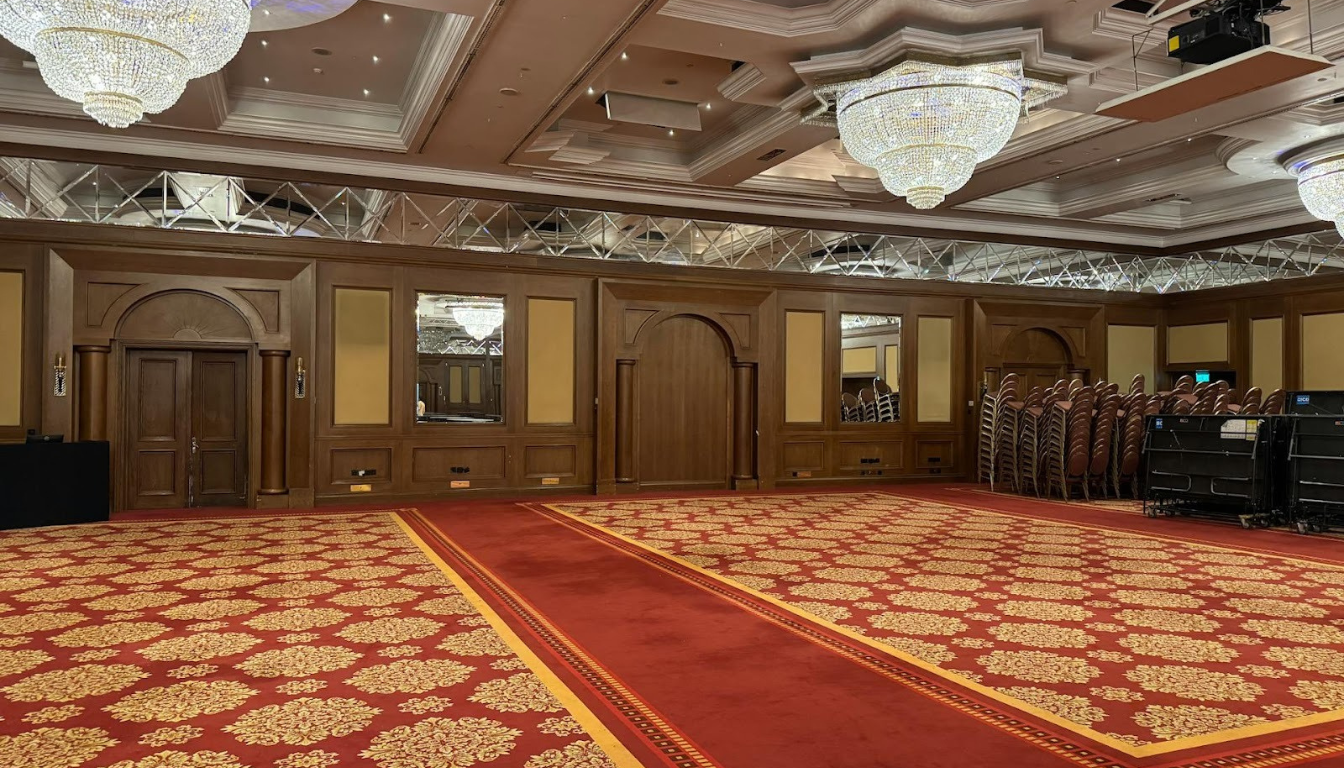
The word luxury is doing a lot of heavy lifting in the corporate events industry, and most of it imprecisely. A resort can charge luxury prices while delivering a generic, forgettable experience. A boutique property at a fraction of the cost can create something that feels genuinely elevated. Price is a proxy, not a definition.
In the context of a corporate group retreat, luxury is better understood as the deliberate elimination of friction combined with the presence of genuine quality. It shows up in ways that are often invisible until they're absent:
Seamless logistics. At a true premium venue, the flow of the event is handled. Rooms are ready when teams arrive. AV works. Meals appear on time and meet dietary needs without a planning spreadsheet being passed around at 7 a.m. The event staff know what the schedule is and run toward problems before anyone has to ask. This sounds basic, and yet it's consistently the differentiating factor between an offsite that energizes people and one that exhausts them before the first session begins.
Space that enables the work. Premium meeting and collaboration spaces aren't just aesthetically nicer. They're designed for how people actually think and work together. Natural light, acoustic quality, breakout room access, and outdoor options aren't amenities; they're tools. Studies suggest that environmental quality affects cognitive performance, and teams do better work in spaces that support focus and creative thinking.
Catering that people actually want to eat. Food is one of the most underrated elements of a successful offsite. When meals are genuinely good, regionally sourced, thoughtfully prepared, and catering to dietary diversity, people are more present, more energized, and more likely to linger in the kind of informal conversation where real connection happens. The reverse is equally true.
Accommodations people don't have to manage. When rooms are comfortable, well-appointed, and genuinely restful, people show up to the next day's sessions. When they're not, the compounding effect of disrupted sleep and minor physical discomforts quietly degrades the entire experience.
What luxury is not, in this context: unnecessary flash, oversized portions, or amenities that exist to impress rather than to serve the work of the retreat. The best premium offsites feel generous without feeling showy.
When Is a Luxury Corporate Retreat Actually Worth It?
The strategic case for a premium offsite depends heavily on what you're trying to accomplish and who's in the room. Here are the circumstances where the investment is most clearly justified.
Leadership and executive offsites. When the attendees are the people whose decisions shape the company's direction, the argument for a premium environment is straightforward. The cost of friction, distraction, or a subpar experience for this group is measured in missed alignment and slow execution, outcomes that cost far more than the upgrade. Executive retreat planning consistently warrants premium consideration not as a perk, but as a performance variable.
Retention and recognition moments. If the purpose of the retreat is to signal to a high-performing team that the company values them, the quality of the experience is the message. A mid-tier venue with a tight budget communicates something. So does a genuinely exceptional one. When top performers are deciding whether to stay or explore what's elsewhere, the quality of the experiences a company creates for them is part of the calculation.
Pivotal cultural moments. Mergers, major reorgs, the launch of a new strategic direction, or a team rebuilding after a difficult period are all moments that benefit from an environment that communicates intention and care. A luxury retreat signals that this moment matters, which is sometimes exactly what a team needs to hear.
Smaller, high-stakes groups. The math on premium venues works differently by group size. For a team of 12 senior leaders, the per-person cost of an exceptional experience is often reasonable. For 200 people, the same nightly rate changes the budget conversation entirely. Luxury retreats for corporate groups tend to be most cost-effective and most impactful at the leadership-team scale.
Where the Premium Budget Is Best Spent

One of the most common mistakes in planning a high-end team offsite is spreading the premium budget uniformly across every element, regardless of impact. Not everything needs to be top-tier. The decisions that move the needle most are usually:
The venue itself. Location, space quality, and service infrastructure have an outsized effect on everything else. Getting this right creates the conditions for everything downstream to succeed.
The arrival experience. First impressions are disproportionately influential on how people experience an entire event. Ground transportation from the airport, a smooth check-in, and a genuine welcome are high-ROI investments relative to their cost.
The food program. Good food changes how people feel, which changes how they work. This is not the place to cut corners in an otherwise premium offsite.
The facilitation. A great venue with weak facilitation is a waste. The investment in skilled program design and facilitation, whether internal or external, is what converts a beautiful location into an event that actually delivers on its goals.
By contrast, branded swag, elaborate entertainment, and elaborate décor are typically the lowest-return premium spend. They can add to an experience, but they rarely define it.
The Optics Question and Why It Matters Less Than You Think
It would be dishonest to ignore the optics dimension of luxury corporate retreat planning entirely. In a period of layoffs, tightened budgets, or visible cost-cutting, a lavish offsite can generate internal friction and external criticism that undermines the goals it was meant to serve.
The answer to this tension isn't to default to the cheapest option. It's to be thoughtful about framing, timing, and who's in the room. A premium offsite for the senior leadership team during a strategy reset is a different thing than an all-hands extravaganza while the rest of the company is being asked to tighten its belt. The former is defensible. The latter is harder.
When the timing is right and the purpose is clear, most employees understand and often appreciate that the company invests meaningfully in bringing its people together. The experience of the team in the room is what they'll remember, and a high-quality offsite communicates a kind of organizational care that generic venues don't.
How to Vet a Luxury Venue Without Getting Burned

The premium end of the corporate event market has its share of venues that deliver on aesthetics but fall short on execution. A few principles for separating genuine quality from expensive disappointment:
Ask for references from comparable groups. Not testimonials, but actual conversations with planners who ran a similar-sized corporate retreat at this venue. Ask specifically about responsiveness, problem-solving, and whether the experience matched the promise.
Clarify what's included. Premium venues sometimes quote attractively and then add fees for AV, event staffing, early access to space, or F&B minimums that significantly change the total cost. Get the full picture before comparing options.
Evaluate the event staff, not just the property. The venue's dedicated events team is the single biggest variable in execution quality. A beautiful property with an inexperienced or understaffed events team will consistently underdeliver.
Summary
Luxury retreats for corporate groups are worth the investment when the purpose is clear, the timing is right, and the premium spend is directed at the elements that actually shape the experience: the venue, the arrival, the food, and the facilitation. The goal isn't excess. It's friction removal and the creation of conditions where exceptional work and genuine connection can happen.
Premium doesn't have to mean ostentatious, and it doesn't have to mean unaffordable. For the right group, at the right moment, a high-end corporate offsite isn't a budget indulgence. It's a deliberate investment in the people and outcomes that matter most to the business. The planners who get this right aren't the ones who spend the most; they're the ones who spend intentionally, on the things that leave a lasting impression.
FAQs
- What is a luxury corporate retreat?

A luxury corporate retreat is a premium offsite experience designed to remove logistical friction, provide high-quality environments and catering, and create conditions for meaningful team connection and work. It's defined less by price alone and more by the quality and intentionality of the experience: seamless service, exceptional space, and a program that delivers on its goals.
- When does a luxury retreat make sense for a corporate group?
The strongest use cases are executive and leadership offsites, retention and recognition events for high-performing teams, and pivotal cultural moments like strategy resets or major transitions. Luxury retreats also tend to offer the best cost-per-impact ratio at smaller group sizes, where per-person costs are more manageable.
- How do I justify a premium offsite budget to leadership?
Frame the investment around outcomes, not amenities. A well-executed luxury retreat for a leadership team is an investment in alignment, decision quality, and retention, all outcomes with measurable business value. Quantify what misalignment, attrition, or a failed offsite would cost compared to the incremental spend on a premium experience.
- What's the difference between a luxury retreat and a standard corporate offsite?
The core difference lies in service quality, environmental design, and the degree to which logistics are handled invisibly. A luxury offsite removes friction so that attendees can focus entirely on the work and the people, rather than managing minor discomforts, waiting for AV to be fixed, or navigating a venue that wasn't designed for group work.
You may also like



Stay Updated with Our Insights
Get exclusive content and valuable updates directly to you.