
Free Time vs. Structured Time: How to Get the Right Balance in Your Retreat Agenda

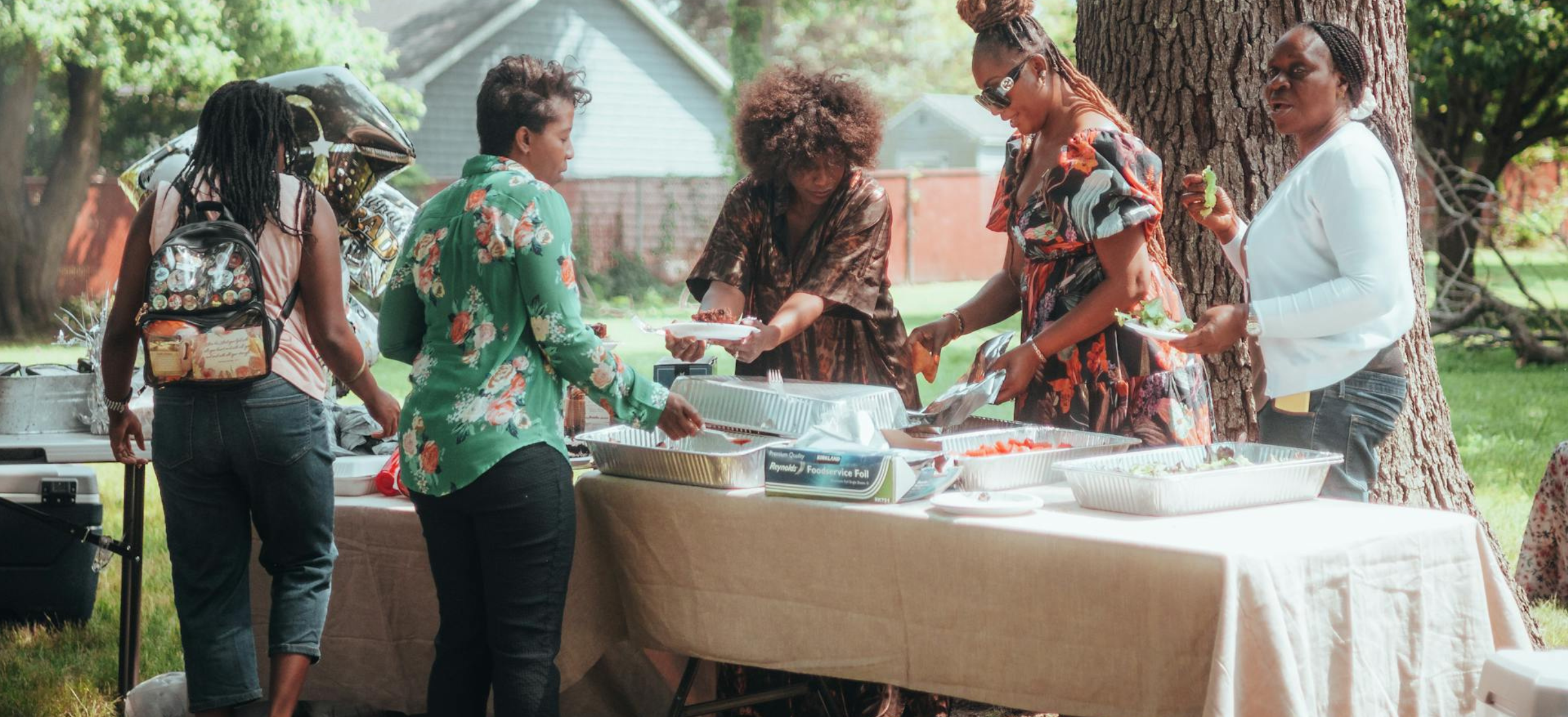
The most common mistake in building a retreat agenda isn't choosing the wrong venue or picking the wrong city. It's over-scheduling. Someone on the planning team, often with the best intentions, looks at a two-day offsite and decides that every hour should be accounted for — workshops in the morning, breakout sessions after lunch, team dinner at 7 p.m., optional activity at 9 p.m. The agenda looks productive on paper. In practice, it's exhausting, and the deeper conversations that retreats are actually designed to spark never get a chance to breathe. If you're still building the foundation, start with our step-by-step corporate retreat planning guide before diving into agenda design.
The opposite mistake exists too: too little structure, and a retreat drifts into an expensive working vacation where no one is quite sure what they're supposed to be doing or why they came.
A retreat agenda is the planned schedule for a corporate offsite or team retreat, including facilitated sessions, activities, meals, and free time. A well-designed schedule balances structured programming with unstructured time to support both productivity and genuine team connection. This guide breaks down how to think about that balance, what research and experienced planners tell us, and how to design a schedule your team will actually thank you for.
Key Takeaways
- Over-scheduling is one of the most common retreat planning mistakes. White space is a feature, not a gap to fill.
- A strong retreat agenda balances three elements: aligned programming (sessions with a clear purpose), collaborative transition time (meals, travel, and low-key shared experiences), and true free time.
- The ratio of structured to unstructured time should shift based on retreat goals — strategy-heavy offsites need more structure, while culture and connection retreats benefit from more openness.
- Transition moments such as walks, informal meals, and unplanned downtime are where some of the most valuable team conversations happen.
- Session length matters as much as session content. 90-minute blocks with real breaks outperform marathon half-days.
Why Retreat Agendas So Often Get This Wrong

Most retreat agendas are built by people who are very good at scheduling, which is precisely the problem. The instinct that makes someone an effective operations lead or executive assistant (fill the time, create accountability, leave nothing to chance) runs directly counter to what makes a retreat work.
Retreats are not a series of longer meetings. They're an opportunity for a team to step out of the velocity of normal work and see each other and the business differently. That kind of perspective shift doesn't happen in a scheduled session. It happens in the margin: over a slow breakfast, on a walk between activities, in the twenty minutes of downtime before dinner when two people who've never had a real conversation finally have one.
Research on team dynamics consistently shows that informal interaction, unplanned and unstructured contact between colleagues, is one of the most reliable drivers of trust and cohesion. When you schedule every minute, you systematically eliminate the conditions under which that trust is built.
The goal, then, isn't to choose between productivity and connection. It's to build a retreat agenda that creates the conditions for both and understands which requires more space at different moments.
The Three Building Blocks of a Balanced Retreat Agenda
Think of your retreat schedule not as a list of sessions, but as three distinct types of time that each serve a different function.
Aligned programming refers to sessions with a clear, intentional purpose: a facilitated strategy discussion, a culture workshop, a keynote, or a structured team-building activity. This is where your explicit retreat goals live. Every session in this category should be able to answer the question: "What will this team know, decide, or feel differently about after this hour?"
Collaborative transition time refers to the shared experiences that aren't quite programmed but aren't quite free either. Group meals, travel time between venues, a guided nature walk, and a cooking class where the point is being together rather than learning to cook. These moments are enormously valuable and often underestimated. They create a social container for the more formal sessions and give people time to process and connect. If your retreat includes a backward-looking session, see how to run a retrospective within your retreat agenda without losing the forward momentum of the day.
True free time is exactly what it sounds like: time with no agenda, no optional activities on offer, no suggestion that you should be doing anything in particular. Free time is where people rest, have the conversations they actually want to have, and show up to the next session as full human beings rather than depleted calendar squares.
A balanced retreat agenda contains all three. Most over-scheduled retreats contain only the first.
How to Calibrate the Ratio Based on Your Retreat Goals
There's no universal formula for the right split between structured and unstructured time. It depends on what the retreat is trying to accomplish. Here's a framework:
Strategy and planning retreats tend to need more structure because the outputs are specific: decisions made, priorities aligned, plans drafted. That said, even the most output-oriented offsite shouldn't exceed four to five hours of facilitated sessions per day. Strategic thinking requires mental energy that can't be sustained through back-to-back blocks. Build in generous transitions and keep evenings as genuinely social time, not networking disguised as another agenda item.
Culture and connection retreats, often run for fully distributed or hybrid teams who rarely see each other in person, should lean toward collaborative transition time and true free time. The structured sessions serve as anchors; the rest of the time is what the retreat is actually for—a rough target: no more than 40 percent of waking hours in formal programming.
Hybrid retreats, which blend a real strategic agenda with culture-building intent, require the most deliberate calibration. The temptation is to try to do everything, which results in an overfull agenda that does nothing well. The better approach is to identify one or two genuinely important outcomes for the structured programming and protect everything else as unscheduled time.
A useful gut check: look at your draft agenda and ask whether a teammate who'd just come off a high-stress sprint could get through it without feeling more depleted at the end than at the beginning. If the answer is no, cut something.
Designing Structured Sessions That Actually Earn Their Place
Not all structured time is equal. A two-hour workshop that generates energy, unlocks a real conversation, or creates a meaningful shared experience is worth ten times more than a three-hour all-hands deck review dressed up as an offsite session.
A few principles for structured sessions that hold their own:
Keep sessions at 90 minutes or under. Studies on ultradian rhythms and attention span consistently show that sustained focus and productive group thinking deteriorate after roughly 90 minutes without a meaningful break. A real break means stepping away from the room and the topic, not a five-minute bio break before re-opening the deck.
Design for dialogue, not delivery. The worst retreat sessions are ones where someone presents for 60 minutes and then asks for questions. If an hour of your retreat agenda could be replaced by a pre-read email, replace it with the email. Reserve facilitated time for things that genuinely require real-time interaction: working through a disagreement, generating options, and making a commitment together.
Name the purpose of every session explicitly. When you share the agenda ahead of the retreat, each session should include a one-sentence description of its purpose, not what will happen in the session, but why it's on the agenda and what the team will have when it's done. This makes it easier to cut sessions that can't pass that test.
Leave the last hour of each day unstructured. The final session slot on any retreat day has a way of absorbing overrun from everything that came before it. Protect that buffer and treat any leftover time as a gift to the group, an invitation to keep talking over an early drink or a walk rather than an opportunity to squeeze in one more agenda item.
The Underestimated Value of Transition Time

One of the most reliable patterns in post-retreat feedback is that people remember the between-session moments most vividly: a long dinner where the conversation went somewhere unexpected, a morning hike where two colleagues finally understood each other's perspective on a long-standing tension, a road trip between venues that turned into a two-hour storytelling session.
This pattern is not coincidental. Transition time relaxes the performance pressure of formal settings. People aren't in "meeting mode," which means they're more likely to say what they actually think, take conversational risks, and connect as whole people rather than functional colleagues.
For planners, this means treating collaborative transition time as seriously as programmed sessions. A group lunch with no agenda is not dead time. It's social infrastructure. A shared activity that requires mild collaboration, with low stakes, such as a cooking class, a guided tour, or a casual sports session, can build team cohesion more effectively than a carefully designed icebreaker workshop.
Offsite’s venue and activity curation make it straightforward to identify experiences that serve this function, spaces and settings that generate natural conversation without the overhead of structured facilitation.
Practical Agenda Templates by Retreat Length

One-day offsite (8 to 9 hours). A single day can't do everything, so pick one primary goal and build around it.
- Morning (3 hours): One substantive session, 90 minutes max, with a real break in the middle. Transition over a group lunch.
- Afternoon (3 hours): A second structured session (no more than 90 minutes), followed by a collaborative activity or free time.
- Evening (if applicable): Unstructured. A group dinner is appropriate; agenda items are not.
Two-day retreat. Day one sets context and builds connection; day two works the substance.
- Day one: Light programming in the morning (orientation, a single alignment session), collaborative experience in the afternoon, long unstructured dinner.
- Day two: Two structured sessions (morning and early afternoon), free time or optional activity mid-afternoon, closing session that's short and celebratory rather than substantive. For a fully time-blocked version of this structure, see our complete offsite agenda template for a 2-day company retreat.
Three-day or multi-day retreat. Treat any day beyond the second as an extension of connection time. By day three, the formal programming should be winding down, not ramping up. Protect large blocks of free time and resist the urge to fill them.
Summary
A great retreat agenda does not account for every hour. It's intentional about which hours need accounting for and which ones need to be left alone. The structured sessions you include should earn their place by being genuinely interactive, clearly purposeful, and time-bounded. The unstructured time you protect should be treated not as slack in the schedule, but as the actual mechanism through which connection, trust, and energy are built.
Teams that come back from a retreat feeling energized, clearer, and more connected to each other are rarely teams that were scheduled from breakfast to bedtime. They're teams whose planners understood that the best thing an agenda can do, sometimes, is get out of the way. Build your next retreat around that principle, and the outcomes will reflect it.
FAQs
- What is a retreat agenda?

A retreat agenda is the planned schedule for a corporate offsite or team retreat, including facilitated sessions, activities, meals, and free time. A well-designed retreat agenda balances structured programming with unstructured time to support both productivity and genuine team connection.
- How much free time should be built into a corporate retreat agenda?
There's no single answer, but a useful benchmark is that facilitated sessions should generally account for no more than 40 to 50 percent of waking hours, even on a strategy-focused retreat. The rest should be a mix of collaborative transition time (group meals, shared experiences) and true unstructured free time.
- How long should sessions be in a corporate retreat schedule?
Individual sessions should generally run 90 minutes or under, followed by real breaks where attendees step away from the topic entirely. Longer blocks tend to see attention and engagement decline, and rarely produce proportionally better outcomes.
- What's the difference between free time and unstructured time on a retreat?
Free time has no suggested activities; attendees do whatever they choose. Unstructured time might still involve a group activity (a casual hike, an open-ended meal), but without a formal agenda or facilitation. Both serve important functions on a retreat, and the best agendas include both types.
You may also like


Stay Updated with Our Insights
Get exclusive content and valuable updates directly to you.