
How to Define and Live Your Company's Core Values


Every successful business thrives on strong principles that guide decisions and shape its organizational culture. Core values are these guiding principles, reflecting what an organization believes in and how it wants to operate. Understanding what are core values and how they influence employees and customers is essential for creating a motivated, aligned, and productive workforce.
Key Takeaways
- Core values guide employee behavior, shape workplace culture, and support organizational goals.
- Aligning organizational values boosts engagement, satisfaction, and retention.
- Strong core values improve decision-making, attract talent, and enhance customer loyalty.
What Are Core Values?

Core values are the fundamental beliefs that guide how a company operates. They influence behavior, decision-making, and company culture. For businesses asking what are core values, these are not just abstract ideas—they are principles that define an organization's identity and help employees understand what matters most.
Without clearly defined business core values, companies risk losing focus, creating confusion, or allowing misaligned behaviors to emerge. By taking the time to define core values, businesses establish a consistent framework for decisions, teamwork, and customer interactions.
Why Core Values Matter
Core values are central to both daily operations and long-term strategy. They help create a cohesive work environment, attract and retain top talent, and increase employee engagement. Studies show that companies with strong core values experience higher performance, loyalty, and profitability.
Employees aligned with company core values feel a sense of purpose and belonging. Customers perceive businesses with strong workplace values as trustworthy and ethical. Clearly defined core values also simplify decision-making, providing guidance for choices that reflect the company's mission and vision.
Core Value Examples from Successful Companies

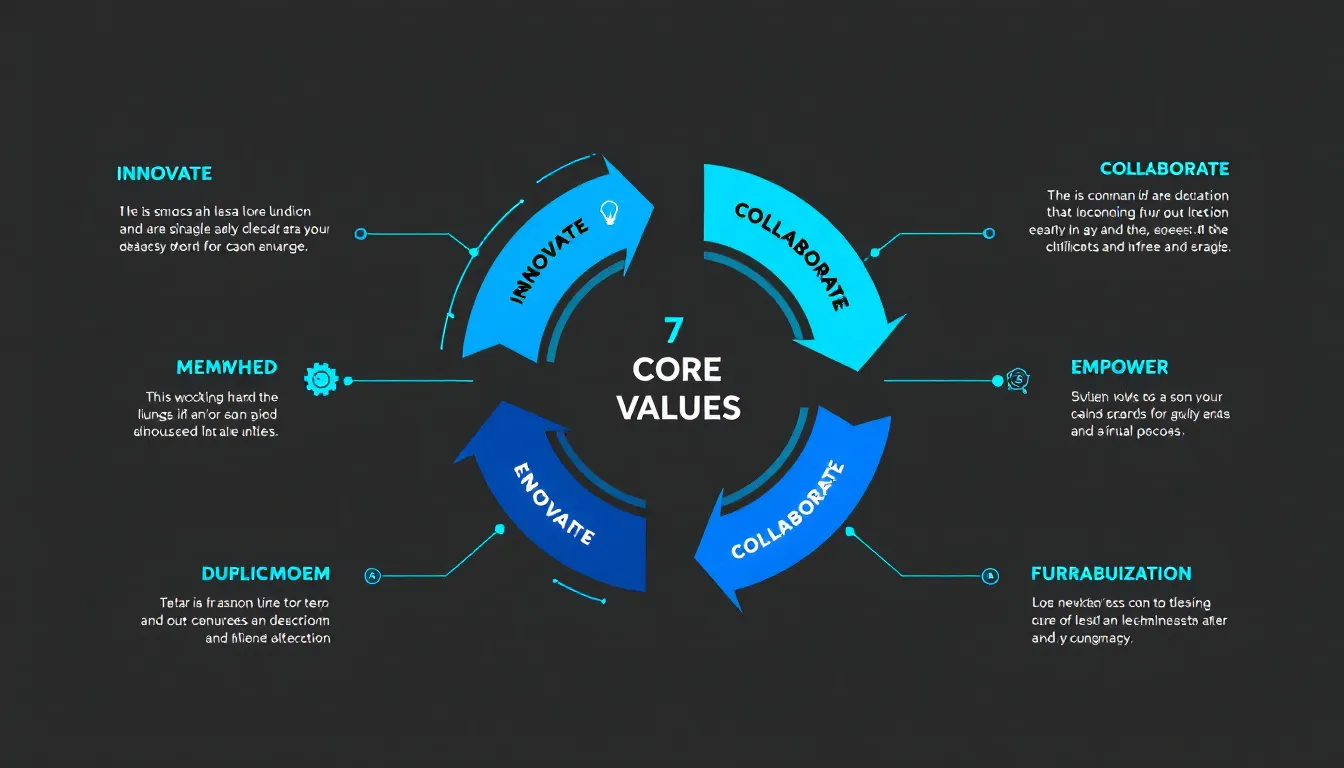
Understanding real-life core value examples helps businesses see the impact of strong principles. Common core values include:
- Integrity
- Innovation
- Customer Focus
- Excellence
- Accountability
- Respect
- Teamwork
- Transparency
- Sustainability
- Diversity and Inclusion
- Continuous Learning
- Social Responsibility
- Passion
Leading companies demonstrate how to live these business core values:
Google emphasizes innovation and user focus, fostering creativity, efficiency, and ethical practices.
Amazon prioritizes customer obsession and operational excellence, ensuring that every decision aligns with customer satisfaction.
Patagonia integrates environmental responsibility and product quality into all operations.
Apple focuses on innovation, simplicity, and respect, maintaining creativity and excellence in its organizational culture.
Netflix centers its culture on freedom and responsibility, trusting employees with real autonomy in exchange for high performance.
Salesforce builds its “Ohana” culture around trust, customer success, innovation, and equality, treating values as a business strategy rather than a poster on the wall.
Ben & Jerry’s builds social responsibility into its business model, tying core values to social and economic justice rather than treating it as a side initiative.
Nike centers its culture on passion, channeling employees’ dedication and creativity into performance and innovation.
These core value examples show how guiding principles shape actions, influence company culture, and support business success.
How to Define Core Values

To define core values that truly guide behavior, start by reflecting on your mission and vision. Ask, "what are core values that matter most to our company and employees?" Gather input from employees and leadership to ensure inclusivity and relevance.
Analyze current practices to identify behaviors that align with your desired workplace culture. Condense your findings into 5–10 core values that capture your organization's essence. Clear, simple language ensures employees can easily understand and apply these principles daily.
Building a Strong Culture and Values Framework

Creating a strong culture that reflects core values requires consistent effort and strategy. This framework ensures that employees understand what the company stands for and how to apply its principles in daily work. Aligning culture and values strengthens teamwork, encourages accountability, and fosters a sense of belonging.
Organizations with aligned workplace values see higher employee engagement, satisfaction, and retention. Employees feel motivated when daily operations reflect the company's core values, reducing conflicts and creating a positive work environment.
Strategies to Foster Core Values and Organizational Culture
Define and Communicate Values. Clearly articulatecore values and explain their importance to all employees. Effectivecommunication ensures alignment and reinforces the company's mission.
Integrate Values into Daily Operations. Embedbusiness core values into hiring, performance reviews, and decision-making.This ensures employees consistently act in line with the company's principles.
Align Leadership Behaviors. Leaders must modeldesired core values consistently. Their actions influence employees andreinforce company culture.
Encourage Open Communication. Transparent dialogueallows employees to share ideas and feedback, strengthening alignment with corevalues.
Recognize and Reward Alignment. Celebrate employeeswho demonstrate core values in their work, reinforcing positive behaviors andbuilding engagement.
Assess and Improve Continuously. Use surveys,metrics, and observations to ensure your organizational culture remains alignedwith your mission. Make adjustments to maintain relevance and engagement.
Companies that follow these strategies, like Zappos and Southwest Airlines, experience higher employee satisfaction, retention, and better business outcomes.
Measuring the Impact of Core Values
To ensure core values are effectively shaping behavior and workplace culture, businesses should measure their impact regularly. Employee surveys, performance reviews, and feedback tools provide insights into how core values are being lived.
Key Performance Indicators (KPIs) track engagement, retention, and cultural alignment. Observing team dynamics and leadership behaviors helps identify gaps between stated core values and actual practices. Adjusting based on these insights ensures continuous improvement and long-term success.
Benefits of Strong Core Values and Company Culture
Strong core values create clarity, guiding decision-making and shaping behavior across all levels. They attract talent aligned with your vision, enhance employee engagement, and improve retention. For customers, companies with clear culture and values appear more trustworthy, ethical, and customer-focused.
A cohesive alignment between core values and organizational culture reduces internal conflicts, increases collaboration, and drives organizational growth. Employees who understand and embrace these principles feel motivated, empowered, and connected to the company mission.
An Overview of How to Define Your Company's Core Values
Core values define a company's identity, guide decision-making, and shape workplace culture. They align employees with the mission, improve engagement, attract top talent, and earn customer trust. By defining core values, communicating them clearly, and embedding them into daily operations, organizations can create a thriving, purpose-driven workplace.
Real-world examples from Google, Amazon, Patagonia, Apple, Zappos, and Southwest Airlines show how companies that live their core values achieve higher employee satisfaction and business success. Embrace the power of core values, integrate them with culture and values, and your organization can grow stronger, more cohesive, and more successful.
FAQs
- What are company core values?

Company core values are fundamental principles that define an organization's identity, guide decision-making, and shape culture and values.
- Why are core values important for a business?
Strong core values align employees, improve engagement, attract talent, and increase customer loyalty. They guide decisions, shape behavior, and support long-term success.
- How can a company define its core values?
To define core values, reflect on the company's mission and vision, gather input from leadership and employees, and identify 5–10 guiding principles that capture the organization's essence.
- How can a company integrate core values into daily operations?
Integrate business core values into hiring, performance reviews, training, and decision-making. Consistently recognize employees who demonstrate these values.
You may also like



Stay Updated with Our Insights
Get exclusive content and valuable updates directly to you.