
Large Group Event Entertainment: Formats Drive Team Engagement

There's a moment every offsite planner dreads: the entertainment slot that lands wrong. A comedian whose jokes miss the mark. A trivia night where half the team checks out by round two. A keynote speaker who generates polite applause and gets forgotten by dinner. You've carved out the time, spent the budget, and signaled to your team that this matters, and the energy just isn't there.
The problem usually isn't the entertainment. It's the format. Corporate event entertainment isn't one-size-fits-all, and what works brilliantly for a group of 15 can collapse completely for a group of 80. When you're planning large group events, format is the strategic decision — and it's one most planners don't give nearly enough attention to.
This guide breaks down how to think about corporate retreat entertainment ideas by format, why certain structures drive genuine engagement while others create passive audiences, and how to match the right entertainment approach to the outcomes your offsite actually needs.
Key Takeaways
- Format, not content, is the primary driver of whether corporate event entertainment creates lasting engagement or falls flat.
- Large groups require deliberate structure: the bigger the group, the more intentional the format design needs to be.
- Passive entertainment has its place, but rarely produces the team cohesion most offsites are trying to build.
- Participatory formats (competitive, collaborative, creative) consistently outperform passive ones in post-event engagement.
- The best entertainment for corporate events aligns with team culture, not just planner logistics.
Why Format Matters More Than the Entertainment Itself
When most people plan corporate event entertainment, they start with content: What type of entertainment should we book? A band? A comedian? A mixologist? A trivia host?
That's the wrong starting point.
Before you decide what, you need to decide how. How will participants engage? Will they watch, or will they do? Will they compete as individuals, collaborate in teams, or share a collective experience? Will the format naturally prompt conversation, or will it create parallel experiences that don't connect people in the room?
These structural questions matter enormously, and they matter more as group size grows. In a small group, even a passive activity can spark interaction because the social context is intimate enough. In a group of 60, 80, or 150, passive entertainment easily becomes a spectator event: people are physically present but socially disconnected.
The most effective corporate event entertainment at scale isn't the most elaborate or expensive option. It's the format that makes participation feel natural, and connection feel inevitable.
The Four Entertainment Formats and What Each One Delivers
Understanding entertainment for corporate events through a format lens means thinking in four broad categories. Each has real strengths and real failure modes.
1. Passive / Performative
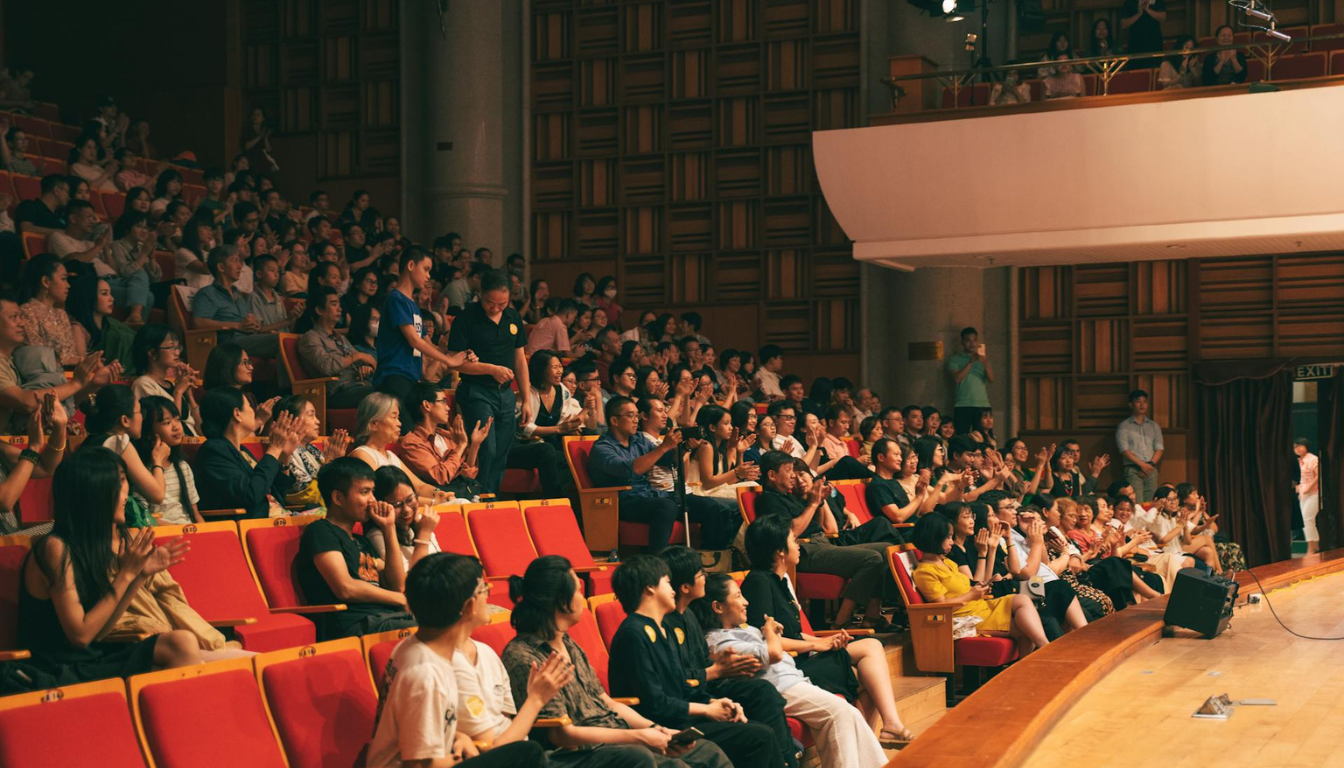
A speaker, performer, band, or comedian takes the stage while the audience watches. Done well, this creates shared emotional moments: a room laughing together, being inspired together, experiencing something together. A genuinely skilled performer can give a team a reference point they'll carry for years.
The failure modes: passive formats can leave introverts disengaged, are highly dependent on talent quality, and rarely generate the peer-to-peer connection that offsites are designed to create. For large groups, passive entertainment works best as a complement to participatory programming, not the centerpiece.
Best for: Opening or closing sessions, celebratory moments, award nights, culture-setting experiences.
2. Competitive / Team-Based
Think company Olympics, trivia leagues, cooking competitions, scavenger hunts, hackathons, and escape room-style challenges. The key structural feature is that teams compete against each other within a shared framework.
This format is one of the most reliable drivers of energy and engagement in large group settings. Competition creates natural stakes, which creates attention. Team-based competition creates interdependence, which creates connection. The format also scales well. You can run simultaneous heats, bracket structures, or parallel challenges across a large group without losing the intimacy of the small-team experience.
The failure mode: poorly designed competition can reinforce existing hierarchies or leave quieter team members feeling exposed. The design of the teams and the nature of the challenges matter as much as the format itself.
Best for: Culture-building, energizing mid-offsite lulls, cross-functional mixing, large groups of 40 to 200 or more.
3. Collaborative / Creative
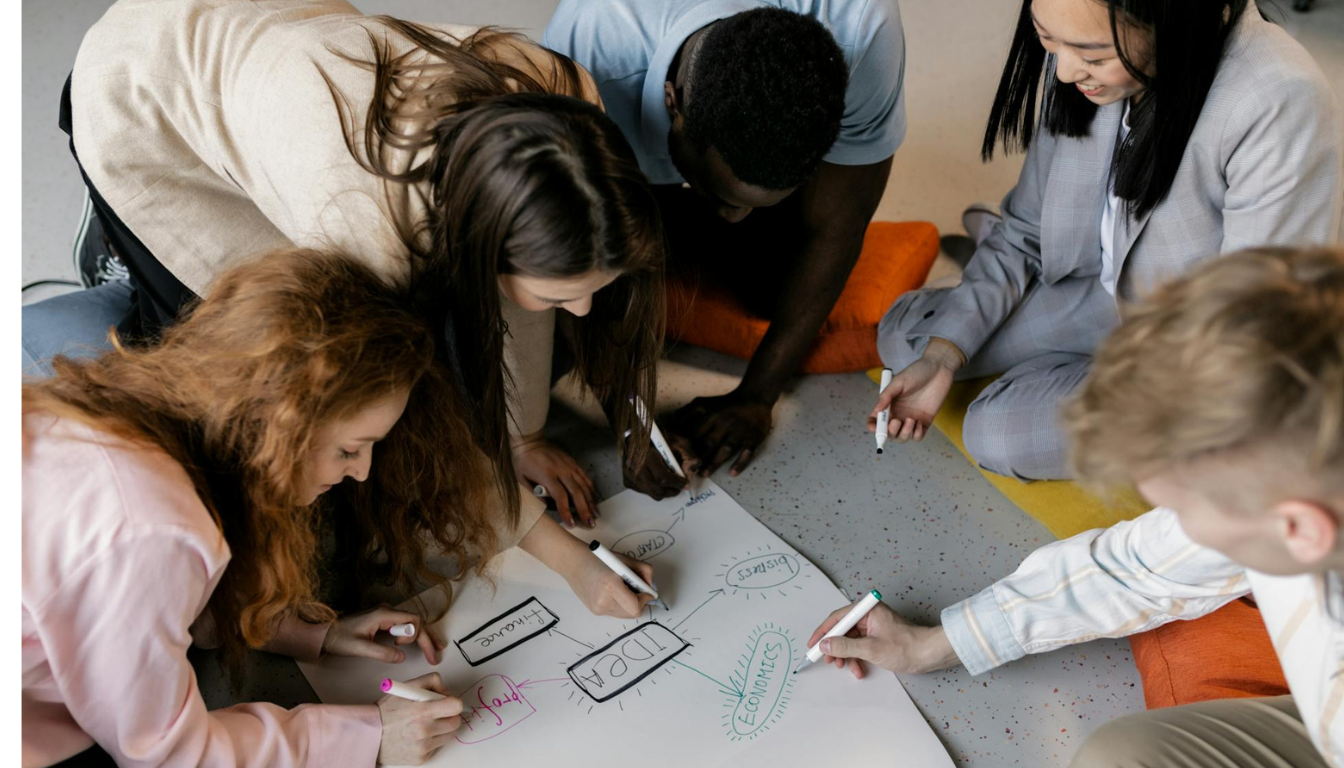
Rather than competing, teams work together toward a shared creative output: a mural, a song, a short film, a collective piece of writing, or a community donation. The format shifts from "who wins" to "what did we make."
Collaborative formats tend to generate deeper connections than competitive ones, though with somewhat lower energy. They also resonate strongly with employees who are less motivated by competition. When the output is something meaningful, such as a mural that hangs in the office or a donation assembled during the event, the emotional resonance outlasts the retreat itself.
Best for: Culture and values work, CSR-focused offsites, teams that need to rebuild trust or deepen cohesion, creative industries.
4. Experiential / Immersive
These formats place participants inside an experience rather than in front of one: a guided nature walk, a local culinary tour, a hands-on artisan workshop, a spirits tasting with a maker, or a live cooking class with a regional chef. The activity is entertainment.
What makes this format distinctive is that the environment does a lot of the facilitation work. Shared novelty, being somewhere unfamiliar, learning something new together, and engaging the senses lower social barriers in ways that structured activities sometimes can't. This format also integrates naturally with sustainable and locally-rooted retreat planning, since the best experiential entertainment draws directly from the destination.
The failure mode: experiential formats require more logistical coordination and can be harder to scale without splitting into cohorts.
Best for: Distributed teams who rarely meet in person, leaders who want a less formal tone, destination-forward retreats, groups of 20 to 60.
How to Choose the Right Format for Your Group
No single entertainment format works for every team or every moment. Here's a practical framework for making the call.
Consider your team's composition. A highly competitive sales organization and a reflective product team will respond very differently to the same format. Don't assume one team's highlight is another team's nightmare.
Consider the moment in the retreat arc. Entertainment at the opening of an offsite should lower barriers and build energy. Entertainment mid-retreat can channel existing momentum into something memorable. Closing entertainment should punctuate, not overload.
Consider what your offsite is actually trying to accomplish. If the goal is cross-functional connection, competitive team formats that deliberately mix departments outperform anything that reinforces existing reporting structures. If the goal is morale recovery after a hard stretch, creative and experiential formats tend to land better than high-stakes competition.
Consider group size explicitly. Formats that don't account for scale fail at scale. For groups over 50, any format you choose needs a clear structure that prevents people from falling through the cracks, whether that's subgroups, rotating stations, bracket formats, or parallel tracks.
Offsite's platform makes it easier to filter entertainment options by group size, format type, and retreat goal, so you're not browsing a generic vendor list but matching against what your team actually needs.
What Doesn't Work — and Why Planners Keep Booking It Anyway

Some entertainment formats persist in corporate retreat planning despite consistently underperforming. Understanding why helps you avoid the same trap.
The celebrity keynote that isn't connected to anything. An inspiring speaker can be genuinely powerful, but only if the content connects to what the team is working through. A speaker booked because they're well-known rather than relevant generates polite applause and little else. The format isn't the problem; the curation is.
Trivia as a default. Trivia is fine. It's also the entertainment equivalent of ordering a plain salad: inoffensive, predictable, and unlikely to leave anyone talking about it the next morning. If you're using trivia, customize it with company-specific rounds, destination-relevant categories, and formats that require collaboration rather than just recall.
Open bars as entertainment. Alcohol as the primary social lubricant is a format failure masquerading as a plan. Teams that are well-connected don't need it. Teams that aren't well-connected won't become so through it.
Passive group activities that assume everyone's an extrovert. Icebreakers, open networking sessions, and unstructured mingling all rely on a level of social confidence that not everyone has. If you want people to connect, give them something to do together first.
Summary
Corporate event entertainment only works when the format matches the group. For large groups, especially, the structural question of how people will engage matters more than the content question of what to book. Passive formats create audiences. Competitive formats create energy. Collaborative formats create connection. Experiential formats create memories. The strongest offsite programs don't pick just one; they sequence across formats intentionally, with a clear sense of what each moment in the retreat arc needs to accomplish.
The good news for HR leaders and offsite planners: when you get the format right, the entertainment doesn't have to be elaborate. A well-designed cooking competition with local ingredients can do more for team cohesion than a headline act that costs three times as much. It's not about the budget; it's about the design. And design starts with knowing what you're actually trying to build.
FAQs
- What is corporate event entertainment?

Corporate event entertainment refers to any structured activity, performance, or experience planned as part of a company offsite, retreat, or team event, with the goal of engaging attendees, building team connection, and creating memorable shared experiences. It includes everything from keynote speakers and live performances to team competitions, hands-on workshops, and immersive local experiences.
- What are the best corporate event entertainment ideas for large groups?
For large groups, the most effective entertainment formats are those that combine structure with participation, such as competitive team challenges, collaborative creative projects, and experiential activities like cooking classes or local cultural tours. These formats scale well because they create natural subgroups and built-in social interaction, rather than relying on individual initiative or passive observation.
- How do I choose entertainment for a corporate event?
Start with your group's size, composition, and the goal of the retreat, not with a format or vendor list. Ask: Do we need energy and engagement, or connection and depth? Are we mixing people who don't know each other, or deepening relationships on existing teams? What moment in the retreat arc does this entertainment need to serve? Matching format to intent is the most reliable way to get entertainment that actually lands.
- How is corporate event entertainment different from regular event entertainment?
Corporate event entertainment has a dual job: to be genuinely enjoyable, and to serve a team goal, whether that's cross-functional connection, culture reinforcement, morale recovery, or recognition. That dual purpose changes how formats should be evaluated. Entertainment that's great for a public event may fall flat in a corporate context if it doesn't create the right conditions for the team to connect.
You may also like


Stay Updated with Our Insights
Get exclusive content and valuable updates directly to you.