
Ground Transportation for Corporate Retreats: Charter Buses, Shuttles, and Rideshares


Getting your team from point A to point B sounds simple — until you're coordinating 80 employees, 3 flight arrival windows, 2 hotel properties, and a dinner venue 12 miles from the retreat center. Corporate event transportation is one of the most underestimated logistical challenges in retreat planning, and the wrong call can cost your team hours of fragmented arrivals, ballooning expenses, and a frustrating start to what should be an energizing experience. The good news is that the ground transportation landscape has never offered more options: charter buses, corporate shuttle services, and rideshare platforms each have a legitimate place in a well-designed transport plan. The trick is knowing which tool fits which moment — and how to combine them strategically so your entire team arrives on time, comfortable, and ready to engage. This guide breaks down every major option for corporate event transportation so you can build a logistics plan that's as polished as the retreat itself.
Key Takeaways
- Choosing the right corporate event transportation depends on group size, distance, budget, and retreat location.
- Charter buses are best for large groups traveling together over longer distances.
- Shuttles work well for staggered arrivals, airport transfers, and venue-to-venue movement.
- Rideshares offer flexibility for small teams but lose efficiency and cost control at scale.
- Planning event transportation early — ideally 6–8 weeks out — prevents last-minute stress and price hikes.
Why Corporate Event Transportation Deserves Its Own Planning Track

Transportation is rarely the first thing retreat planners think about — and almost always the first thing they wish they'd planned sooner. Unlike venue selection or agenda design, event transportation involves external vendors, fixed vehicle capacities, regional availability constraints, and timing dependencies that compound quickly when something goes wrong.
For small teams of 10 or fewer, transportation is relatively simple. But for mid-size to large corporate retreats — anywhere from 30 to 300 attendees — the logistics become a genuine operational challenge. Large corporate event transportation requires thinking about pickup windows, route sequencing, luggage capacity, accessibility needs, and contingency plans all at once.
The earlier you begin, the more options you have — and the lower your costs. Peak retreat seasons (April–May and September–October) see charter and shuttle availability tighten significantly, sometimes weeks in advance.
Option 1: Charter Buses — The Workhorse of Large Group Travel
For groups of 30 or more traveling the same route, charter buses are almost always the most efficient and cost-effective corporate event transportation solution.
What Makes Charter Buses the Right Call
Charter buses are purpose-built for exactly what corporate retreats demand: moving a large number of people reliably, on a fixed schedule, to a shared destination. A full-size motorcoach typically seats 47–57 passengers, while minibus options seat 20–35, giving you flexibility based on group size.
Beyond capacity, the case for charter buses comes down to four practical advantages:
Cost per head. When you divide the flat charter rate across a full bus, the per-person cost is significantly lower than coordinating individual rideshares or reimbursing mileage. For large corporate event transportation involving 50+ employees, the savings can be substantial.
Group cohesion. Traveling together isn't just logistically efficient — it's a retreat asset. The 90-minute ride to the venue becomes an informal bonding opportunity. Teams arrive together, energized rather than scattered.
Luggage capacity. Charter buses have dedicated luggage bays that handle suitcases, equipment cases, and even branded retreat materials. Rideshares and standard shuttles simply can't compete here.
Reliability. Reputable charter operators provide professional drivers, pre-trip vehicle inspections, and fixed commitments. That certainty is invaluable when your entire retreat schedule depends on a punctual arrival.
When Charter Buses Don't Fit
Charter buses require everyone to travel on the same schedule from the same location. If your team has staggered flight arrivals, remote employees driving in from different directions, or a mix of people needing airport pickups, a single charter run won't cover it. In those cases, charters work best as the primary venue transfer — not the sole transportation solution.
Option 2: Shuttle Services — The Flexible Middle Ground
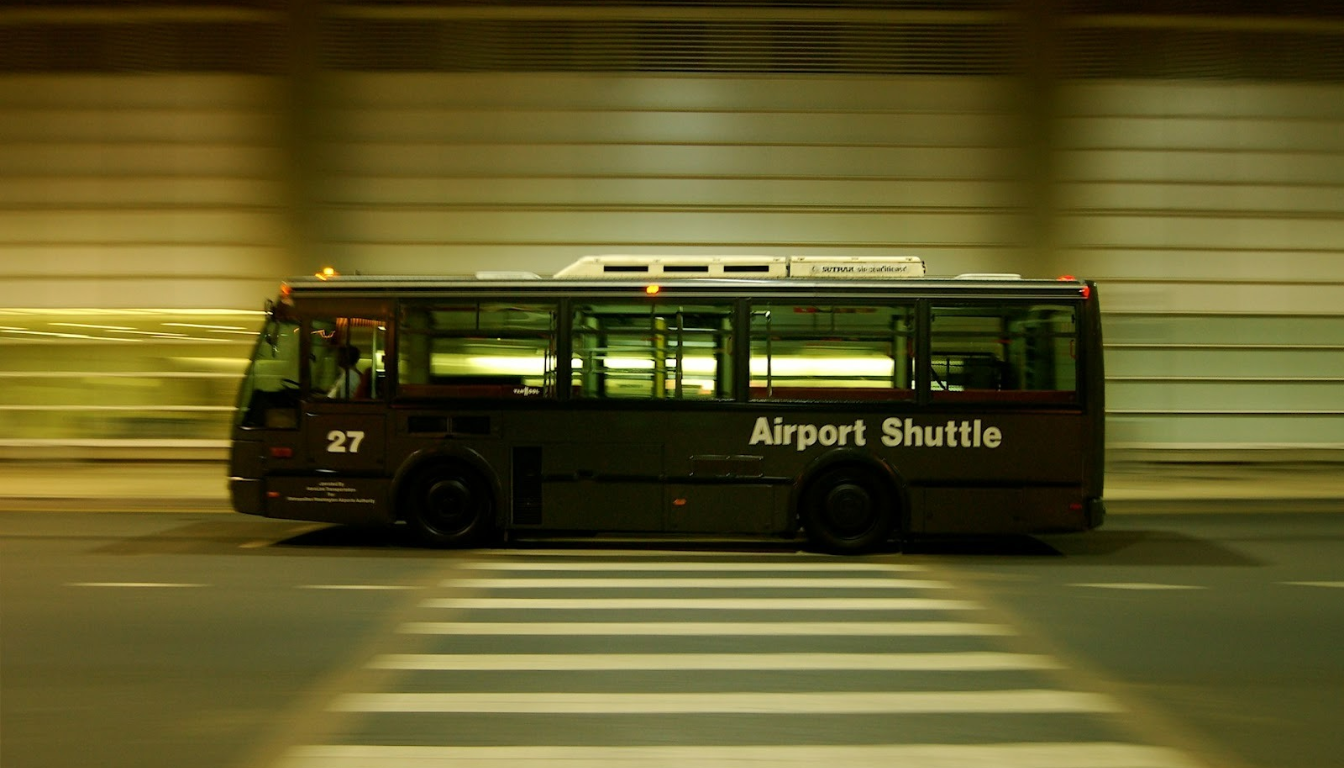
Corporate shuttle services occupy the space between the structured efficiency of charter buses and the on-demand flexibility of rideshares. For most retreats, shuttles solve problems that neither extreme can handle well.
Where Shuttles Excel
Airport transfers. When your team is flying in from multiple cities across multiple arrival windows, a shuttle loop between the airport and the retreat venue is the cleanest solution. A dedicated shuttle can run 3 or 4 pickups throughout the day, collecting groups of arriving employees without requiring anyone to wait hours for a charter departure.
Venue-to-venue movement. Many corporate retreats involve multiple locations — a hotel, a meeting facility, a restaurant, and an outdoor activity site. Shuttle services are ideal for these shorter, repeated transfers, keeping the team moving without the overhead of coordinating a full charter bus for a 10-minute route.
Evening event transportation. When the retreat dinner or evening activity is off-site, a shuttle loop gives employees a safe, reliable return option without relying on rideshares or individual driving — particularly important when alcohol is involved.
Shuttle Considerations
Shuttle services typically operate on fixed loop schedules rather than point-to-point charters, which means some waiting is built in. Communicate pickup times clearly in your retreat materials, so employees aren't left wondering when the next run arrives. For tech-savvy teams, a shared tracking link for the shuttle vehicle eliminates most of the frustration.
Option 3: Rideshare Platforms — Useful in the Right Lane
Rideshare platforms like Uber and Lyft have reshaped individual travel expectations, and they have a genuine role in corporate event transportation planning — just not the one most planners assume.
Where Rideshare Works
Rideshare is most effective as a supplementary layer, not a primary transport solution. Specific use cases where it fits:
- Small team retreats (under 15 people) where coordinating a charter isn't cost-effective, and everyone is arriving from different locations.
- Last-mile coverage for employees who miss a shuttle window or arrive outside scheduled transfer times.
- Optional free-time transportation when employees want to explore the local area independently during downtime.
Both Uber for Business and Lyft Business offer corporate accounts that allow centralized billing, ride monitoring, and employee access without requiring personal payment, which simplifies expense reporting and gives planners visibility into team movements.
Where Rideshare Falls Short
At scale, rideshare becomes expensive, unreliable, and logistically chaotic. In suburban or rural retreat locations, driver availability drops significantly. Surge pricing during peak arrival and departure windows can send your transportation budget into territory you didn't plan for. And unlike chartered vehicles, rideshare drivers have no obligation to wait, accommodate oversized luggage, or coordinate with your event schedule.
For large corporate event transportation needs, rideshare should be a backup — never the primary plan.
Building a Layered Transportation Plan for Your Retreat

The most effective corporate event transportation strategies don't rely on a single option. They layer solutions to match different segments of the team's journey.
Here's a framework that works for most mid-to-large retreats:
Phase 1 — Arrival Transfers: Use a dedicated shuttle loop for airport-to-venue transfers throughout the arrival day. Set pickup windows every 60–90 minutes to collect arriving groups without excessive waiting.
Phase 2 — Primary Group Movement: Charter a bus or fleet of minibuses for the main retreat-to-venue transfer if your accommodation and meeting space are separate. This is the highest-visibility transport moment — make it count.
Phase 3 — Daily Venue Transfers: Operate a shuttle loop for any off-site sessions, activities, or dining experiences. Build the shuttle schedule into your retreat agenda card so employees always know when the next run departs.
Phase 4 — Departure: Mirror your arrival strategy. Staggered checkout means staggered transportation needs — a shuttle loop back to the airport handles most scenarios more smoothly than a single charter departure that forces everyone to leave simultaneously.
Phase 5 — Rideshare as Backup: Enable a corporate rideshare account and share it with employees for edge cases — early departures, missed shuttles, or independent evening plans.
Practical Tips for Booking Corporate Event Transportation
Book 6–8 weeks in advance. Charter availability in popular retreat markets fills quickly, especially during spring and fall conference season. Waiting until three weeks out often means limited vehicle options and premium pricing.
Always confirm vehicle accessibility. If any team members have mobility needs, confirm ADA-compliant vehicle options with your vendor before signing a contract.
Build in buffer time. Schedule transport pickups 15–20 minutes earlier than the math suggests. Traffic, loading time, and the inevitable "just one more question" from an employee will eat into tight windows.
Get everything in writing. Confirm pickup times, locations, vehicle specifications, driver contact information, cancellation policies, and overtime rates in your contract. Verbal agreements with transportation vendors are a liability.
Designate a transport point of contact. Assign one person on your team — separate from the lead facilitator — as the transport coordinator for the retreat. They own vendor communication, monitor schedules, and handle day-of issues without disrupting the retreat program.
Summary
Great corporate event transportation doesn't happen by accident — it's the result of early planning, the right vendor mix, and a layered strategy that matches each phase of your retreat to the most appropriate solution. Charter buses win on cost and cohesion for large group movement, shuttles provide the flexible coverage that keeps a multi-venue retreat flowing smoothly, and rideshares fill the gaps that fixed schedules can't cover. When your event transportation runs invisibly in the background, your team never thinks about how they got there — they just show up ready to do the work.
FAQs
- How early should I book corporate event transportation for a retreat?

For most markets, booking 6–8 weeks in advance is the safe window for corporate event transportation. If your retreat falls during peak seasons (April–May or September–October), extend that to 10–12 weeks — charter and shuttle availability tightens considerably during high-demand periods.
- What is the most cost-effective event transportation for a group of 50 employees?
A full-size charter motorcoach is typically the most cost-effective event transportation solution for groups of 47–57 people traveling the same route. The flat charter rate, divided across the full group, almost always beats coordinating individual rideshares or reimbursing personal vehicle mileage.
- How do I handle transportation for employees flying in from different cities?
Use a staggered shuttle loop for airport-to-venue transfers, with scheduled pickups every 60–90 minutes across the main arrival window. For employees arriving significantly outside that window, a corporate rideshare account provides reliable last-mile coverage without requiring you to hold a shuttle for a single passenger.
- What should I look for when vetting a corporate shuttle or charter vendor?
Prioritize vendors with FMCSA operating authority and current insurance documentation, verifiable driver background check policies, a clear cancellation and overtime policy, and references from comparable corporate events. Ask specifically about their protocol for vehicle breakdowns — reputable vendors have contingency vehicles on standby for large corporate event transportation contracts.
You may also like



Stay Updated with Our Insights
Get exclusive content and valuable updates directly to you.