
AV and Tech Setup for Large Group Corporate Events: What to Spec and What to Outsource

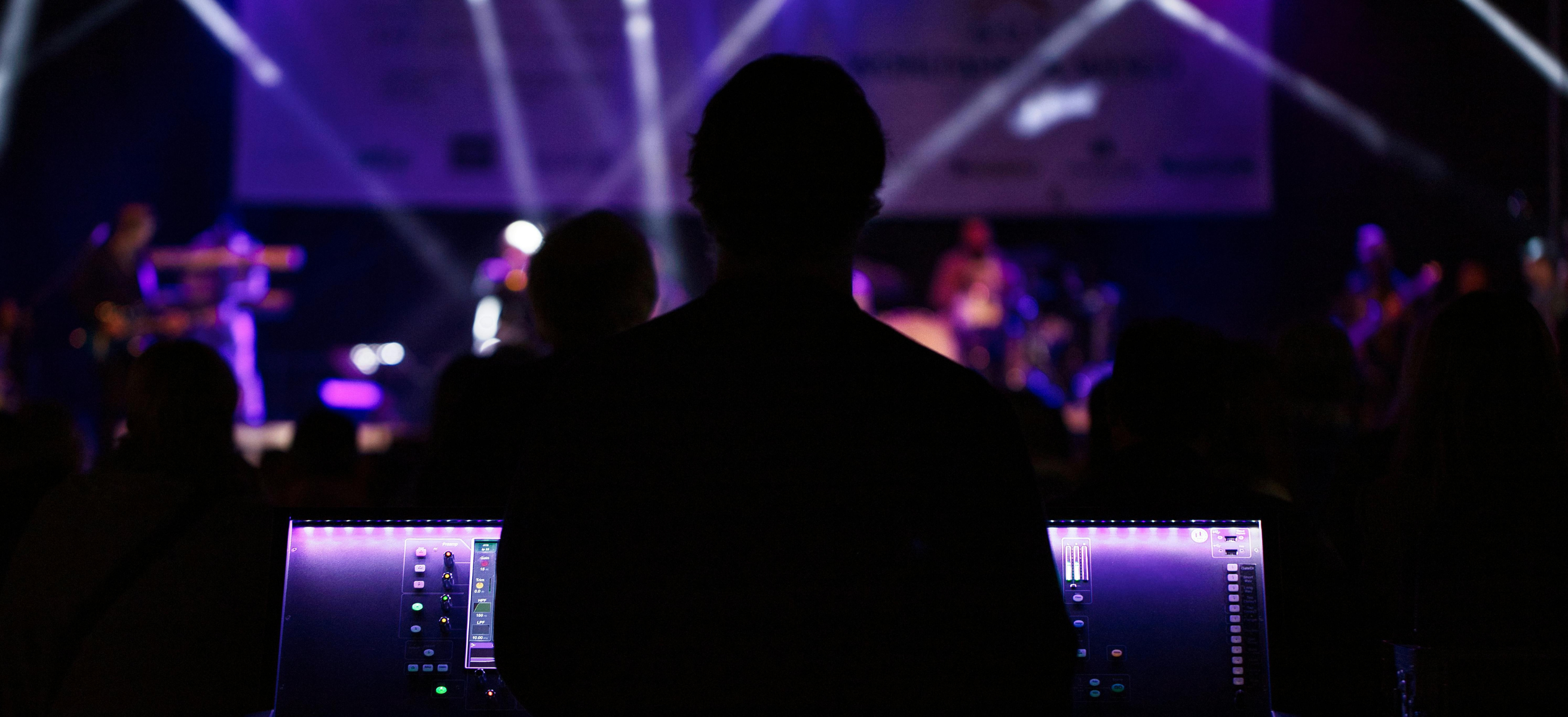
The technical production layer of large group events is the one element that every attendee notices instantly when it fails and almost no one acknowledges when it works — which means the AV and tech decisions made in the planning phase are quietly responsible for whether hundreds of people can hear the keynote clearly, follow the presentation visuals from every seat in the room, and stay connected and engaged across a full day of programming. Most corporate event planners are skilled at managing venue, catering, and agenda design, but AV specification is a technical discipline with its own vocabulary, vendor landscape, and failure modes — and the gap between what a planner assumes a venue's in-house system can handle and what it actually delivers under load is one of the most consistent sources of event-day crisis at large group events. Getting this right requires knowing which technical elements are genuinely scalable to your group size, which decisions carry the most risk if delegated to the wrong vendor, and where the line is between what a competent internal team can manage and what requires dedicated professional production support. This guide gives you that framework in full.
Key Takeaways
- AV failure is the most visible and most preventable source of large group event disruption — it is almost always the result of under-specification, not bad luck.
- Venue-provided AV packages are consistently under-powered for groups above 100 people; always request a full technical specification before accepting the in-house option.
- Sound system design — coverage, intelligibility, and feedback management — is the highest-stakes technical decision in any large group event and the one most requiring specialist expertise.
- Wi-Fi infrastructure for large groups requires dedicated event networking; shared venue Wi-Fi fails predictably above 75 to 100 simultaneous devices.
- Outsource anything that requires same-day technical troubleshooting expertise; the cost of a skilled AV technician on-site is a fraction of the cost of a failed session.
- Run a full technical rehearsal with live presenter content in the actual event space at least 90 minutes before doors open — never for the first time in front of the audience.
Why AV Specification Is the Highest-Risk Technical Decision in Large Group Events
Most large group events do not fail because of bad programming, insufficient catering, or venue selection errors. They fail because the audio cuts out during the keynote, the projection screen is visible to only two-thirds of the room, the presenter's laptop cannot connect to the venue's display system, or the Wi-Fi collapses under the weight of 200 people trying to access the shared event platform simultaneously. These are not freak occurrences — they are the predictable consequences of AV decisions made without adequate specification, and they are preventable at every stage of the planning process.
The challenge for planners is that AV specification requires technical knowledge that most event management training does not cover in depth. Vendors speak in technical terms — throw ratios, SPL levels, managed versus unmanaged network switches, HDMI versus SDI signal paths — that can make the specification process feel inaccessible to non-technical planners. The practical solution is not to become a technical expert but to know enough about the right questions to ask, the right responses to expect, and the warning signs that a vendor or in-house system is likely to underperform under the specific conditions of your event.
Sound System Specification: What Large Group Events Actually Require
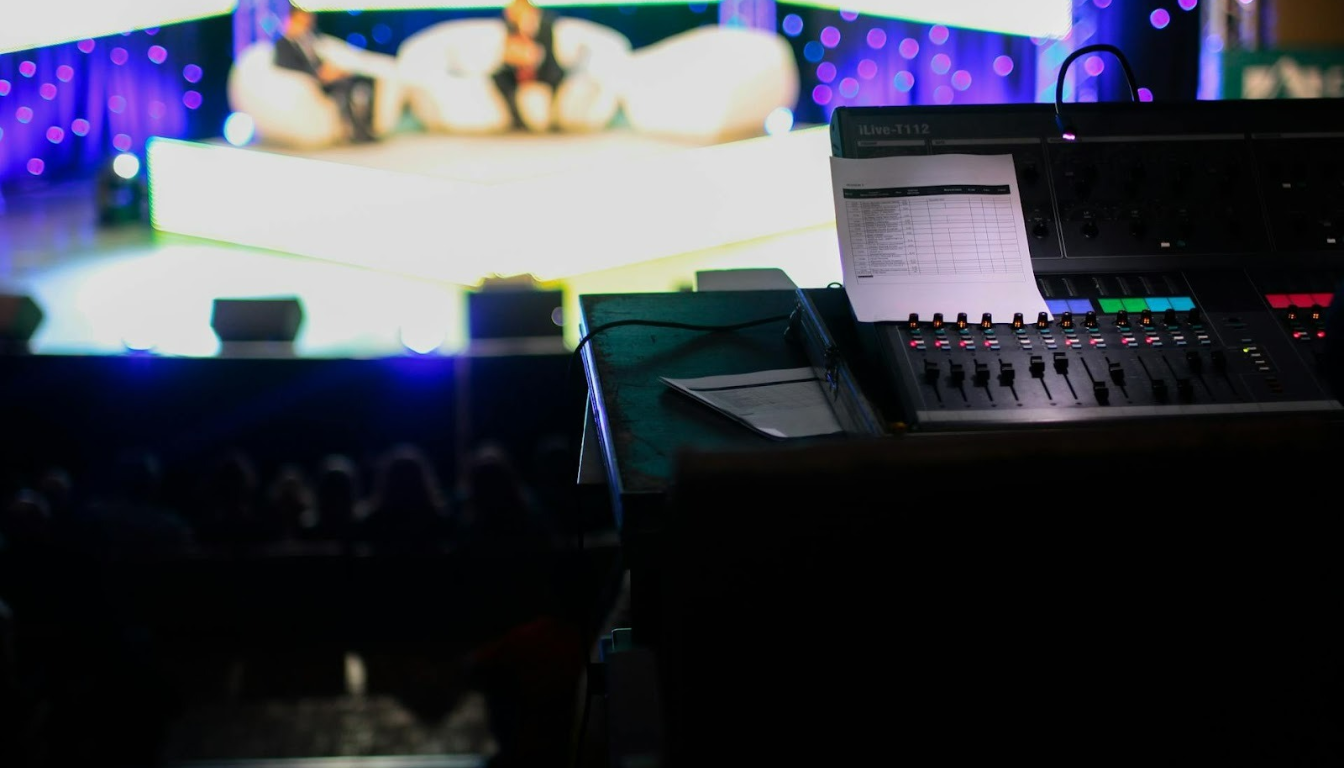
Audio is the non-negotiable technical priority at any large group event. An audience can tolerate a dim slide or a delayed video clip; it cannot tolerate a keynote it cannot hear clearly. Sound system specification for large groups involves four distinct considerations, each of which must be addressed explicitly before a vendor is engaged.
Coverage and Intelligibility
A sound system that is loud enough at the front of the room but inaudible at the back is not a large group sound system — it is a small room system deployed at insufficient scale. For groups above 100 people in a single room, intelligibility across the full seating area requires either a properly scaled line array system or a distributed speaker system with delay fills that ensure consistent audio quality from front to back. Ask your AV vendor to provide a coverage map for the proposed system in your specific room configuration. If they cannot produce one, treat that as a significant capability signal.
Microphone Configuration
The microphone setup for large group events must be matched to the presentation format, not simply to the number of speakers. A single presenter at a podium requires a different microphone approach than a facilitated panel discussion with five participants, a walking presenter using a handheld, or a Q&A session requiring a roving audience microphone. Specify every session format in your brief to the AV vendor and confirm that the microphone configuration for each session is explicitly addressed in their proposal. Microphone switching, feedback management, and backup units should all be confirmed in writing before the event day.
Monitoring for Presenters
Presenters at large group events need confidence monitoring — a way to see their current slide and their upcoming slide without turning their back to the audience. Specify a presenter monitor or confidence monitor at the lectern or presentation position for every session involving slides. This is a modest additional cost that prevents the significant disruption caused by presenters who turn away from the audience to check the main screen or who lose their place because their laptop display is positioned inconsistently with the main output.
Feedback and Acoustic Management
Acoustic feedback — the squeal produced when a microphone picks up its own amplified output — is the most jarring audio failure at large group events and one of the most preventable. It is almost always a consequence of insufficient sound check time, poorly positioned speakers relative to microphone positions, or the use of underpowered venue-supplied equipment pushed beyond its operational range. A professional sound engineer who has worked in the specific room before, or who has at minimum two hours for a complete system check and acoustic calibration before the event begins, eliminates this risk in the vast majority of cases.
Visual Display and Projection: Matching the System to the Room
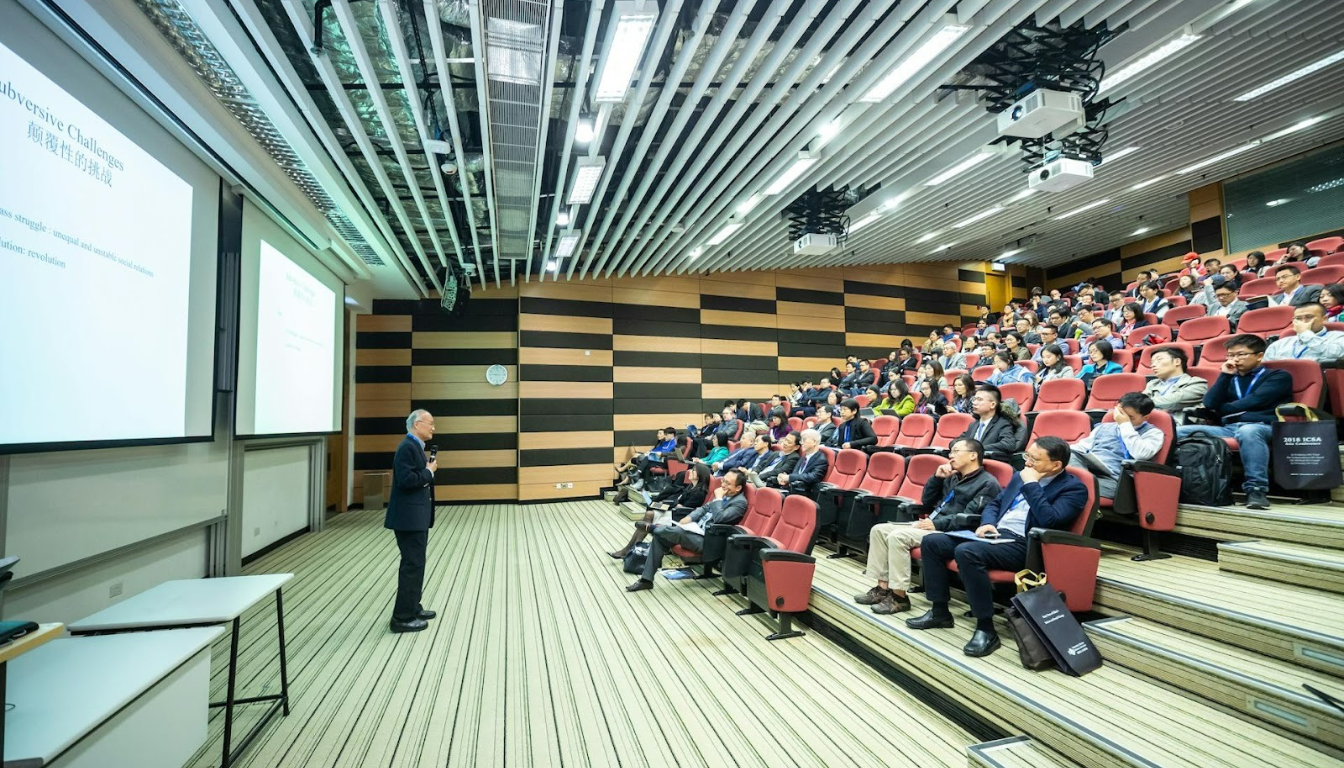
The visual presentation layer of a large group event — screens, projectors, LED panels, and confidence monitors — must be specified against the room's physical dimensions and the seated sight lines of the full audience, not against a generic venue equipment list.
Screen Size and Throw Distance
A standard rule for readable presentation screens at large group events is that the farthest seat in the room should be no more than eight times the screen height away from the display surface. A room with a 200-foot depth requires a screen height of at least 25 feet, or a secondary screen positioned mid-room to maintain readability. Most venue-supplied projection systems do not meet this specification for groups above 150 people in ballroom or large conference room configurations. Request the room's dimensions and the venue's projection throw distance before accepting the in-house AV package.
Projection Versus LED Wall
LED wall panels have largely replaced front projection as the preferred display technology for large group events with high ambient light conditions — ballrooms with windows, outdoor-adjacent spaces, or rooms where full blackout is impractical. LED walls offer significantly higher brightness, more consistent color fidelity, and the ability to display edge-to-edge without the washout that ambient light causes on projection screens. The cost premium over standard projection is meaningful and is most justified for events where the visual quality of the display is a brand or production value priority.
Multiple Display Zones for Complex Spaces
Large group events in non-standard room configurations — L-shaped spaces, rooms with obstructed sightlines, outdoor tent venues, or multi-room setups with overflow seating — require a multiple display zone approach in which secondary screens or monitors in each zone receive a video feed from the main presentation. This requires a distribution amplifier and a video signal routing plan that is confirmed in the AV specification before the event day. Overflow rooms or secondary viewing areas should have the same audio quality standard as the primary space.
Network and Connectivity: The Infrastructure Most Planners Under-Specify
Shared venue Wi-Fi is one of the most reliably over-promised and under-delivered elements of large group event infrastructure. A venue that comfortably serves 30 guests in a meeting room does not automatically scale to 200 guests in its ballroom, particularly when those guests are simultaneously running video streams, accessing cloud-based platforms, and participating in live polling or digital event apps.
Dedicated Event Networking
For large group events with more than 75 to 100 attendees who will be simultaneously using internet-connected devices, a dedicated event network — separate from the venue's general guest Wi-Fi, managed by your AV vendor or a specialist network provider — is not a luxury. It is a functional requirement. A dedicated event network allows bandwidth allocation to be controlled per device category, prioritizes the presenter's laptop and AV control systems above general attendee browsing, and eliminates the contention that causes shared networks to degrade under load. Request confirmation of dedicated event networking as a line item in every AV proposal for groups above 100 people.
Presenter Connectivity and Backup Protocols
Every presenter at a large group event should have a confirmed primary and backup connection method for their presentation content. The primary is typically a direct cable connection — HDMI or USB-C to the AV system — with the presentation stored locally on the presenter's device, not streamed from the cloud. The backup is a USB drive containing the presentation in both its native format and as a PDF, held by the AV technician. Cloud-dependent presentations and last-minute slide revisions emailed to the AV desk five minutes before a session begins are among the most common sources of avoidable delay and technical failure at large group events.
What to Spec In-House Versus What to Outsource
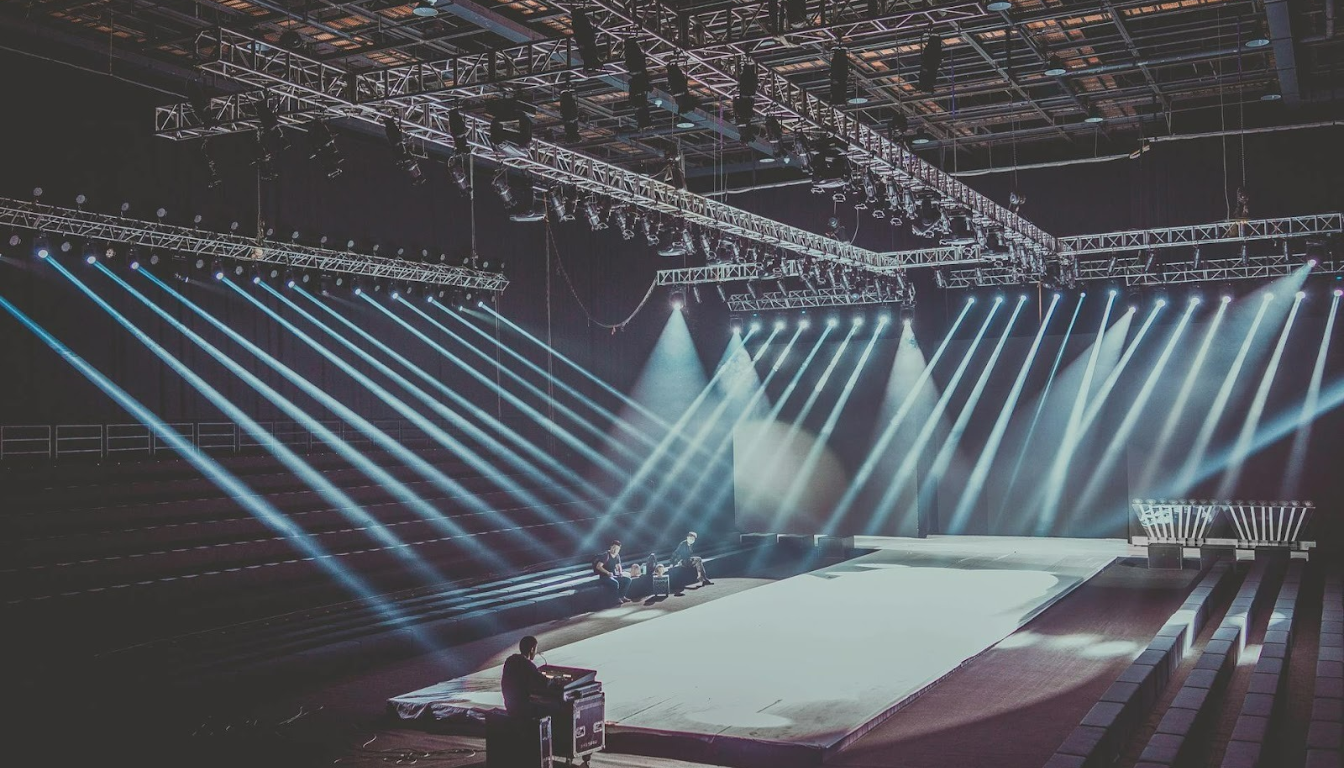
The build-versus-buy decision for AV and tech at large group events is less about cost than about risk tolerance and technical capability. The following framework identifies where internal management is appropriate and where outsourcing to a specialist produces a meaningfully better outcome.
- Manage internally — event app and digital platform setup: Selecting, configuring, and testing the event app, live polling platform, or attendee engagement tool is a logistical and content task that an internal event coordinator can manage effectively. This includes pre-loading the agenda, setting up attendee profiles, configuring polling questions, and testing on multiple device types. These are software tasks with good documentation and vendor support — they do not require specialist AV expertise.
- Manage internally — slide content review and standardization: Collecting presenter decks, enforcing a consistent aspect ratio and font standard, and confirming that every presentation opens correctly on the event laptop is internal coordinator work. Completing this process at least 48 hours before the event eliminates the majority of last-minute technical scrambles on the day.
- Outsource — sound system design and operation: A professional sound engineer with experience in large group events and familiarity with the specific venue delivers a standard of audio quality and real-time problem resolution that internal teams cannot replicate. This is the single highest-value AV outsourcing decision for any large group event above 75 to 100 attendees.
- Outsource — lighting design for main sessions: Lighting for a large group event keynote or plenary session — stage wash, audience lighting, and any video or photography-optimized setup — requires specialist knowledge of fixture types, color temperature, and positioning that produces a professional result. Venue house lighting is almost never optimized for the visual quality that a plenary presentation requires.
- Outsource — live streaming and hybrid event production: Any large group event with a remote or hybrid audience component requires a dedicated production crew with its own camera, encoding, and streaming infrastructure. Attempting to stream a large group event through a laptop webcam and a screen share is a false economy that invariably produces a significantly degraded remote attendee experience.
- Outsource — on-site technical direction: For large group events of 150 or more people running multi-session programming across a full day, a dedicated on-site technical director — the person who oversees the overall AV system and coordinates between the sound engineer, lighting operator, and video team — is a professional role that cannot be absorbed by a planner managing event logistics simultaneously.
Summary
The AV and tech layer of large group events is too consequential and too technically specific to treat as a procurement task rather than a design discipline — and the planners who consistently deliver technically flawless events are those who approach specification with the same rigor they apply to venue selection and agenda design. Sound system coverage, display readability, dedicated event networking, and the build-versus-outsource decisions outlined in this guide are not optional refinements for well-resourced events; they are the baseline requirements for any large group event where professional execution is expected. Invest in a dedicated AV vendor with verifiable large group experience, give them accurate room dimensions and session format details, require a written specification against those inputs, and run a full technical rehearsal before the doors open — and the technical layer of your event will be the one element no attendee ever has reason to mention.
FAQs
- What AV equipment is needed for large group corporate events?

The core AV equipment required for large group corporate events includes a scaled sound system with full-room audio coverage and managed microphone configurations, a display system — projection or LED wall — sized appropriately for the room depth and ambient light conditions, a dedicated event network separate from venue guest Wi-Fi for groups above 75 to 100 attendees, presenter confidence monitors at each speaking position, and a professional AV technician on-site for the duration of the event. For sessions involving video playback, hybrid audiences, or live streaming, additional video production infrastructure is required.
- How far in advance should AV be booked for a large group event?
For large group events of 100 or more attendees, AV vendors with specialist corporate event experience should be engaged three to four months in advance. Premium production companies and specialist technical directors book quickly for peak event seasons in spring and fall, and the lead time also allows adequate time for the site visit, technical specification process, and presenter coordination that quality AV planning requires. Attempting to book specialist AV support within four to six weeks of a large group event significantly limits vendor options and eliminates the planning depth that prevents day-of technical failures.
- Should we use the venue's in-house AV or hire an external company?
Venue in-house AV systems are appropriate for small meetings and simple presentation setups, but they are consistently under-specified for large group events above 100 attendees. The most significant limitations are sound system scale, screen size relative to room depth, and the technical support staffing that venue AV teams provide — which is typically shared across multiple concurrent events rather than dedicated to your event. For any large group event where audio clarity, full-room visibility, and seamless session transitions are priorities, hiring an external AV company with documented large group corporate event experience delivers a meaningfully more reliable outcome.
- What is the most common AV failure at large group corporate events?
The most common AV failure at large group corporate events is audio — specifically, insufficient sound coverage in the rear portions of large rooms, microphone feedback caused by inadequate sound check time, and wireless microphone dropouts resulting from unmanaged radio frequency interference. The second most common is connectivity failure: a presenter's laptop that does not recognize the venue's display system, or shared venue Wi-Fi that collapses under the load of simultaneous attendee device connections. Both categories of failure are preventable through adequate specification, dedicated event networking, and a full technical rehearsal completed at least 90 minutes before the first session begins.
You may also like


Stay Updated with Our Insights
Get exclusive content and valuable updates directly to you.